
Identification and safety
Microchipping: Implantation, Registration and Keeping Details Current
Understand how microchips work, why registration details matter more than the chip itself, and how to keep records up to date.
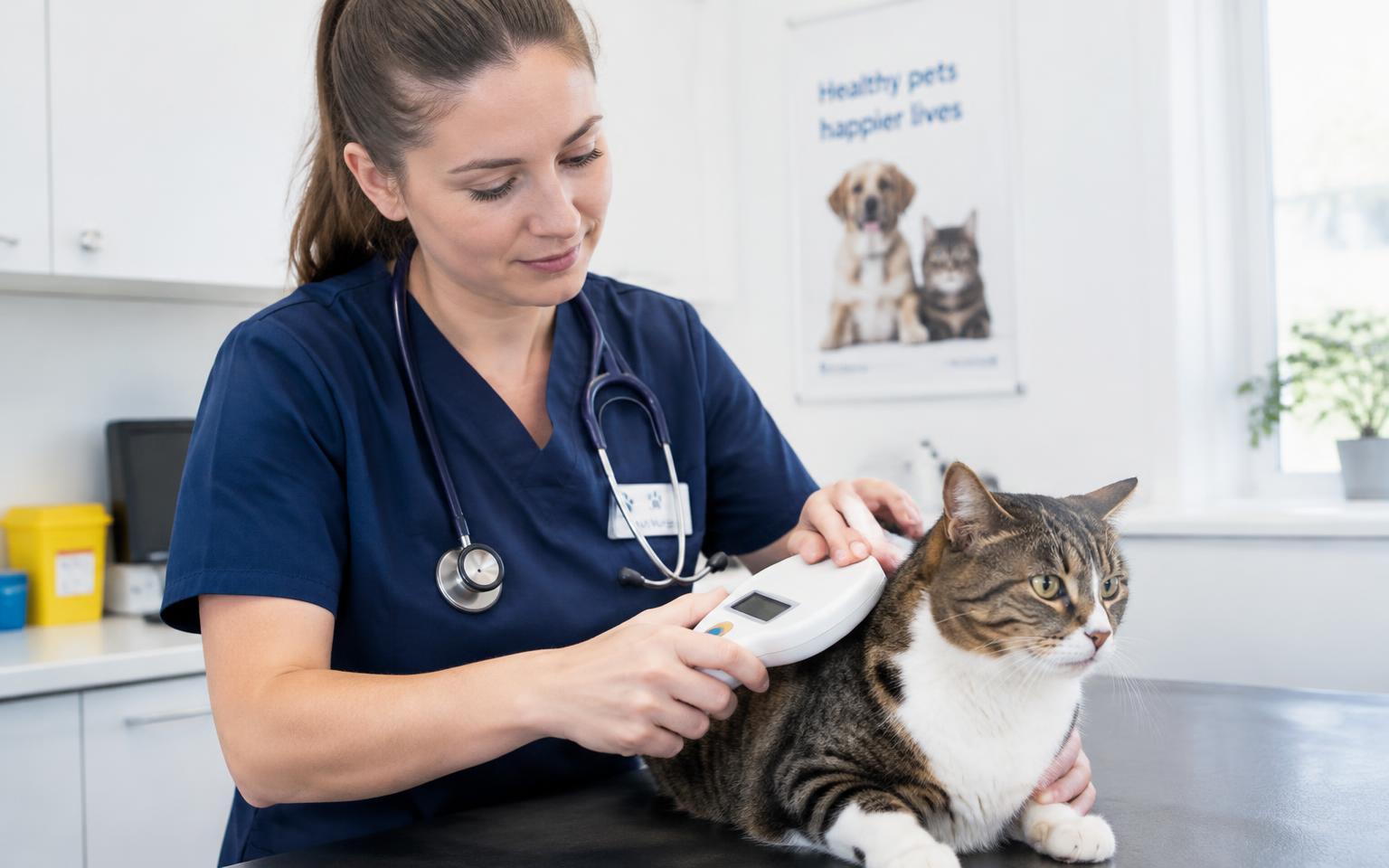
AI-generated editorial image; illustrative, not a clinical demonstration or documentary photograph.
What a microchip does and does not do
A microchip is a small, inert transponder, typically implanted under the skin between the shoulder blades, that stores a unique identification number readable by a compatible scanner. It carries no GPS function and cannot track an animal's location in real time; it only confirms identity when scanned by a vet, shelter or animal control officer.
The chip is only as useful as the registration record linked to its number. A chip implanted but never registered, or registered with outdated contact details, provides little practical benefit if an animal goes missing.
The implantation procedure itself
Implantation is a quick procedure, usually performed with a needle similar to a standard vaccination, and most animals tolerate it well with minimal discomfort. It can typically be done during a routine veterinary visit without sedation, although vets often combine it with a procedure already requiring anaesthesia, such as neutering, for additional comfort.
After implantation, the vet or shelter should scan the animal to confirm the chip reads correctly and provide you with registration paperwork noting the unique number. Keep this paperwork; you will need the number to complete or update registration.
Registration is a separate, essential step
In many countries, the chip must be registered with a national or regional database separately from implantation, and this registration is usually the owner's responsibility, not automatically completed by the vet. Confirm with your vet or the chip manufacturer which database applies and whether registration was completed on your behalf or still needs action.
Some countries have legal requirements for dog microchipping and registration, with penalties for non-compliance; check current local rules, as these are periodically updated.
- Confirm which database holds your pet's record
- Keep the registration certificate in a safe place
- Update details after every house move
- Update details after a change of phone number
- Re-check registration after rehoming or ownership transfer
Update details whenever circumstances change
Registration details become outdated after moving house, changing phone number, or transferring ownership of an animal, and an unreachable contact defeats the purpose of microchipping. Make updating the microchip record part of your moving-house or new-phone-number checklist, alongside more obvious tasks.
If you adopt or rehome an animal, check that the previous owner's details have been replaced with yours; some rescues handle this automatically, but it is worth confirming directly with the database rather than assuming.
Scanning and chip migration considerations
Ask your vet to scan the microchip at routine check-ups to confirm it is still detectable; chips can occasionally migrate slightly under the skin or, rarely, fail, though serious complications are uncommon. If a scan fails to detect a chip that should be present, discuss re-implantation with your vet.
When travelling internationally with a pet, check destination and return requirements well in advance, since many countries require a specific chip standard and proof of registration as part of pet travel documentation.
Frequently asked questions
- Can a microchip track my pet's location?
- No. A microchip only stores an identification number read by a scanner at close range; it has no GPS or live tracking capability.
- Do I need to register the chip separately?
- In most systems, yes. Implantation and registration are usually two separate steps, and an unregistered or outdated record limits the chip's usefulness.
- Is microchipping painful?
- Most animals show only brief, mild discomfort similar to a vaccination injection, and it is often performed alongside another routine procedure for convenience.
- What happens if I move house?
- Update your registered address and phone number with the relevant microchip database as soon as possible; an old address makes reunification much harder if your pet goes missing.
References
- Microchipping of animals FAQ — American Veterinary Medical Association
- Microchipping your pet — RSPCA