
Cat breed · Shorthair
Korat
An ancient Thai 'good luck cat', traditionally given in pairs to brides. Bonds intensely with its family and dislikes being left out.
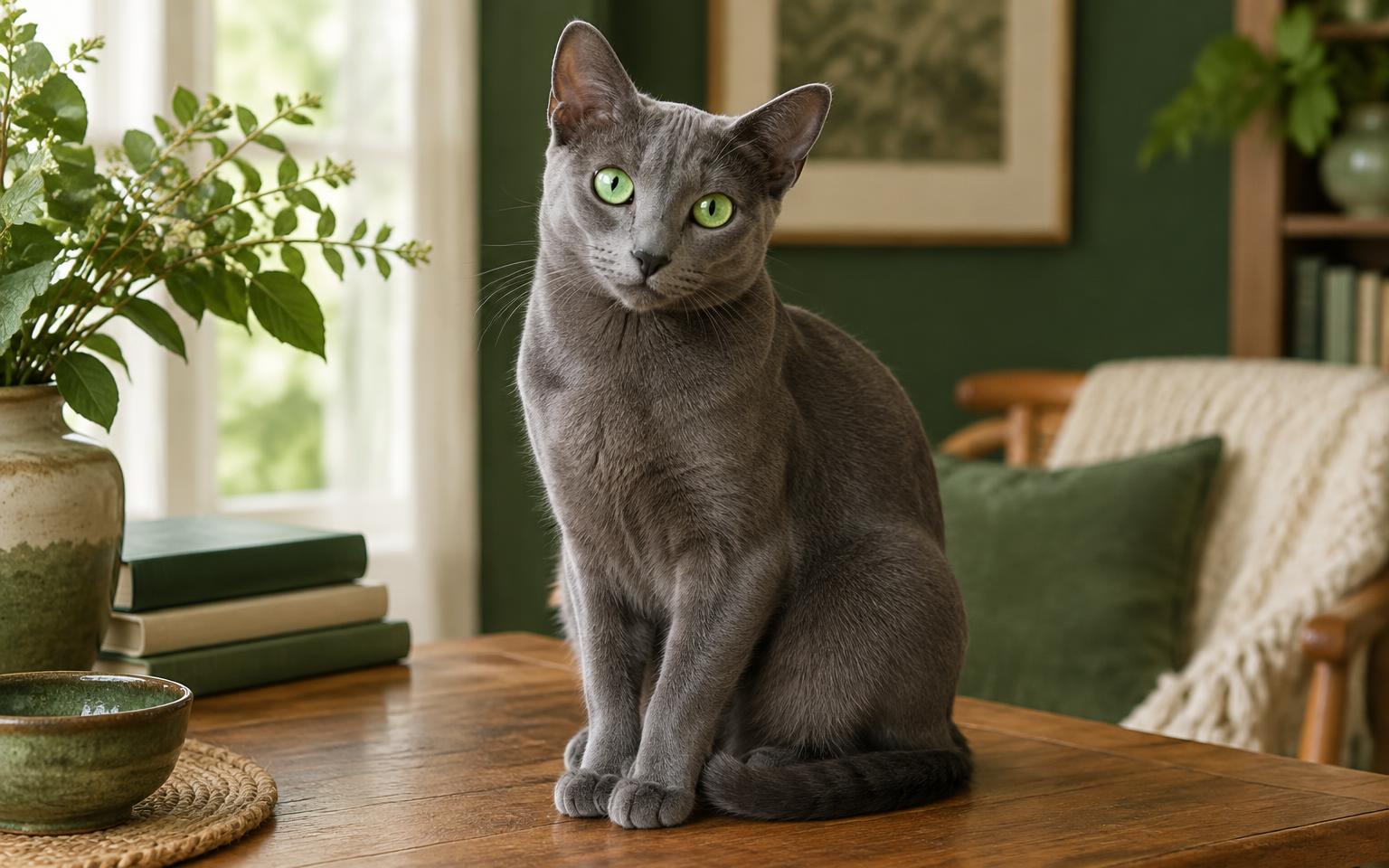
Illustrative cover using relevant category imagery; it does not depict the exact subject.
Breed characteristics
- Group
- Shorthair
- Origin
- Thailand
- Size
- Small
- Weight
- 2.5–4.5 kg
- Height
- 23–28 cm
- Lifespan
- 12–16 years
- Coat
- Short, single, silver-tipped blue coat
- Temperament
- DevotedQuietPossessive of its peopleGentle
History
Recorded in Thailand's Cat-Book Poems centuries ago; a natural breed, never outcrossed to other colours.
Appearance
Compact, heart-faced blue cat with luminous green eyes and a silver sheen from tipped hairs.
Exercise and activity
Moderate; enjoys gentle play close to its people.
Care and grooming
Minimal grooming; values routine and a calm household.
Health considerations
- Generally healthy
- Gangliosidosis (GM1/GM2 — tested in breeding programmes)
Honest challenges
Before choosing a Korat
- Treat the breed profile as a starting point, not a guarantee of temperament. Meet the individual and discuss its history, needs and behaviour with the rescue or responsible breeder.
- Check your routine can support the activity described here: Moderate; enjoys gentle play close to its people. Allow for age, weather, health and recovery rather than imposing a fixed target.
- Ask the breeder or rescue and your vet about problems reported in this breed (such as Gangliosidosis (GM1/GM2 — tested in breeding programmes)), which of them have recognised screening tests, and the parents' results where relevant. Screening reduces some uncertainty but cannot promise a healthy lifetime.
- Plan grooming, veterinary costs and care during holidays. Children and other pets still need careful introductions and supervision whatever a breed's typical rating.
Educational reference, not an individual diagnosis or a verified professional review. Read our editorial policy.
Sources on this topic
Pages on this specific subject from recognised organisations. They are cited for further reading and do not mean the organisation has reviewed this page.
- Korat breed profile — Cat Fanciers' Association
Guidance libraries and further reading
These organisations publish relevant guidance. Their links are further reading, not evidence that they have reviewed this page.
- RSPCA — animal care and welfare advice across species
- PDSA — veterinary charity pet health advice
- International Cat Care — cat health, behaviour and welfare advice