
Cat breed · Rex
Devon Rex
A pixie-faced, curly-coated cat that behaves more like a mischievous small monkey than a typical cat.
Small12–16 yearsDevon, EnglandCan suit apartments
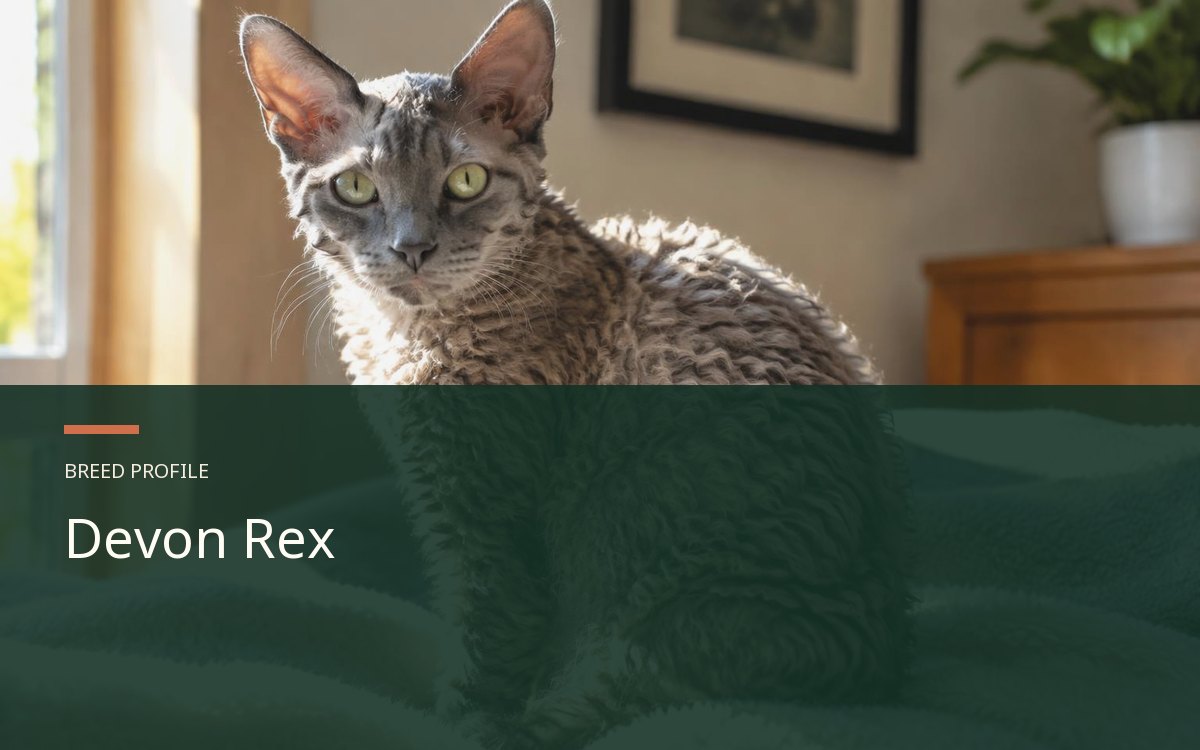
Illustrative cover using relevant category imagery; it does not depict the exact subject.
Breed characteristics
- Group
- Rex
- Origin
- Devon, England
- Size
- Small
- Weight
- 2.5–4.5 kg (6–10 lb)
- Height
- 25–30 cm
- Lifespan
- 12–16 years
- Coat
- Short, soft, wavy and sparse
- Temperament
- ImpishSociableWarmth-seekingAcrobatic
History
Began with a curly-coated kitten named Kirlee found near a Devon tin mine in 1959.
Appearance
Large ears, huge eyes and a soft rippled coat over a slender frame.
Exercise and activity
Frequent play and high perches; they will be wherever you are.
Care and grooming
Gentle weekly wiping rather than brushing, regular ear cleaning and warm bedding.
Health considerations
- Hypertrophic cardiomyopathy
- Devon Rex myopathy
- Patellar luxation
- Malassezia dermatitis
- Cold sensitivity
Honest challenges
Before choosing a Devon Rex
- Treat the breed profile as a starting point, not a guarantee of temperament. Meet the individual and discuss its history, needs and behaviour with the rescue or responsible breeder.
- Check your routine can support the activity described here: Frequent play and high perches; they will be wherever you are. Allow for age, weather, health and recovery rather than imposing a fixed target.
- Ask the breeder or rescue and your vet about problems reported in this breed (such as Hypertrophic cardiomyopathy, Devon Rex myopathy, Patellar luxation, Malassezia dermatitis, Cold sensitivity), which of them have recognised screening tests, and the parents' results where relevant. Screening reduces some uncertainty but cannot promise a healthy lifetime.
- Plan grooming, veterinary costs and care during holidays. Children and other pets still need careful introductions and supervision whatever a breed's typical rating.
Educational reference, not an individual diagnosis or a verified professional review. Read our editorial policy.
Guidance libraries and further reading
These organisations publish relevant guidance. Their links are further reading, not evidence that they have reviewed this page.
- RSPCA — animal care and welfare advice across species
- PDSA — veterinary charity pet health advice
- International Cat Care — cat health, behaviour and welfare advice