
Dog breed · Hound
Bloodhound
A giant scent hound with the most sensitive nose of any breed, used for centuries to track missing people over enormous distances. At home Bloodhounds are placid and affectionate, but a scent trail can override every other instinct.
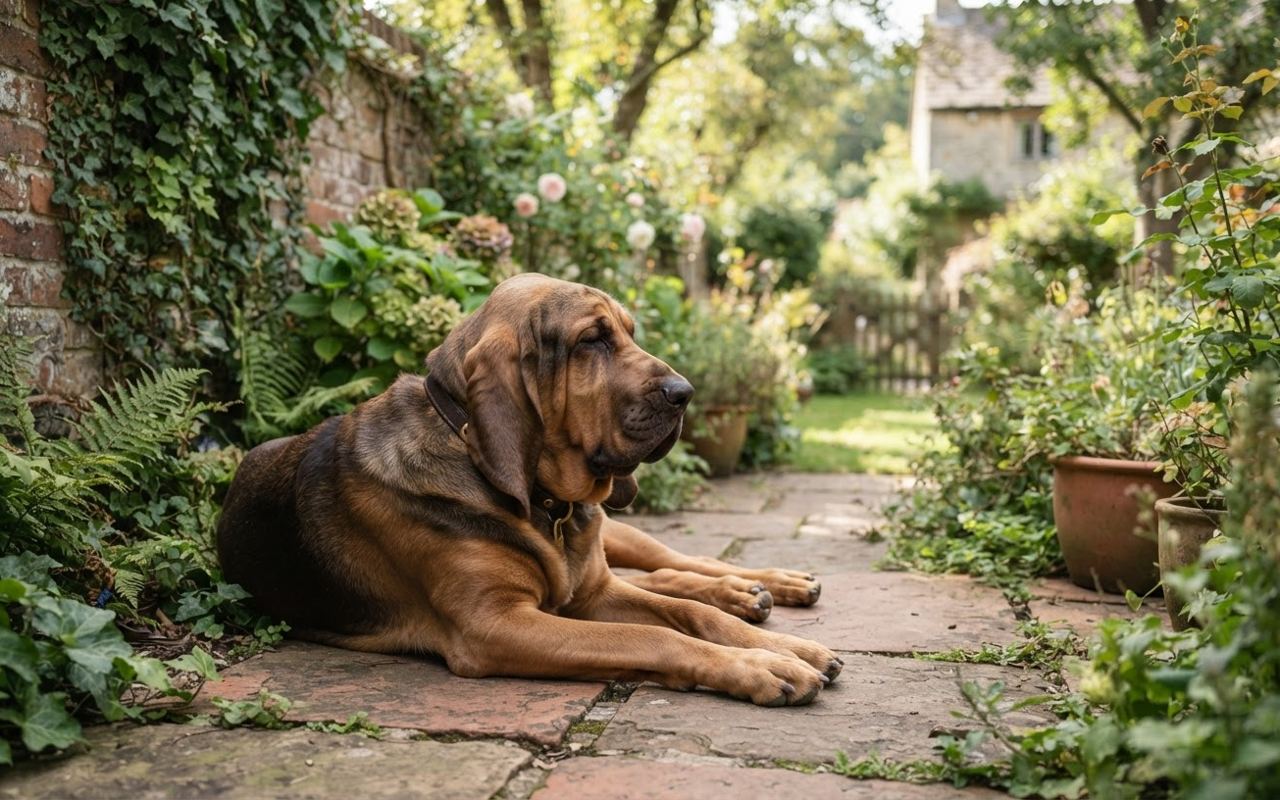
AI-generated editorial illustration of the subject; not a photograph of a specific animal, product or case.
Breed characteristics
- Group
- Hound
- Origin
- Belgium/France, developed in England
- Size
- Giant
- Weight
- 36–50 kg (80–110 lb)
- Height
- 58–69 cm
- Lifespan
- 10–12 years
- Coat
- Short, dense, loose-fitting wrinkled skin
- Temperament
- GentleDeterminedIndependent nose-drivenAffectionate
History
Descended from medieval European tracking hounds kept by monasteries, refined in England for law enforcement and search-and-rescue tracking work.
Appearance
A large, heavy-boned hound with loose, wrinkled skin, long pendulous ears and a deep, mournful expression.
Exercise and activity
An hour or more daily, ideally including tracking games; a securely fenced area is essential since a scent trail can lead a Bloodhound a long way, oblivious to recall.
Care and grooming
Clean facial folds and long ears regularly to prevent infection, and manage drool, which is considerable in this breed.
Health considerations
- Gastric dilatation-volvulus (bloat)
- Hip and elbow dysplasia
- Ear infections
- Ectropion and entropion
- Bloat-related risk from deep chest conformation
Honest challenges
Before choosing a Bloodhound
- Treat the breed profile as a starting point, not a guarantee of temperament. Meet the individual and discuss its history, needs and behaviour with the rescue or responsible breeder.
- Check your routine can support the activity described here: An hour or more daily, ideally including tracking games; a securely fenced area is essential since a scent trail can lead a Bloodhound a long way, oblivious to recall. Allow for age, weather, health and recovery rather than imposing a fixed target.
- Ask the breeder or rescue and your vet about problems reported in this breed (such as Gastric dilatation-volvulus (bloat), Hip and elbow dysplasia, Ear infections, Ectropion and entropion, Bloat-related risk from deep chest conformation), which of them have recognised screening tests, and the parents' results where relevant. Screening reduces some uncertainty but cannot promise a healthy lifetime. Bloat has no screening test: learn its emergency signs and ask about prevention.
- Plan grooming, veterinary costs and care during holidays. Children and other pets still need careful introductions and supervision whatever a breed's typical rating.
Educational reference, not an individual diagnosis or a verified professional review. Read our editorial policy.
Guidance libraries and further reading
These organisations publish relevant guidance. Their links are further reading, not evidence that they have reviewed this page.
- RSPCA — animal care and welfare advice across species
- PDSA — veterinary charity pet health advice
- Dogs Trust — dog care, behaviour and welfare advice