
Feline social behaviour
Multi-Cat Households: Resources, Not Personalities
Most tension between cats is an environmental problem wearing a behavioural disguise. How to count resources, read the subtle signs of conflict, and reintroduce cats that have fallen out.
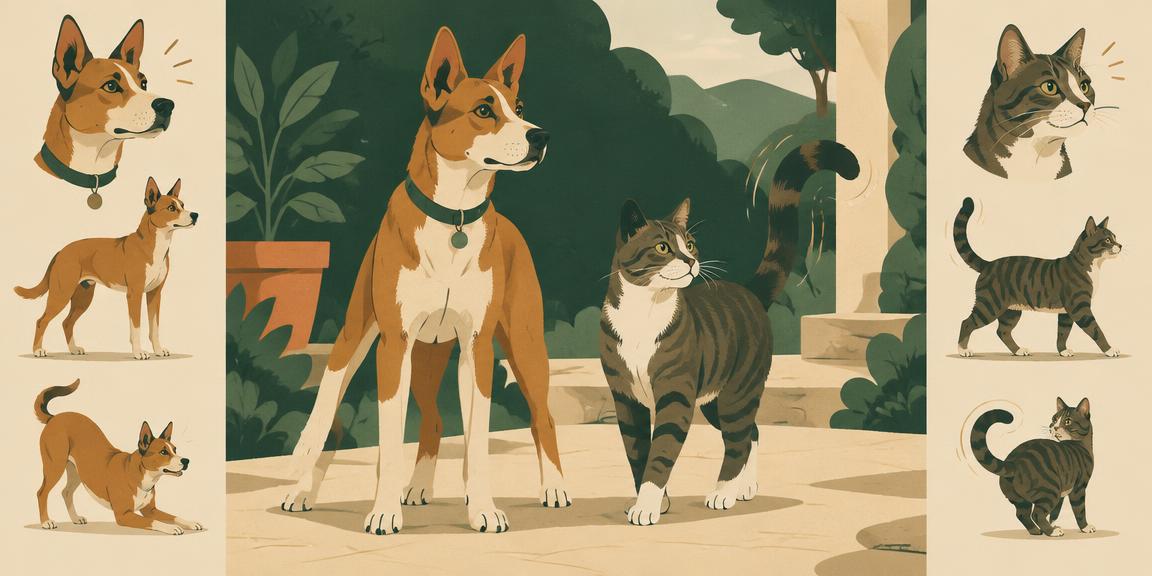
Cats are social, but not obligately so
Domestic cats can form close affiliative bonds — grooming, sleeping in contact, greeting with raised tails — but unlike dogs they did not evolve to share a food source with unrelated individuals. A household of cats is a cooperative arrangement that depends on each cat being able to eat, drink, toilet and rest without having to negotiate with another cat.
This is why 'they just don't like each other' is usually the wrong diagnosis. Change the environment and the relationship often changes with it.
The resource count
The working rule is one of each key resource per cat, plus one spare, distributed around the home rather than lined up in a row. Two litter trays side by side function as one resource because a single cat can guard both.
- Litter trays: one per cat plus one, in separate rooms, uncovered and large
- Water: multiple stations away from food, since cats prefer to drink apart from where they eat
- Food: separate bowls in separate places, never a shared dish
- Elevated resting places: shelves, cat trees and window perches let cats share a room while keeping distance
- Hiding places: covered beds and boxes at floor level for cats who cope by disappearing
- Scratching posts: near sleeping areas and entrances, both vertical and horizontal
Signs of tension you will otherwise miss
Open fighting is rare and late. Chronic conflict looks quiet: one cat blocking a doorway while the other waits, a cat that no longer uses the upstairs, staring across a room, a cat spending all day on top of a wardrobe, or house-soiling that begins after a new arrival.
Over-grooming, cystitis and inappetence in one cat of a pair are frequently stress-linked and warrant a veterinary visit as well as an environmental review, because feline idiopathic cystitis is both painful and genuinely associated with social stress.
Reintroducing cats that have fallen out
After a serious fight or a frightening event, cats may need a full reintroduction: complete separation with duplicate resources, then scent swapping using bedding, then feeding on either side of a closed door, then brief visual contact through a barrier, and only then supervised shared time — moving to the next step only when both cats are relaxed and eating.
Rushing this is the commonest reason reintroductions fail. Weeks, not days, is a realistic timescale, and a clinical animal behaviourist working with your vet is worth involving early if there has been injury.
Frequently asked questions
- Will getting a kitten keep my adult cat company?
- Often the opposite. Adult cats rarely want a playmate; they want predictability. Introduce a second cat because you want one, not as therapy for the first.
- Do plug-in pheromone diffusers work?
- Evidence is mixed and modest. They may take the edge off, but they cannot compensate for too few litter trays or an overcrowded home.