
Common problems
Why Your Cat Scratches Furniture — and What to Do
Scratching is normal, necessary and cannot be stopped. It can absolutely be redirected.
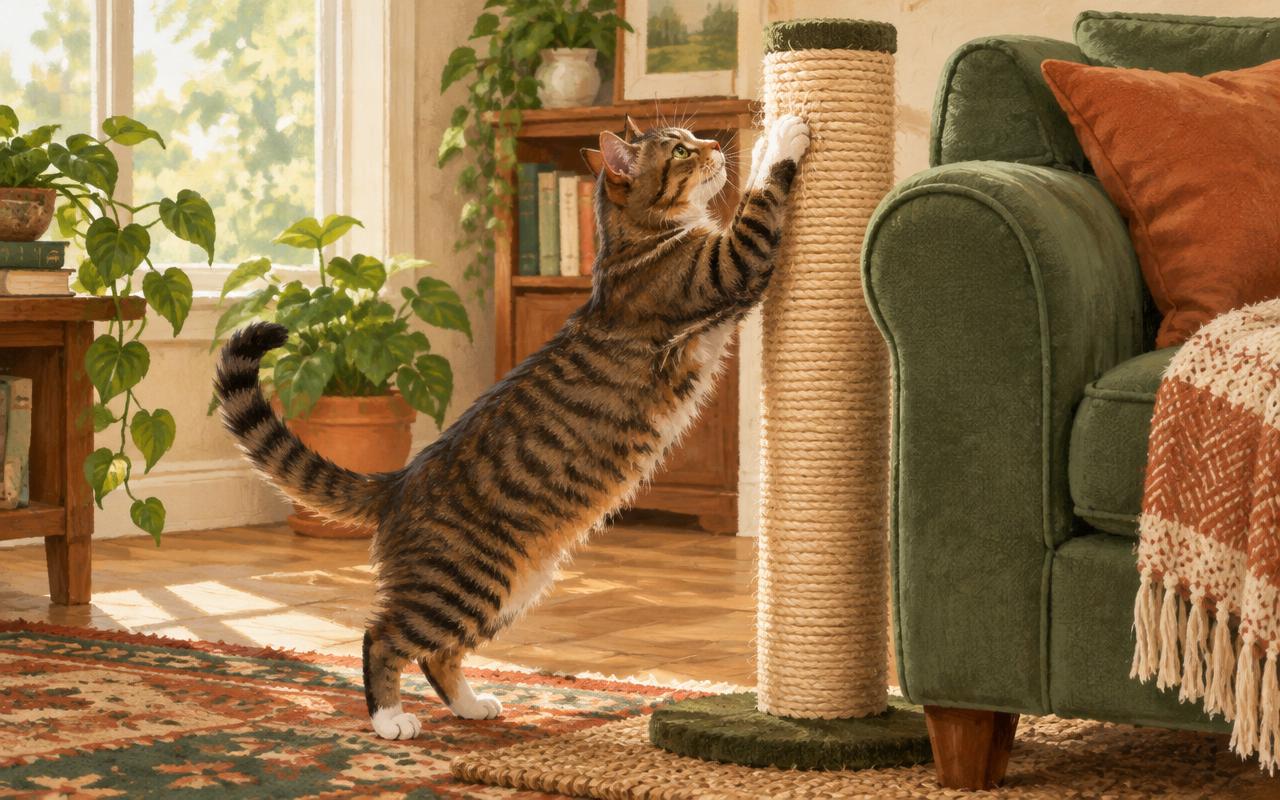
AI-generated editorial illustration of the subject; not a photograph of a specific animal, product or case.
Scratching is a biological need, not a behaviour to eliminate
Scratching serves several real purposes for a cat: it removes the worn outer sheath of the claw, stretches the muscles of the back, shoulders and legs, and deposits both a visible mark and scent from glands in the paw as a form of communication with other cats. Because it meets genuine physical and communicative needs, scratching cannot be trained away entirely, and attempting to suppress it without providing an alternative usually fails or causes frustration.
The realistic goal is redirection: providing scratching surfaces the cat prefers over your furniture, placed where the cat actually wants to scratch, not simply introducing any scratching post anywhere convenient to you.
Why cats choose furniture over a scratching post
Cats select a scratching surface based on texture, stability, height and location, and a flimsy post tucked away in a spare room will usually lose to a sturdy sofa arm positioned centrally in the household. Many commercial posts are also too short for a full stretch or too unstable to tolerate a confident pull, both of which make them less appealing than furniture.
Observe exactly what your cat currently scratches and try to match that texture, orientation (vertical or horizontal) and sturdiness in the alternative you provide, at least initially, rather than guessing at a generic solution.
Placement matters as much as the object itself
A scratching post or pad needs to be positioned where the cat already spends time and, ideally, near the furniture it currently targets, since cats often scratch after waking or near social areas rather than in secluded corners. Multiple scratching points around the home, including near resting areas and entry points to rooms, work better than a single post for the whole household, especially with more than one cat.
Once the cat is reliably using the new surface, it can sometimes be moved gradually, in small increments over time, to a more convenient location, though some cats will always prefer a prominent, central spot.
Make the furniture itself less rewarding to scratch
Temporarily covering previously scratched areas with a texture cats dislike, such as the smooth side of upholstery protector tape or a fitted throw, can reduce the appeal of the furniture while you build the habit of using the new surface. Double-sided tape and aluminium foil are sometimes suggested but should be checked for comfort and safety, and should not be relied upon as a permanent solution on their own.
Avoid punishment such as shouting, spraying with water or physical correction; these do not teach the cat what to do instead, can damage the relationship between cat and owner, and are linked to increased anxiety and other behaviour problems rather than lasting improvement.
Nail care and claw caps are supportive, not primary, solutions
Keeping nails trimmed can reduce the damage caused by scratching, and soft adhesive claw caps are available for cats that tolerate them, but neither replaces the cat's underlying need to scratch or removes the communication and muscle-stretching functions scratching provides. Declawing, which involves amputating part of each toe, is a painful and medically unnecessary procedure that is banned or restricted in many countries and is not recommended by veterinary and welfare organisations.
If nail trimming or cap application is stressful for a particular cat, a vet or veterinary nurse can demonstrate a low-stress technique rather than persisting with a method that causes fear or injury.
When scratching changes suddenly, think beyond habit
A cat that suddenly starts scratching more, scratches different surfaces than before, or appears distressed while doing so may be responding to stress, a new household change, or in some cases pain or joint discomfort affecting how it stretches and grooms. A veterinary check is worthwhile if a long-established scratching pattern changes abruptly, rather than assuming it is simply a lapse in training.
Frequently asked questions
- Can I train my cat to stop scratching entirely?
- No. Scratching meets real physical and communicative needs and cannot be eliminated; the realistic goal is redirecting it to an acceptable surface.
- Why does my cat ignore the scratching post I bought?
- It may be the wrong texture, orientation, height, stability or location. Match it to what your cat already scratches and place it where your cat spends time.
- Is declawing a reasonable solution for persistent scratching?
- No. Declawing is a painful amputation procedure, is not recommended by veterinary bodies, and is banned or restricted in many places; alternatives like appropriate scratching surfaces and nail care are safer and more effective.
- Should I punish my cat for scratching furniture?
- No. Punishment does not teach an alternative behaviour, can increase anxiety, and may damage your relationship with your cat; redirect and make the furniture less appealing instead.
References
- Scratching — International Cat Care