
Welfare science
Light and Darkness: Daily Rhythms for Exotic Pets
Match lighting to the species, protect uninterrupted rest and separate visible light, UVB and heating decisions.
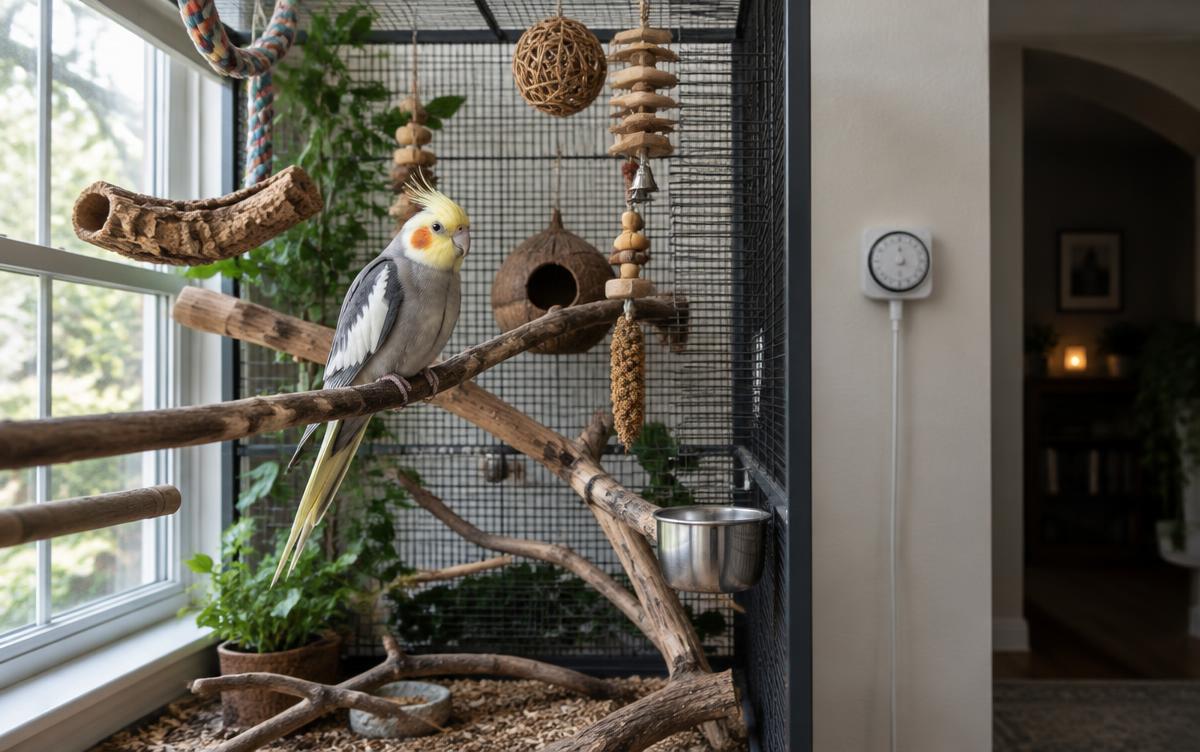
AI-generated editorial image; illustrative, not a clinical demonstration or documentary photograph.
A household schedule is not an animal's natural rhythm
Televisions, ceiling lamps and irregular late nights can extend an animal's apparent day. Some pets are active mainly at dusk or night, while others need daytime light and a quiet overnight rest period. Learn the requirements of the exact species rather than assuming all exotic pets need the same timetable.
A regular light–dark cycle is one part of husbandry. Enclosure size, temperature, nutrition, social contact and opportunities to hide also matter. Sleep changes alone do not diagnose a lighting problem, and persistent changes deserve veterinary assessment.
Distinguish light, ultraviolet radiation and heat
Visible light makes an enclosure bright; UVB and heat have separate roles for species that require them. A bright room does not necessarily provide suitable UVB, and sunlight through ordinary glass is not an adequate substitute for an appropriate reptile lighting setup.
Choose lamps and distances using species-specific advice and the equipment manufacturer's instructions. Mesh, lamp age and positioning affect exposure. Provide shaded areas and a temperature gradient so the animal can make choices; never place an animal where it cannot escape heat or intense light.
Protect a predictable rest period
Use a reliable timer where appropriate and check that it actually switches equipment as intended. Put an enclosure in a room where evening noise and light can be managed. A quiet retreat should not compromise ventilation, safety or access to the correct overnight temperature.
Do not treat every bird species as needing an identical number of dark hours. Seasonal cues and breeding behaviour can be relevant, so discuss persistent reproductive problems with an avian veterinarian. Avoid improvised covers that trap heat or create a hazard.
Nocturnal pets still need choices
A nocturnal animal is not necessarily an animal that benefits from continuous darkness. Natural daytime cues, suitable shelter and an undisturbed active period all have roles. Do not wake a sleeping hamster repeatedly for daytime play or assume a gecko's inactivity means it is boring or unwell.
If overnight warmth is needed, obtain advice on a regulated heat source appropriate to the species rather than leaving a visible lamp on by default. Thermostats, safe guards and monitoring are important; one universal overnight solution is not suitable for every enclosure.
Keep a simple observation log
Record timer settings, temperatures, lamp replacement dates and the animal's usual activity. Check the enclosure after a power cut or clock change. Compare appetite, movement and use of basking or hiding areas over several days rather than relying on one glance.
Seek veterinary advice for persistent lethargy, appetite loss, weakness, breathing changes or abnormal behaviour. Correct husbandry is preventive care, not a reason to delay treatment when an animal is unwell.
Frequently asked questions
- Does every exotic pet need twelve hours of darkness?
- No universal schedule suits every species and life stage. Use species-specific guidance and ask an experienced vet when uncertain.
- Can I use a night light for warmth?
- Visible light and heating are separate decisions. Ask about a safe regulated heat source that meets the species' needs without unnecessarily disrupting darkness.
References
- Exotic pet care and welfare — RSPCA