
Life changes
Moving House with Pets: A Low-Stress Plan
How to keep dogs, cats and small pets safe and settled before, during and after a move.
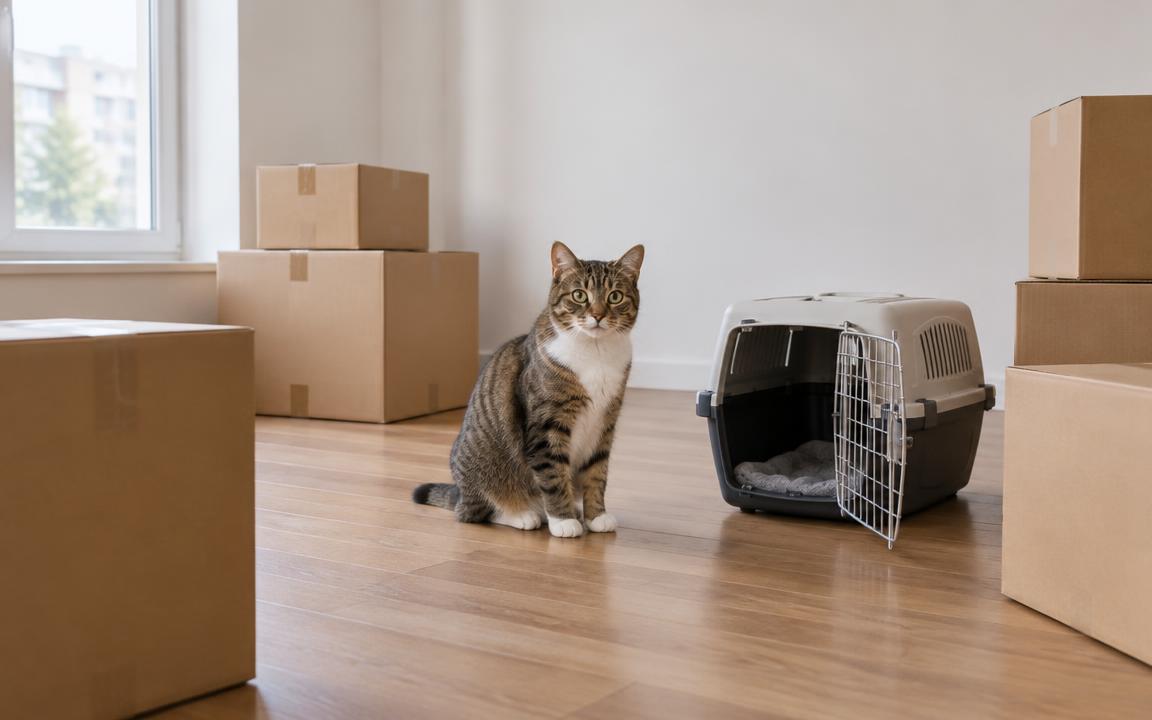
AI-generated editorial image; illustrative, not a clinical demonstration or documentary photograph.
Plan the move as a sequence—not one stressful day
Before moving, identify how the animal will travel, where it will stay during loading and which person is responsible. Update contact details through the relevant identification service and arrange veterinary registration if you are moving away. Check housing permissions and any legal requirements for the species. International moves need additional official advice; ordinary domestic moving guidance is not an import checklist.
Keep routine food, bedding, medicines and care equipment accessible rather than inside unlabelled boxes. Prepare a secure carrier or transport setup in advance. For a fearful animal, practise manageable parts of travel where time allows and discuss severe distress with the vet. Do not give sedatives or change prescribed treatment without advice.
Prevent escape during packing and loading
Open doors, unfamiliar people and noise create escape opportunities. Use a quiet, secure room or an appropriate temporary care arrangement away from the loading route. Put a clear sign on the door and tell everyone not to enter casually. Provide essential resources and regular checks; a closed room does not remove the need for care.
Do not tether an animal near moving vehicles or leave it in an unattended car. Check gates, windows and enclosure catches before each transition. For multiple animals, consider established relationships and possible conflict in confined spaces. A bonded pair may benefit from staying together, but transport arrangements must still meet the species' safety needs.
Travel with the animal—not loose among belongings
Use a secure carrier or suitable restraint following the manufacturer's instructions. Support the carrier and protect it from falling luggage, direct sunlight and blocked ventilation. Keep food, water and any prescribed medicine available for the planned journey. Never open a cat carrier beside a road or assume a frightened animal will return when called.
Small mammals, birds, reptiles and fish require different transport plans. Ask a species-experienced professional about temperature, ventilation, containers and travel duration. Moving an aquarium also involves protecting animals and biological filtration; do not improvise a long journey in an unsuitable bucket. Transport safety takes priority over packing convenience.
Set up a safe starting area in the new home
Inspect the space before release: exposed wiring, cleaning products, open windows, loose screens and gaps behind appliances may be new hazards. Begin with a manageable quiet area containing familiar resources. Let the animal investigate at its own pace rather than introducing every room, visitor and neighbour immediately.
For dogs, check fencing before garden access and supervise while learning the environment. For cats, establish indoor security and seek advice before any return to outdoor access; readiness depends on the cat and circumstances, not a universal number of days. Keep usual routines where practical, and offer hiding or resting choices.
Watch adjustment without missing illness
Some temporary changes in confidence can follow a move, but persistent refusal of food, urinary difficulties, breathing changes or marked lethargy need veterinary advice. Rabbits and guinea pigs with reduced eating or droppings require prompt attention. Do not attribute every symptom to stress simply because the move was recent.
Keep brief notes about eating, toileting, sleep and responses to the new space. Add areas or activities gradually when the animal appears comfortable. New aggression may reflect fear, pain or competition for resources. Avoid punishment and seek qualified help if distress persists or safety becomes difficult.
Finish the practical changes
Check that identification records, clinic details, insurance contacts and emergency numbers are correct. Store transport equipment where it can be reached quickly. Review daily care when commuting or household schedules change. A successful move is not just arrival: it is a secure home, continuity of treatment and a workable routine for the weeks that follow.
Frequently asked questions
- Should I release my cat outdoors as soon as we arrive?
- No. Establish a secure indoor base and seek individual advice before outdoor access; do not rely on one universal settling period.
- Can I leave my pet in the car during unloading?
- Do not leave it unattended. Temperature and escape risks can become dangerous quickly.
- Is appetite loss always moving stress?
- No. Contact a vet for reduced eating or other concerning changes, particularly in rabbits and guinea pigs.
- Do these instructions cover international relocation?
- No. Check destination-specific official rules, transport requirements and veterinary documentation separately.
References
- Moving home with cats — Cats Protection
- Travelling with cats — Cats Protection
- Microchipping of animals FAQ — American Veterinary Medical Association