
Food
Xylitol (birch sugar)
A true emergency. Even a single piece of gum can cause dangerous hypoglycaemia in a small dog.
Life-threateningDogsFerretsRabbits
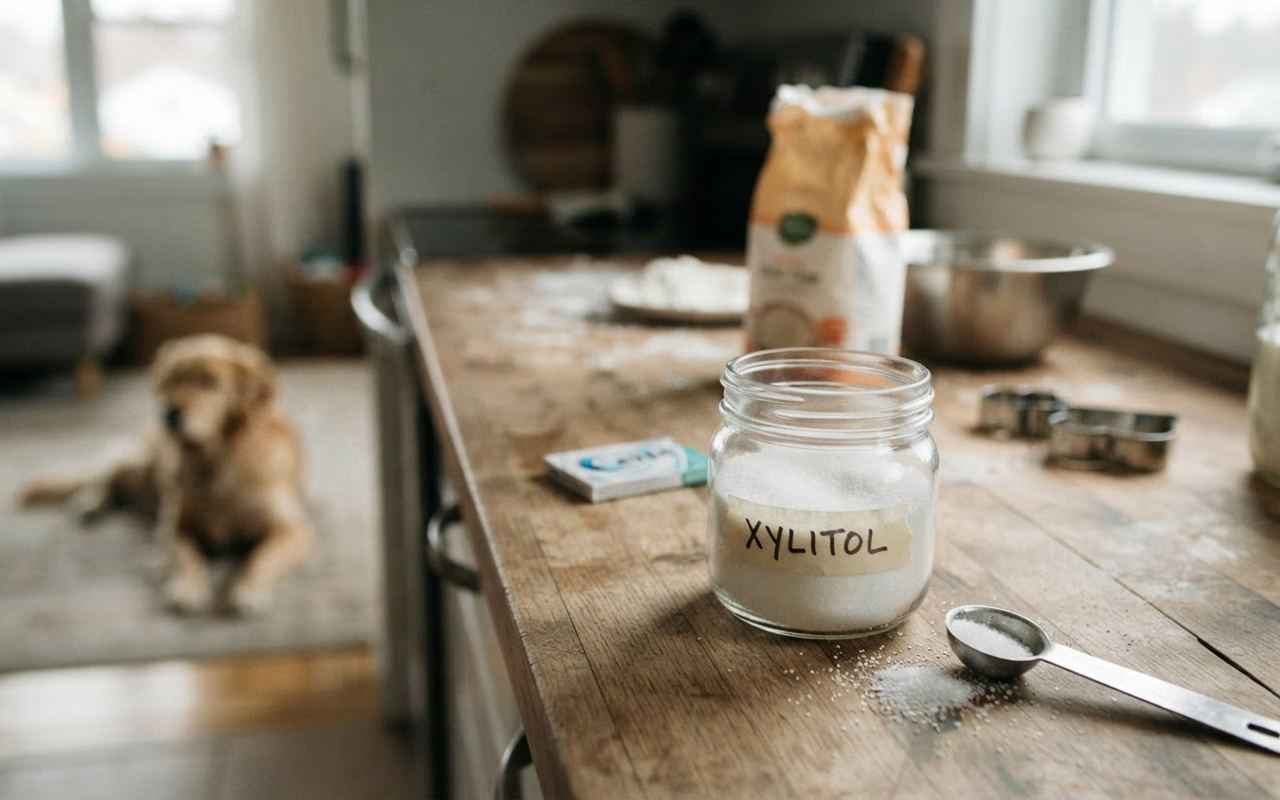
AI-generated editorial illustration of the subject; not a photograph of a specific animal, product or case.
What to do right now
- 1.Phone a vet immediately — this cannot wait for symptoms
- 2.Bring the packaging so the xylitol content can be calculated
- 3.Do not give food or drink unless instructed
Symptoms
- Weakness and collapse
- Vomiting
- Tremors
- Seizures
- Jaundice from liver failure
Details
- Category
- Food
- Toxicity
- Life-threatening
- Species affected
- Dogs, Ferrets, Rabbits
- Routes of exposure
- Eaten in sugar-free gum, sweets, peanut butter, baked goods, some medicines and toothpaste
- Urgency
- A true emergency. Even a single piece of gum can cause dangerous hypoglycaemia in a small dog.
Veterinary notes and prevention
Xylitol triggers a massive insulin release in dogs and can cause acute liver necrosis. Treatment involves blood glucose monitoring, dextrose infusion and liver support.
Prepare the information your vet needs
- For Xylitol (birch sugar), report the exposure route: Eaten in sugar-free gum, sweets, peanut butter, baked goods, some medicines and toothpaste. Tell the clinic the time, possible amount and your pet's species and approximate weight.
- Photograph the packaging, ingredient list or plant if safe. Do not handle contaminated material without protection or delay the call to identify it perfectly.
- Keep other animals away from the source. An animal may appear normal before signs develop; do not wait for symptoms or calculate a home 'safe dose'.
- Follow the clinic's transport instructions. Do not give food, medicines or home remedies unless instructed, and take packaging with you if available.
Educational reference, not an individual diagnosis or a verified professional review. Read our editorial policy.
Guidance libraries and further reading
These organisations publish relevant guidance. Their links are further reading, not evidence that they have reviewed this page.