
Buying guides
Choosing Your First Aquarium Setup
What to buy, what to skip, and why the biggest tank you can fit is usually the easiest to keep.
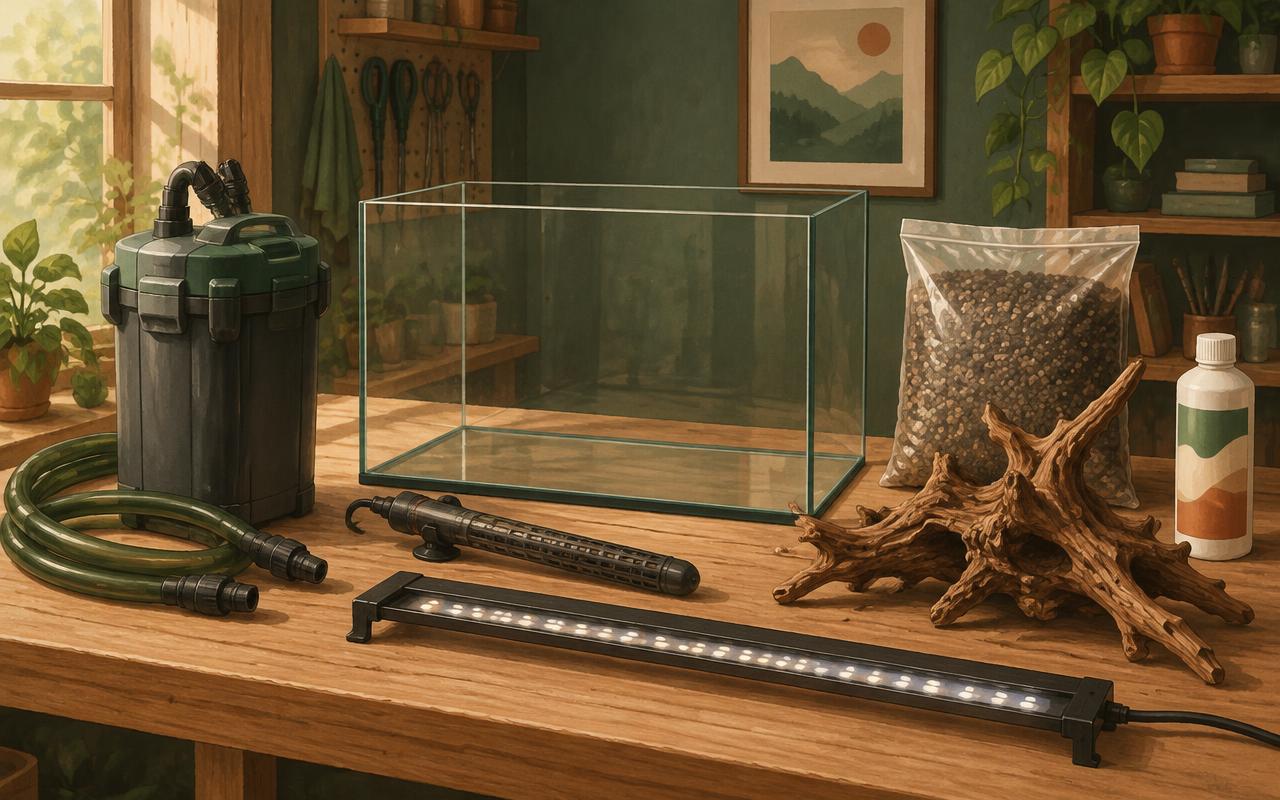
AI-generated editorial illustration of the subject; not a photograph of a specific animal, product or case.
Choose the species before choosing the tank
An aquarium should meet the needs of the animals you plan to keep, including adult size, social group, swimming space and water conditions. A shop display or small juvenile does not establish appropriate long-term housing. Research compatibility, temperature and water chemistry before buying equipment or animals. Avoid mixing species simply because they are sold in the same section.
Tank volume is only one consideration: footprint, surface area, current, hiding places and access to the surface can matter. Larger stable systems are often easier to manage than very small ones, but no volume is universally sufficient for every species. Check the full needs of the proposed group, not a simplistic fish-per-litre rule.
Budget for the complete working system
Allow for filtration, suitable lighting, water testing, water conditioner where needed, temperature control if appropriate, safe decor and maintenance supplies. Include ongoing electricity, replacement parts and veterinary or specialist advice. The cheapest empty tank is not necessarily the cheapest suitable setup.
Check the floor or stand can support the filled system, with a level, stable base and manufacturer-approved support. Keep electrical connections protected from splashes and use appropriate safety arrangements. Do not position the tank in intense direct sunlight, beside unstable furniture or where temperature changes and noise repeatedly disturb the animals.
Establish biological filtration before stocking
Fish release waste, and uneaten food also contributes to water pollution. Beneficial microorganisms in established filtration convert ammonia through nitrite to nitrate. A new tank does not become biologically ready simply because water looks clear or a filter has run for a few hours. Establish and test the system before adding animals using reliable species-appropriate guidance.
Learn to test ammonia, nitrite, nitrate and relevant water chemistry, and keep a written record. A test kit is useful only when used and interpreted correctly. Do not expose animals to harmful waste levels as a shortcut to starting the tank. If you already have animals in an unstable system, seek prompt advice about safe corrective action.
Match temperature, flow and habitat to the animals
Tropical, temperate and cold-water species differ; a heater is not automatically appropriate for every aquarium. Where heating is needed, use suitable equipment and monitor with a reliable thermometer. Plan for safe temperature control during seasonal changes rather than relying on touch to judge water warmth.
Provide safe hides, plants or other habitat features appropriate to the species without blocking movement or trapping animals. Inspect decor for sharp edges, unstable stacks and openings that could trap a growing fish. Water current should suit the inhabitants. Air movement or surface agitation may support gas exchange, but equipment must be matched to the complete setup.
Stock gradually and maintain the system
Once the system is ready, add compatible animals conservatively and continue testing. Follow a safe introduction and disease-prevention plan; animals from a new source may carry infection. Do not crowd the tank to create a busy appearance. Check adult needs and social requirements before every addition.
Use a maintenance schedule based on test results and the aquarium's needs. Avoid replacing all biological media or sterilising the entire filter as routine cleaning, because this can disrupt its function. Follow equipment instructions and use suitable water for media maintenance. Feed appropriate amounts and remove problems promptly rather than masking them with more products.
Know signs that require help
Gasping, loss of balance, sudden deaths, persistent hiding, damaged fins or refusal to eat needs investigation. Check water conditions and equipment promptly, but do not assume every illness is a water problem or add multiple medicines blindly. Seek a veterinarian with aquatic experience where possible. Record test results, species, recent additions and changes to help identify the cause.
Frequently asked questions
- Is clear water proof that a tank is ready?
- No. Establish biological filtration and test water conditions before stocking.
- Can I use a fish-per-litre rule?
- It is not a reliable universal stocking method. Adult size, behaviour, social group and system capacity all matter.
- Should I replace every filter medium during cleaning?
- Not routinely. Protect established biological filtration and follow the equipment's maintenance instructions.
- Does every fish need a heated tank?
- No. Temperature requirements depend on the species, not the fact that it lives in an aquarium.
References
- Aquarium care guidance — Ornamental Aquatic Trade Association