
Independent guide · Updated 2026-10-20
Small-animal enclosures
Living spaces planned around uninterrupted floor area, ventilation, hiding, digging and species-specific social needs.
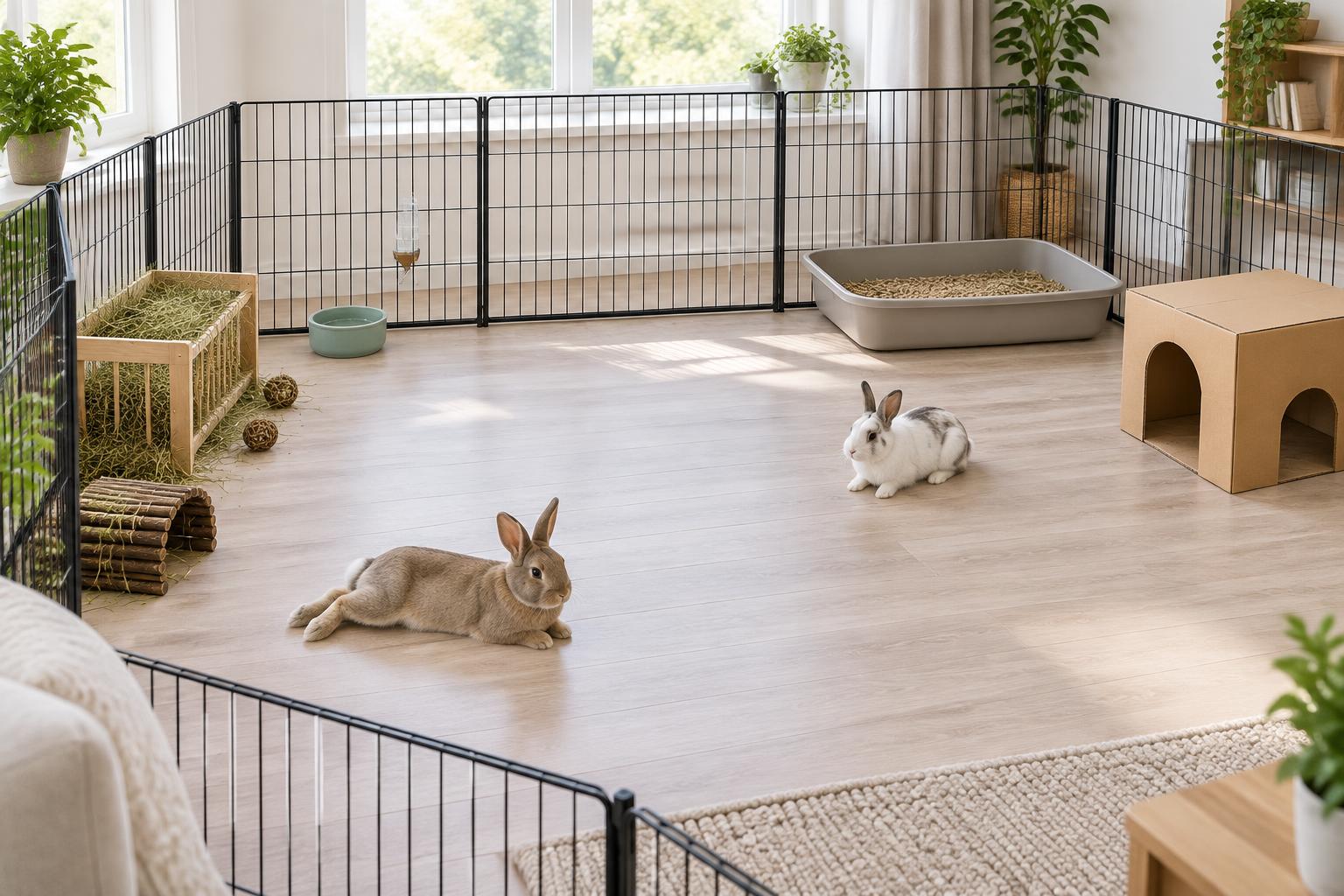
AI-generated editorial illustration; not a clinical demonstration or documentary photograph.
What to look for
- Floor area
- Continuous usable space supports running and normal movement better than stacked small levels.
- Ventilation
- Open, secure designs reduce ammonia and heat accumulation.
- Complexity
- Shelters, forage, substrate and raised viewpoints should not eliminate movement space.
Sizing and fit
Base dimensions on the species, group size and full behavioural repertoire, using welfare-organisation minimums as a floor rather than a target.
Safety checks
- Prevent bar spacing injuries and chewing access to coatings.
- Avoid wire-only flooring.
- Protect from predators, heat and escape routes.
Cleaning and maintenance
Spot-clean toilets daily and deep-clean in sections so some familiar scent remains; replace wet substrate promptly.
Small-mammal housing: avoid one-size-fits-all
| Decision | What to establish |
|---|---|
| Species and group | Use species-specific social and housing advice; not every small mammal should share. |
| Usable space | Normal movement remains possible after furnishings are installed. |
| Floor and substrate | Appropriate solid support and species-specific digging opportunities. |
| Security | Check chewing, digging, gaps and outdoor predator protection. |
| Daily checks | Confirm actual drinking, eating and droppings, not just stocked containers. |
This guide deliberately gives no universal cage dimensions or grouping rule. Consult the appropriate species care guidance.
Choose a species-specific living plan
Small mammals are not interchangeable. Rabbits need extensive movement and appropriate companionship; hamsters need species-appropriate substrate and housing, and some must live alone; guinea pigs have different feeding, social and environmental requirements again. Begin with a reliable species guide and consider the whole daily living area rather than a starter cage. Minimum welfare dimensions are a floor, not a promise that a setup meets every need. Raised shelves do not compensate for inadequate continuous floor space, and an occasional exercise session cannot replace suitable permanent accommodation.
Test the layout after furnishings are added
Place shelters, feeding areas, toilet areas and activity equipment on a plan before buying. Check that normal running, turning and species-appropriate upright posture remain possible. Safe substrate depth for digging and comfortable solid flooring may be essential, depending on the species. Wire-only floors and unsuitable mesh can injure feet. For social animals, distribute resources so one individual cannot guard everything; compatible grouping still needs observation. Shelters with alternative exits can reduce trapping during conflict. A multi-level design is unsuitable when ramps, gaps or heights create falls or block an animal with limited mobility.
- Measure usable internal dimensions.
- Retain clear routes around shelters and food.
- Plan a safe temporary separation area when needed.
Check containment and predator protection
Inspect bar spacing, doors, joins and every reachable edge. Chewing animals can exploit weak mesh, plastic or damaged coatings, so supervise a new setup and inspect repeatedly. Outdoor accommodation needs secure predator protection, escape prevention and suitable sheltered space. A lightweight exercise pen without an appropriate roof or base may not provide the protection its appearance suggests. Ground conditions, digging and local predators change what is required. Do not assume another pet in the household is a safe companion; dogs and cats can frighten or injure small mammals even without obvious aggression.
Plan ventilation and temperature before location
Choose a place where conditions can be monitored and managed throughout the day, not just while someone is home. Sunlight through windows, poorly ventilated boxes and sheltered outdoor corners can overheat. Avoid draughts and damp while maintaining suitable air exchange. Keep housing away from fumes, smoke and chewing access to electrical cables. Assess noise and disturbance as well as temperature. A single thermometer reading cannot establish that every part of the enclosure is suitable; inspect resting and active areas and prepare for seasonal extremes using reliable species-specific advice.
Clean while preserving access and observing change
Remove wet or heavily soiled material promptly and clean feeding and water-contact equipment reliably. Adapt deeper cleaning to the species and substrate rather than stripping all familiar scent on an arbitrary schedule. Check drinking systems directly; a full bottle does not prove the nozzle works or that the animal drinks. Record intake, droppings, movement and resource use while cleaning. Reduced appetite, fewer droppings, weight change or unusual hiding may signal illness. For rabbits, reduced eating or droppings warrants prompt veterinary advice, not merely a new cage or more enrichment.
Common questions
- Can one enclosure design suit rabbits, hamsters and guinea pigs?
- Not automatically. Movement, substrate, social needs, containment and feeding requirements differ by species.
- Do extra levels replace floor area?
- No. Continuous usable movement space remains essential, and unsuitable levels may create falls or access problems.
- Does a full water bottle prove my pet has water?
- No. Check the nozzle works and the animal can and does drink; blocked equipment can look full.
- Should reduced rabbit eating wait until the enclosure is improved?
- No. Reduced eating or droppings needs prompt veterinary advice; housing improvements cannot rule out illness.
Sources for this guide
AI-assisted educational guidance, updated 2026-10-20. Not professionally reviewed; sources do not imply endorsement.
A practical purchase and first-use check
- Match small-animal enclosures to the listed species (Rabbits, Small mammals), the individual animal and the actual task. A product's marketing claim is not proof it meets those needs.
- Before ordering, verify fit: Base dimensions on the species, group size and full behavioural repertoire, using welfare-organisation minimums as a floor rather than a target. Check the return policy if safe fitting cannot be established from measurements.
- Introduce new equipment gradually and watch how your animal behaves around it. Check it cannot trap, burn, injure or be chewed into a hazard, and stop using it if it causes distress.
- Plan the ongoing upkeep: Spot-clean toilets daily and deep-clean in sections so some familiar scent remains; replace wet substrate promptly. Include replacement parts and safe disposal, not only the initial price.
Educational reference, not an individual diagnosis or a verified professional review. Read our editorial policy.
Guidance libraries and further reading
These organisations publish relevant guidance. Their links are further reading, not evidence that they have reviewed this page.