
Independent guide · Updated 2026-10-20
Reptile UVB lighting
UVB equipment selected and positioned to support species-specific vitamin D synthesis and calcium metabolism.
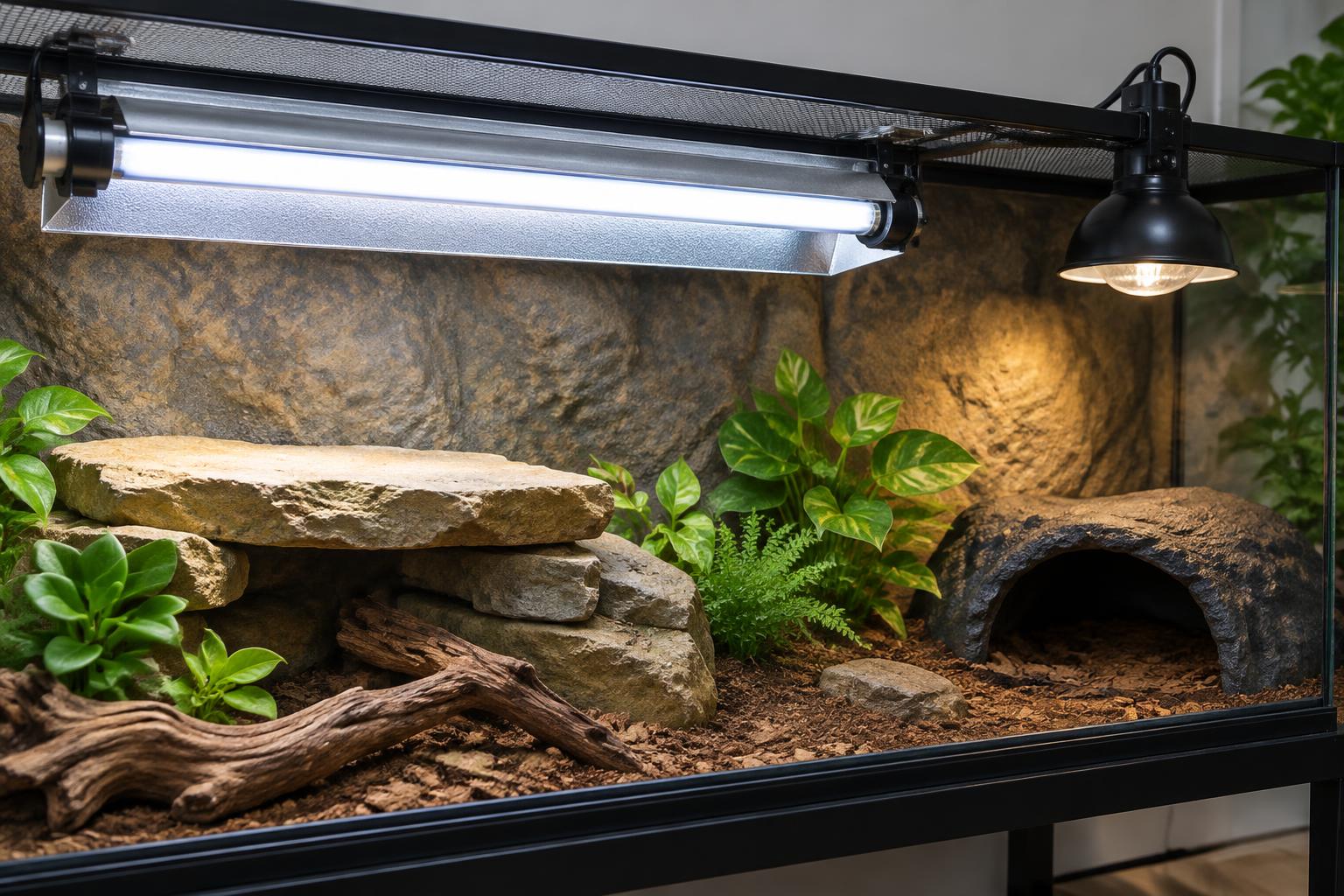
AI-generated editorial illustration; not a clinical demonstration or documentary photograph.
What to look for
- Output
- Lamp strength and target UV index must match the species and basking behaviour.
- Coverage
- A linear lamp creates a useful gradient more reliably than a small spot source.
- Placement
- Distance, mesh and reflectors materially change delivered UVB.
Sizing and fit
Match lamp length to the basking zone and enclosure, then verify the animal can self-select exposure and shade.
Safety checks
- Never place glass or plastic between lamp and animal.
- Prevent direct contact with hot fittings.
- Replace lamps on schedule even when visible light remains.
Cleaning and maintenance
Record installation dates, clean reflectors safely and use a suitable UV meter where practical to verify output.
UVB setup: variables to record
| Variable | Why it matters |
|---|---|
| Species | Exposure targets are not transferable to every reptile. |
| Lamp and reflector | The combination changes delivered output. |
| Distance and reachable height | The animal's position changes actual exposure. |
| Mesh, glass and plastic | Barriers alter or block useful UVB. |
| Shade and maintenance | Provide choice and track output; visible light is not a UVB test. |
No universal lamp percentage, distance or UV index is prescribed here. Use species-specific advice and exact equipment instructions.
Start with species and exposure needs
Reptiles differ in activity pattern, habitat and basking behaviour. Do not choose UVB solely from a label such as desert or tropical, or from the lamp's wattage. Establish a species-appropriate target exposure and layout using reliable husbandry guidance, with an experienced reptile veterinarian when health or suitability is uncertain. UVB provision interacts with suitable temperature, diet and calcium metabolism but cannot correct every nutritional or skeletal problem. Visible brightness is not evidence of adequate UVB. A lamp may continue shining after useful UV output has declined.
Map a gradient with accessible shade
Plan the basking area, retreat and the animal's reachable heights before fitting the lamp. The actual distance from lamp to animal matters, including the position on branches or raised platforms. Provide shade and opportunities to move away rather than flooding every resting place with exposure. Linear equipment can provide broader coverage, but lamp type alone does not establish safety. Reflectors, fittings and enclosure mesh alter delivered UVB. Glass and many plastics block useful UVB; a lamp outside a glass wall does not provide the intended exposure inside.
Follow the exact fitting instructions
Use a compatible fitting and follow the manufacturer's placement, orientation and minimum-distance instructions for the actual lamp and reflector combination. Prevent contact with hot surfaces and protect electrical equipment from water or damage. Do not improvise a closer position to compensate for mesh without reliable output guidance or measurement. New lamp models and changed enclosure materials may alter the exposure. Record the equipment model, distance and fitting date so future adjustments are based on the real setup, not memory. Heating equipment needs its own suitable control and temperature checks.
- Record lamp and reflector model together.
- Measure from the animal's reachable position.
- Reassess after moving a branch, platform or mesh panel.
Measure appropriately and keep records
A suitable UV-index meter, used correctly, can help assess delivered exposure across the animal's usable habitat. A household light meter or thermometer cannot measure UVB. Measurement is most useful when compared with a species-appropriate target and the manufacturer's advice rather than a universal number. Record basking and retreat readings, dates and changes to the setup. If a suitable meter is unavailable, follow trustworthy instructions for that exact equipment and enclosure arrangement and seek advice about uncertain mesh or distance effects. Avoid inventing a target from another species' care sheet.
Maintain equipment without treating illness at home
Clean accessible fittings and reflectors according to instructions with the power off and equipment cool. Replace lamps on the manufacturer's advised schedule, informed by suitable measurements where available, rather than waiting for visible failure. Recheck the habitat after replacement because a new lamp may deliver different exposure from the old one. Weakness, swelling, tremors, poor growth or difficulty moving needs prompt reptile veterinary assessment. Buying a stronger lamp or adding supplements without a plan can delay diagnosis and create new risks. This equipment guide is not a treatment for metabolic bone disease.
Common questions
- Can I judge UVB output by brightness?
- No. Visible light does not establish useful UVB output; use appropriate instructions and suitable measurement where available.
- Does UVB work through glass?
- Glass generally blocks the useful UVB needed for this purpose. Follow an appropriate enclosure and lamp arrangement.
- Should the whole enclosure have the same UV exposure?
- No. Provide a species-appropriate gradient and accessible shade so the animal can move away.
- Will a stronger lamp treat suspected metabolic bone disease?
- No. Suspected disease requires veterinary assessment and an individual plan, not an unmeasured increase in exposure.
Sources for this guide
- RVC: reptile heating and lighting guide (PDF)
- Merck Veterinary Manual: reptile management and husbandry
AI-assisted educational guidance, updated 2026-10-20. Not professionally reviewed; sources do not imply endorsement.
A practical purchase and first-use check
- Match reptile uvb lighting to the listed species (Reptiles), the individual animal and the actual task. A product's marketing claim is not proof it meets those needs.
- Before ordering, verify fit: Match lamp length to the basking zone and enclosure, then verify the animal can self-select exposure and shade. Check the return policy if safe fitting cannot be established from measurements.
- Introduce new equipment gradually and watch how your animal behaves around it. Check it cannot trap, burn, injure or be chewed into a hazard, and stop using it if it causes distress.
- Plan the ongoing upkeep: Record installation dates, clean reflectors safely and use a suitable UV meter where practical to verify output. Include replacement parts and safe disposal, not only the initial price.
Educational reference, not an individual diagnosis or a verified professional review. Read our editorial policy.
Guidance libraries and further reading
These organisations publish relevant guidance. Their links are further reading, not evidence that they have reviewed this page.