
Independent guide · Updated 2026-10-20
Pet ramps and steps
Mobility aids chosen for traction, slope, stability and the individual animal’s gait and confidence.
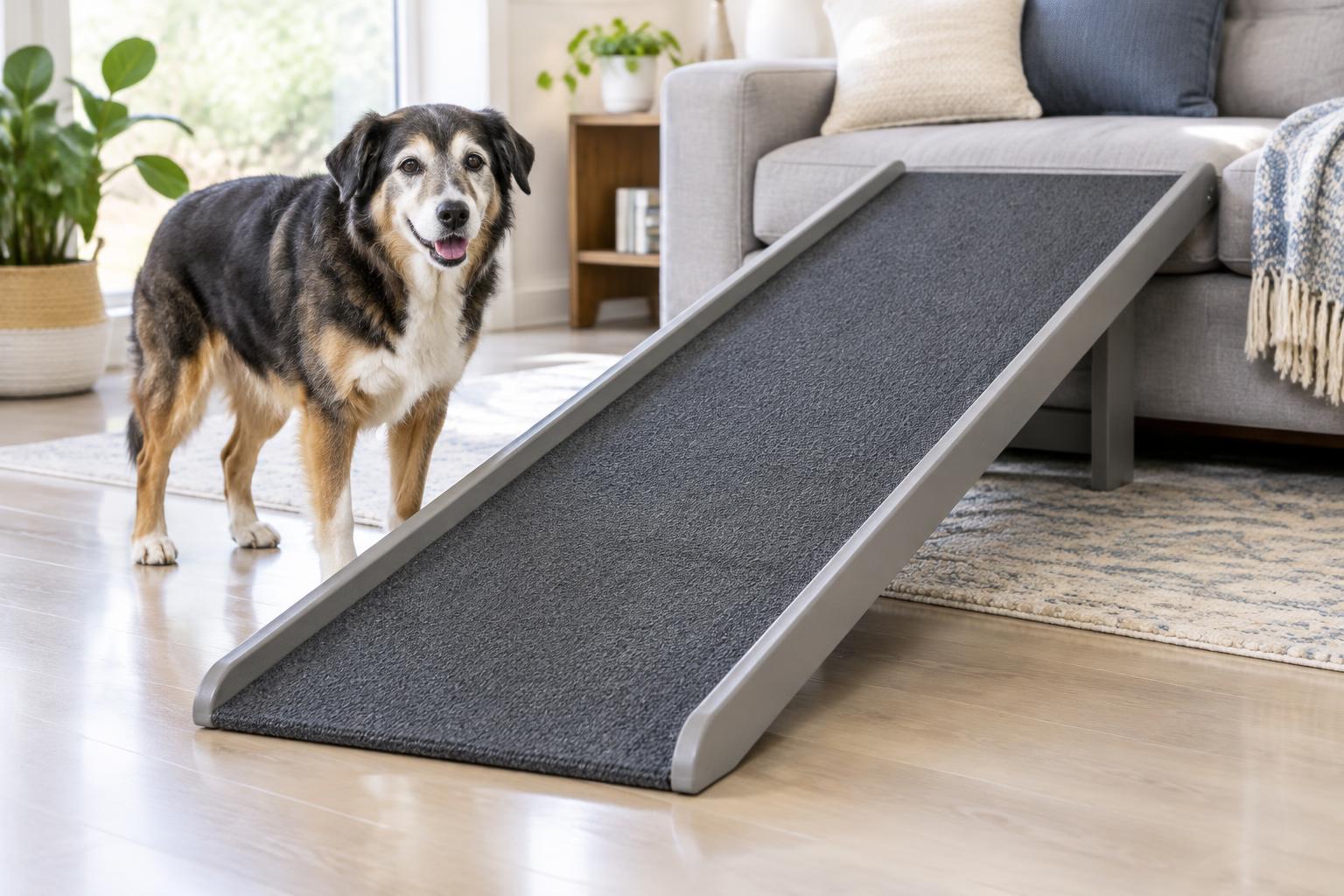
AI-generated editorial illustration; not a clinical demonstration or documentary photograph.
What to look for
- Traction
- The surface must remain grippy with wet paws and during descent.
- Stability
- The aid should not flex, slide or rock under the animal’s full weight.
- Geometry
- A gentler ramp often suits painful joints better than short steep steps.
Sizing and fit
Measure the destination height and available run; longer ramps reduce slope but need safe side protection and landing space.
Safety checks
- Secure both ends before use.
- Introduce at floor level with rewards.
- Supervise until movement is confident and consistent.
Cleaning and maintenance
Clean traction surfaces, tighten fixings and inspect hinges, feet and fabric for wear.
Ramp or steps: a practical route check
| Finding | Response |
|---|---|
| New movement difficulty | Arrange veterinary assessment; equipment is not a diagnosis. |
| Short steep route | Review geometry and floor-level alternatives. |
| Slipping or flexing | Stop use and correct traction or stability. |
| Avoidance during practice | Reduce the challenge and assess comfort; never push or pull. |
| Recovery after surgery | Follow individual activity restrictions before using an aid. |
There is no universally safe slope or step height. Match the aid to the animal, location and veterinary restrictions.
Understand the movement problem first
A ramp may reduce the need to jump, but reluctance to move can reflect pain, weakness, fear or poor footing. New difficulty using furniture or entering a vehicle needs veterinary assessment rather than simply adding steps. Consider which journeys are necessary and whether the destination can be moved to floor level. Protect access to beds, water and toileting as part of the whole environment. A mobility aid cannot diagnose arthritis or replace prescribed treatment. Postoperative patients need their own activity instructions; a ramp does not automatically make a restricted movement safe.
Measure the whole route
Measure destination height, available floor length and space for turning at both ends. A longer ramp can produce a gentler slope, but it needs a secure landing and room for the animal to approach without twisting. Steps require appropriate tread depth, width and rise for the individual; tiny steep steps may remain difficult. Check the stated load capacity, but also observe flexing and stability because a rating alone does not establish comfortable use. Do not place a ramp across a busy household route where people can trip or disturb it.
- Check the approach and landing, not only the incline.
- Keep essential resources accessible without difficult climbing.
- Follow the vet's restrictions during recovery.
Inspect traction and attachment
The surface should provide comfortable grip in both directions and in the conditions it will actually face. Wet paws, loose coverings and worn fabric can turn an apparently suitable aid into a slip hazard. Secure the base and top according to instructions and check that folding joints cannot close during use. Assess side edges and drop-offs, especially for animals with visual impairment or poor coordination. Do not use an unstable aid while hoping confidence will improve. Vehicle attachment must suit that vehicle and cannot depend on a loose lip resting precariously on an edge.
Introduce a stable low version
Begin with safe floor-level familiarisation when the manufacturer's design permits it. Reward voluntary approach and short comfortable movement without luring an animal onto a height it cannot safely manage. Increase the challenge gradually only while footing and confidence remain good. Do not pull the animal up by a collar or push from behind. If it slips, freezes or repeatedly turns away, stop and review the surface, geometry, pain and training plan. Some animals may need a different aid or professionally taught handling rather than more repetition on the same ramp.
Recheck as health and equipment change
Inspect hinges, feet, coverings and fasteners before use and after moving the aid. Clean according to instructions and let traction surfaces dry before relying on them. Age, weight, recovery and disease can change an animal's ability to use equipment that previously worked. Observe descent as well as ascent and remove access if unsupervised use creates a fall risk. Discuss safe assistance with a veterinary rehabilitation professional where needed. Keep a practical alternative for loading or essential access when the ramp cannot be used, rather than forcing a painful or unsafe attempt.
Common questions
- Are ramps always better than steps?
- No. Geometry, traction, space, gait and the animal's condition determine which option is suitable.
- Can I pull my dog up a ramp to teach it?
- Do not force use. Start with a stable easy stage and review pain or unsafe footing if the animal refuses.
- Does a weight rating prove the ramp is safe?
- No. Attachment, flexing, surface grip, approach and landing space also need checking.
- Can a postoperative pet use a ramp immediately?
- Only when it fits the veterinary team's individual recovery instructions. A ramp does not override activity restrictions.
Sources for this guide
AI-assisted educational guidance, updated 2026-10-20. Not professionally reviewed; sources do not imply endorsement.
A practical purchase and first-use check
- Match pet ramps and steps to the listed species (Dogs, Cats), the individual animal and the actual task. A product's marketing claim is not proof it meets those needs.
- Before ordering, verify fit: Measure the destination height and available run; longer ramps reduce slope but need safe side protection and landing space. Check the return policy if safe fitting cannot be established from measurements.
- Introduce new equipment gradually and watch how your animal behaves around it. Check it cannot trap, burn, injure or be chewed into a hazard, and stop using it if it causes distress.
- Plan the ongoing upkeep: Clean traction surfaces, tighten fixings and inspect hinges, feet and fabric for wear. Include replacement parts and safe disposal, not only the initial price.
Educational reference, not an individual diagnosis or a verified professional review. Read our editorial policy.
Guidance libraries and further reading
These organisations publish relevant guidance. Their links are further reading, not evidence that they have reviewed this page.
- PDSA — veterinary charity pet health advice
- RSPCA — animal care and welfare advice across species
- International Cat Care — cat health, behaviour and welfare advice