
Independent guide · Updated 2026-10-20
Identification: microchips, tags and trackers
Identification options compared for reliability, local requirements and practical recovery planning.
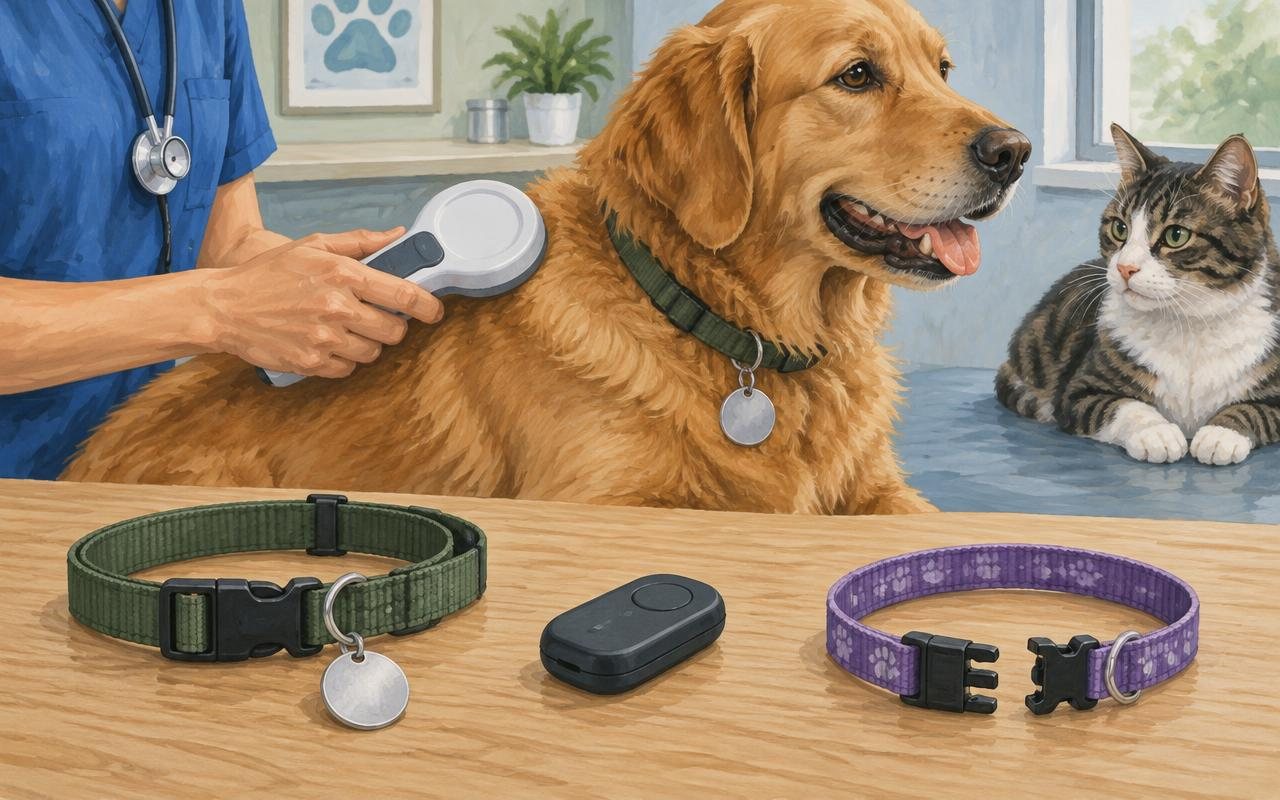
AI-generated editorial illustration; not a clinical demonstration or documentary photograph.
What to look for
- Registered identity
- A microchip provides a persistent identity number, not GPS; confirm scanning and current registry details because chips can be missed or fail.
- Readability
- Use readable current contact information and verify locally required tag details.
- Battery devices
- GPS trackers depend on battery and suitable coverage; they supplement rather than replace registered identification and safe containment.
Sizing and fit
Tags and tracker housings should be light enough not to drag on the collar; cats need an appropriately fitted quick-release safety collar if a collar is used.
Safety checks
- Follow collar fitting instructions and recheck growing animals.
- Use suitable quick-release safety collars for cats and inspect the release mechanism.
- Keep tracker charging cables and chewable batteries inaccessible.
Cleaning and maintenance
Update registered chip details after contact changes, confirm authorised transfers and replace unreadable tags. Verify current local identification laws.
Microchip, tag and tracker: different roles
| Option | Strength and limitation |
|---|---|
| Microchip | Persistent identity number; needs scanning and correct registry details, not GPS. |
| Visible tag | Direct contact information; may detach or become unreadable. |
| GPS tracker | Possible location support; depends on battery and suitable coverage. |
| Local requirements | Verify current rules for the species and location. |
| Recovery plan | Keep photographs, contacts and secure containment alongside identification. |
No device guarantees recovery. Microchips can be missed or fail; confirm scanning and registration rather than promising infallibility.
Distinguish identification from live location
A microchip carries an identification number that a compatible scanner can read; it does not show a moving animal on a map. Its usefulness depends on correct registration and current contact details. A visible tag can let a finder contact a keeper without a scanner but may be lost or become unreadable. A GPS tracker can provide location information under suitable conditions, yet needs power and often network coverage or a subscription. These tools complement rather than replace one another. None guarantees recovery or makes roaming safe. Start with secure containment, appropriate handling and an individual identification plan.
Confirm registration instead of assuming it
Ask the veterinary team or appropriate professional to scan the animal and confirm the recorded number. Establish which legitimate registry holds the record and check its process for updating details. The existence of a chip is not proof that ownership or contact information is correct. After adoption, follow the authorised transfer process and keep confirmation. Update contact information after a move or telephone change and consider an appropriate backup contact where the registry permits it. Periodic scanning during routine care can help check that the chip is found; do not treat a chip as impossible to miss, migrate or fail.
- Keep the chip number and registry confirmation safely.
- Check registration after adoption or transfer.
- Update details promptly when contact information changes.
Check local legal requirements directly
Identification laws differ by country, region, species and sometimes the animal's age or circumstances. Do not assume that a rule for dogs also applies to cats, or that microchipping removes a requirement for collar identification. Consult the relevant local authority for current rules, required tag information and exemptions. International travel may impose additional chip and documentation requirements; use the official destination and transport guidance before making arrangements. Registration, ownership evidence and travel documents are different records. Avoid paying an unfamiliar registry without confirming it is appropriate for your location and chip. This guide is not legal advice or a universal statement of compliance.
Choose wearable equipment for safe fit
A tag or tracker must not make a collar excessively heavy, catch on equipment or interfere with normal movement. Cats need an appropriately fitted quick-release safety collar if a collar is used; inspect the release mechanism and follow its instructions rather than assuming every plastic buckle is a safety release. Growing animals need repeated fit checks. Look for rubbing, loose attachments and worn engraving. Do not add improvised cords or loops to retain a tracker when they create snagging risks. A tracker case and its battery need protection from chewing, and charging cables should remain inaccessible. The device does not substitute for a suitable walking restraint.
Prepare a realistic lost-pet response
Keep clear recent photographs and a concise record of identifying features, chip number and relevant contacts. If an animal is missing, use the registry's reporting process and contact local veterinary practices, shelters and appropriate authorities. Follow a safe search plan rather than relying solely on an app pin that may be delayed or inaccurate. Check tracker battery, service coverage and notifications routinely before they are needed. Protect personal information when sharing public notices and be cautious about requests for payment from unverified finders. When the animal returns, arrange health checks when injury or illness is suspected and review the escape route as well as the identification system.
Common questions
- Can a microchip show where my pet is?
- No. It provides an identification number when scanned, not live GPS location.
- Does having a microchip mean registration is correct?
- No. Confirm the registry record, authorised transfer and current contact details.
- Can a tracker replace a microchip or required tag?
- No. It is supplementary equipment and does not remove applicable identification requirements.
- Are microchipping laws the same everywhere?
- No. Verify current local rules for the animal's species and circumstances, including any tag or travel requirements.
Sources for this guide
AI-assisted educational guidance, updated 2026-10-20. Not professionally reviewed; sources do not imply endorsement.
A practical purchase and first-use check
- Match identification: microchips, tags and trackers to the listed species (Dogs, Cats), the individual animal and the actual task. A product's marketing claim is not proof it meets those needs.
- Before ordering, verify fit: Tags and tracker housings should be light enough not to drag on the collar; cats need an appropriately fitted quick-release safety collar if a collar is used. Check the return policy if safe fitting cannot be established from measurements.
- Introduce new equipment gradually and watch how your animal behaves around it. Check it cannot trap, burn, injure or be chewed into a hazard, and stop using it if it causes distress.
- Plan the ongoing upkeep: Update registered chip details after contact changes, confirm authorised transfers and replace unreadable tags. Verify current local identification laws. Include replacement parts and safe disposal, not only the initial price.
Educational reference, not an individual diagnosis or a verified professional review. Read our editorial policy.
Guidance libraries and further reading
These organisations publish relevant guidance. Their links are further reading, not evidence that they have reviewed this page.
- PDSA — veterinary charity pet health advice
- RSPCA — animal care and welfare advice across species
- International Cat Care — cat health, behaviour and welfare advice