
Independent guide · Updated 2026-10-20
Pet carriers
Secure transport choices for veterinary visits, evacuation and everyday travel.
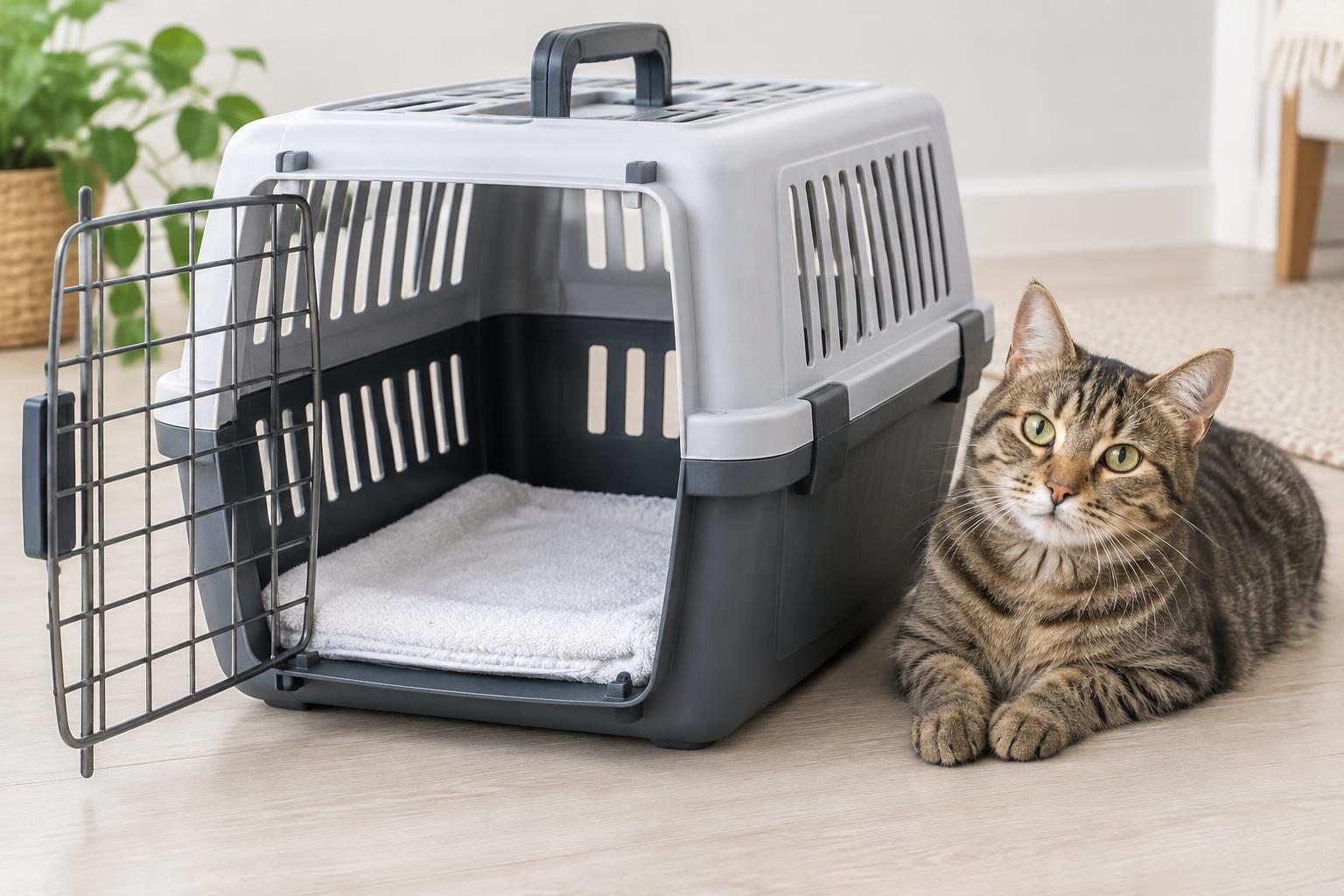
AI-generated editorial illustration; not a clinical demonstration or documentary photograph.
What to look for
- Access
- A removable top and wide front opening reduce forced handling.
- Structure
- Rigid, well-ventilated walls protect the animal and resist collapse.
- Security
- Doors and fasteners must stay closed when lifted or jolted.
Sizing and fit
The animal should stand, turn and lie naturally, while the carrier remains small enough to prevent sliding during travel.
Safety checks
- Secure the carrier in the vehicle.
- Never open it outdoors or in an unsecured waiting area.
- Use absorbent bedding and maintain safe temperature.
Cleaning and maintenance
Remove bedding, wash with a species-safe cleaner and dry fully; inspect hinges, mesh and latches.
Carrier readiness before a journey
| Check | Ready when… |
|---|---|
| Space and base | Natural posture is possible and the base supports the animal. |
| Fasteners | Every door and joining clip closes securely. |
| Familiarity | Practice is calm; urgent veterinary care is never postponed. |
| Vehicle | The carrier is secured according to suitable instructions. |
| Temperature | Ventilation remains open and the animal is never left in a parked car. |
A carrier illustration does not show certification for air travel or vehicle crashes. Verify the actual product and journey requirements.
Match the carrier to the actual journey
A veterinary visit, an evacuation and an airline journey can have different equipment requirements. Start with the species, the animal's size and the conditions you can control. Check that the animal can stand, turn and lie naturally and that the base supports its weight without bending. Suitable ventilation and secure doors matter more than decorative features. A removable top can make examinations less stressful for some cats, but it must remain securely fastened during transport. Check current transport-provider requirements directly before buying for a flight.
Make the carrier part of a familiar environment
Keep it accessible in a quiet home location when possible, with comfortable familiar bedding. Offer rewards nearby and then inside, allowing voluntary entry and exit. Practise door movement, short closure and lifting as separate stages, supporting the base. Progress according to comfort rather than a calendar. Covering part of a carrier may help some animals feel sheltered, but it must not obstruct ventilation or cause overheating. Do not wait until a stressful appointment to discover that the animal fears the carrier, and do not delay urgent care while attempting training.
- Practise while the carrier is stable on the floor.
- Keep early closures brief and calm.
- Support the base during every lift.
Check doors and bedding before departure
Inspect hinges, fasteners, mesh and seams before each trip. Confirm that every clip is engaged and that door mechanisms cannot be pushed open from inside. Choose absorbent bedding that stays reasonably stable and does not create loose loops or swallowable hazards. Rabbits and rodents may chew fabric or mesh, so assess the individual's behaviour rather than relying on a broad small-pet label. Birds need species-appropriate transport arrangements with safe footing. Do not crowd incompatible animals together or assume a shared home means shared travel will be comfortable.
Secure the whole transport system
Follow the carrier and vehicle-restraint instructions; attaching a belt to an unsuitable handle is not a reliable solution. Keep the animal away from unsecured luggage and maintain a safe temperature throughout the journey. Never leave it in a parked vehicle. Plan transfers before opening doors, and keep the carrier closed outdoors and in unsecured waiting rooms. Tell the clinic about travel distress in advance; an individual pre-visit plan may be safer than repeated forced loading. Do not give sedatives, supplements or human medicines without veterinary instructions.
Prepare for cleaning and emergencies
Select a design that lets you reach food residue, urine and bedding-contact surfaces. Follow species-appropriate cleaning advice and the maker's instructions, rinse as directed and dry fully. Store spare bedding and keep the carrier available rather than buried behind furniture. Include current identification, clinic details and any medicine instructions in an evacuation plan. Check that a backup carer can close and lift the carrier safely. Replace damaged latches and structures rather than relying on improvised tape repairs for the next emergency.
Common questions
- Is a soft carrier suitable for every cat or rabbit?
- No. Chewing, escape behaviour, ventilation, base support and transport requirements all affect suitability.
- Should I open the carrier to comfort my pet outdoors?
- No. Keep it closed in unsecured spaces; arrange any necessary access in a safe enclosed area.
- Can I cover the carrier?
- A partial cover may help some animals, but keep ventilation open and monitor temperature and comfort.
- What if an urgent visit happens before carrier training is complete?
- Call the clinic for safe handling advice. Training must not postpone urgent veterinary assessment.
Sources for this guide
AI-assisted educational guidance, updated 2026-10-20. Not professionally reviewed; sources do not imply endorsement.
A practical purchase and first-use check
- Match pet carriers to the listed species (Cats, Dogs, Rabbits, Small mammals, Birds), the individual animal and the actual task. A product's marketing claim is not proof it meets those needs.
- Before ordering, verify fit: The animal should stand, turn and lie naturally, while the carrier remains small enough to prevent sliding during travel. Check the return policy if safe fitting cannot be established from measurements.
- Introduce new equipment gradually and watch how your animal behaves around it. Check it cannot trap, burn, injure or be chewed into a hazard, and stop using it if it causes distress.
- Plan the ongoing upkeep: Remove bedding, wash with a species-safe cleaner and dry fully; inspect hinges, mesh and latches. Include replacement parts and safe disposal, not only the initial price.
Educational reference, not an individual diagnosis or a verified professional review. Read our editorial policy.
Guidance libraries and further reading
These organisations publish relevant guidance. Their links are further reading, not evidence that they have reviewed this page.
- PDSA — veterinary charity pet health advice
- RSPCA — animal care and welfare advice across species
- International Cat Care — cat health, behaviour and welfare advice