
Independent guide · Updated 2026-09-21
Pet beds
Sleeping surfaces chosen for joint support, temperature, washability and the way the animal actually likes to rest.
DogsCats
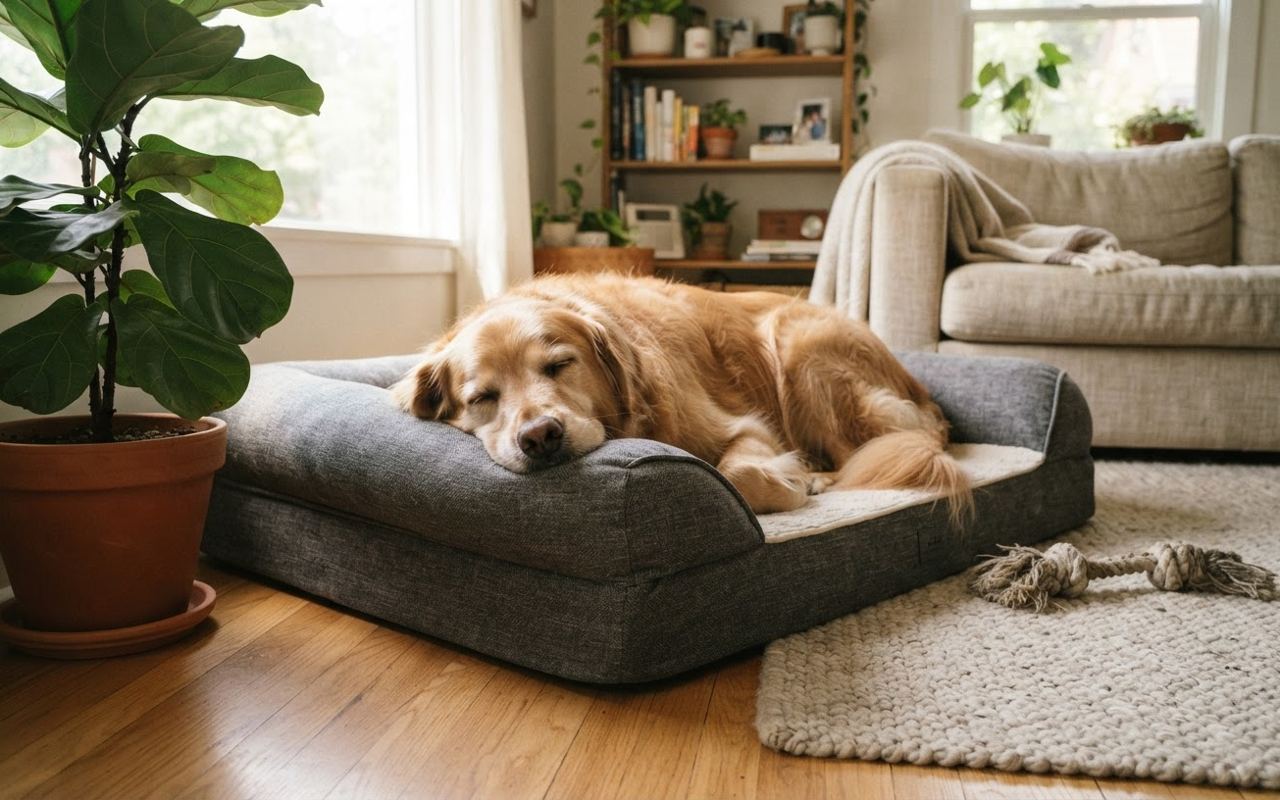
AI-generated editorial illustration of the subject; not a photograph of a specific animal, product or case.
What to look for
- Support
- Foam should not bottom out under the animal's weight; test by pressing to the base.
- Shape
- Curled sleepers prefer bolsters, stretched sleepers need a flat open surface.
- Washability
- Removable covers and a wipeable inner liner matter more than fabric appearance.
Sizing and fit
Measure the animal lying fully extended and add roughly twenty per cent. Older and stiffer animals need a low, easy entry edge.
Safety checks
- Check for loose piping, buttons or stuffing that could be swallowed.
- Keep beds away from heaters and trailing cables.
- Replace foam once it no longer springs back.
Cleaning and maintenance
Wash covers regularly at the temperature advised, dry fully to prevent damp, and vacuum the base to reduce parasite load.
Common questions
- How do I choose pet beds?
- Support: Foam should not bottom out under the animal's weight; test by pressing to the base. Shape: Curled sleepers prefer bolsters, stretched sleepers need a flat open surface. Washability: Removable covers and a wipeable inner liner matter more than fabric appearance.
- What size of pet beds do I need?
- Measure the animal lying fully extended and add roughly twenty per cent. Older and stiffer animals need a low, easy entry edge.
- What are the safety risks with pet beds?
- Check for loose piping, buttons or stuffing that could be swallowed. Keep beds away from heaters and trailing cables. Replace foam once it no longer springs back.
- How should pet beds be cleaned and maintained?
- Wash covers regularly at the temperature advised, dry fully to prevent damp, and vacuum the base to reduce parasite load.
- When are pet beds the wrong choice?
- The animal sinks to the floor through the padding; The cover cannot be removed or washed; Raised edges make it hard for a painful pet to climb in.
A practical purchase and first-use check
- Match pet beds to the listed species (Dogs, Cats), the individual animal and the actual task. A product's marketing claim is not proof it meets those needs.
- Before ordering, verify fit: Measure the animal lying fully extended and add roughly twenty per cent. Older and stiffer animals need a low, easy entry edge. Check the return policy if safe fitting cannot be established from measurements.
- Introduce new equipment gradually and watch how your animal behaves around it. Check it cannot trap, burn, injure or be chewed into a hazard, and stop using it if it causes distress.
- Plan the ongoing upkeep: Wash covers regularly at the temperature advised, dry fully to prevent damp, and vacuum the base to reduce parasite load. Include replacement parts and safe disposal, not only the initial price.
Educational reference, not an individual diagnosis or a verified professional review. Read our editorial policy.
Guidance libraries and further reading
These organisations publish relevant guidance. Their links are further reading, not evidence that they have reviewed this page.
- PDSA — veterinary charity pet health advice
- RSPCA — animal care and welfare advice across species
- International Cat Care — cat health, behaviour and welfare advice