
Independent guide · Updated 2026-10-20
Grooming tools
Brushes, combs and coat-care tools selected for coat type, skin comfort and cooperative handling.
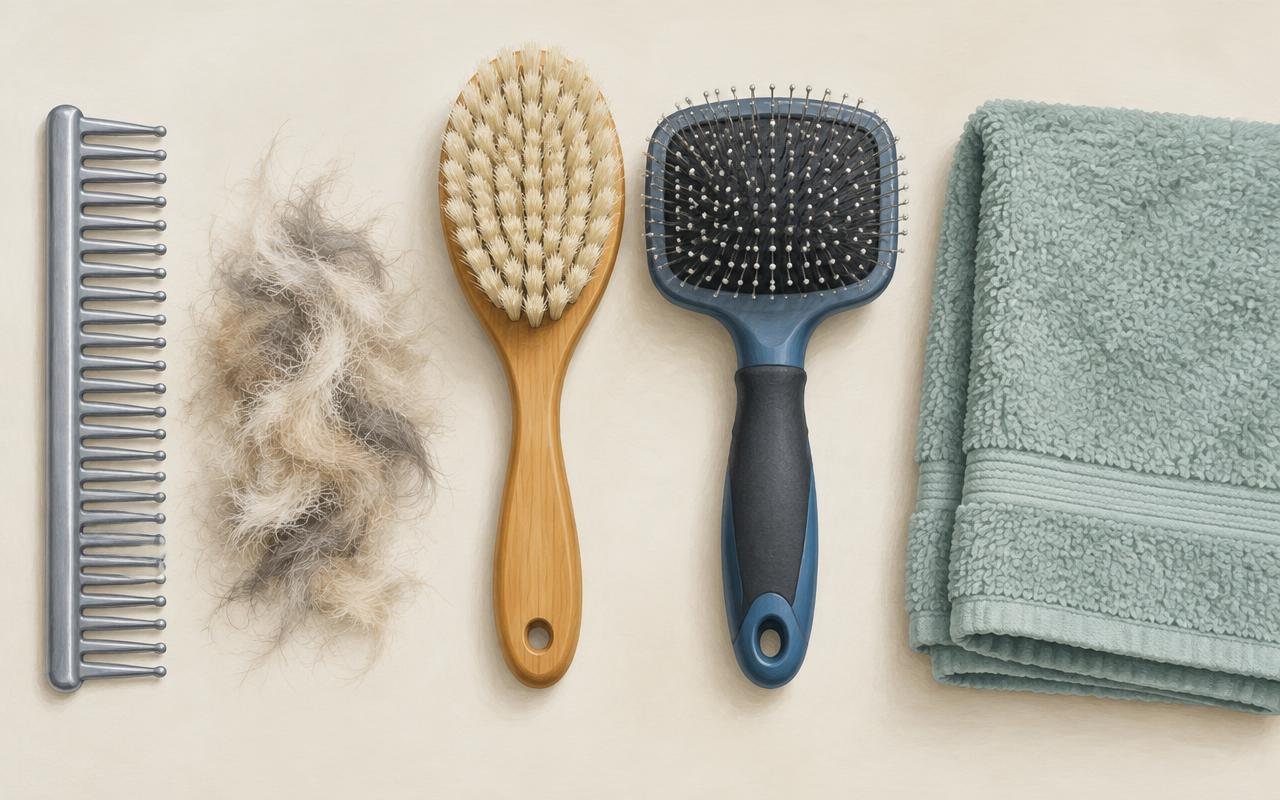
AI-generated editorial illustration; not a clinical demonstration or documentary photograph.
What to look for
- Coat match
- Pin length, spacing and flexibility should reach the coat layer being maintained without scraping skin.
- Comfort
- Rounded teeth, light pressure and short sessions reduce pulling and irritation.
- Purpose
- Detangling, loose-coat removal and finishing often need different tools.
Sizing and fit
Choose a head size that can follow body contours and reach small areas without forcing joints into uncomfortable positions.
Safety checks
- Test pressure on your own skin.
- Never cut close mats with scissors against the body.
- Stop for redness, pain, struggling or sudden sensitivity.
Cleaning and maintenance
Remove hair after each use, wash suitable tools, dry thoroughly and disinfect shared equipment between animals.
Grooming: when to continue and when to stop
| Finding | Safe response |
|---|---|
| Loose coat, comfortable handling | Use a suitable gentle tool in short sessions. |
| Firm mat against skin | Do not cut or pull; arrange competent help. |
| Redness or sudden sensitivity | Stop and seek assessment. |
| Rabbit with soiled hindquarters | Seek prompt advice; review illness and flystrike risk. |
| Bent or sharp tool teeth | Replace before further use. |
Routine coat care is not treatment for skin disease. Tool selection and handling must suit the species and individual.
Match the tool to coat and skin
Identify what needs maintaining: loose undercoat, long hair that tangles, a short smooth coat or an area the animal cannot groom comfortably. Different jobs need different tools. A comb can help check whether a long coat is separated through its depth, while a gentle brush may remove loose surface hair. Long pins and cutting edges can injure skin if used with inappropriate pressure. A product labelled for all pets is not proof of suitability for a rabbit's delicate skin or every dog coat. Ask a qualified groomer or veterinary team when coat type, existing skin disease or tool purpose is uncertain.
Practise cooperation before a full session
Begin in a calm place with secure non-slip footing and allow voluntary participation. Practise seeing the tool, brief comfortable contact and small strokes separately, using suitable rewards and stopping before the animal becomes distressed. Work in short sections rather than insisting on a complete groom at once. Do not restrain harder when an animal freezes, struggles or tries to bite; reassess handling, fear and pain. Rabbits need appropriate support without forcing them onto their backs. Seek experienced help when safe handling is difficult. Never give sedatives or human medicines to make grooming possible without veterinary instructions.
- Check tool teeth and handles before use.
- Start with a comfortable accessible body area.
- Pause for avoidance, soreness or escalating distress.
Do not pull or cut tightly matted hair
Mats can hide skin, wounds and moisture, and pulling at them can cause pain. Avoid cutting close mats with scissors against the body: skin may be drawn into the tangle and be difficult to distinguish from hair. Do not try to brush a firmly attached mat out through repeated force. Contact a competent groomer or veterinarian for a safe plan; extensive matting, skin injury or a distressed animal may require veterinary care. Bathing a matted coat does not reliably solve the problem and may make subsequent care harder. Keep prevention separate from attempting treatment of a painful established tangle.
Inspect the animal as well as the coat
While grooming, note redness, sores, parasites, unusual odour, lumps or new areas of sensitivity without diagnosing from appearance. Cats that suddenly stop grooming may have pain or illness; excessive grooming also needs assessment. A rabbit with soiled hindquarters needs prompt attention because underlying illness and flystrike risk cannot be managed with a brush alone. Keep eyes, ears and sensitive skin safe from tool points. Do not scrape skin to remove flakes or apply human treatments, oils or insecticides without species-appropriate veterinary guidance. A cleaner-looking coat is not proof that a skin problem has resolved.
Maintain tools and a realistic routine
Remove hair after use, clean suitable surfaces according to instructions and dry metal parts thoroughly. Replace bent pins, sharp burrs and cracked handles. Shared equipment needs an appropriate cleaning plan between animals; do not move suspected infectious skin material around the household. Frequency depends on coat, season and individual needs rather than a universal calendar. Check commonly tangled areas gently and seek help early if routine maintenance is becoming painful. Keep a simple record of what the animal tolerates, where tangles recur and any skin changes, so professional advice addresses the actual difficulty rather than adding more tools.
Common questions
- Can I cut a tight mat off with household scissors?
- Do not cut close mats against the body. Skin can be caught in the tangle; arrange professional help.
- Does every coat need a deshedding blade?
- No. Tool choice depends on coat and skin; inappropriate cutting or pressure can damage healthy hair or skin.
- Should I finish grooming if my animal struggles?
- Pause and assess handling, fear and pain. Seek help instead of escalating restraint.
- Can reduced cat grooming be a health sign?
- Yes. New grooming changes or sensitivity need veterinary assessment, not just more brushing.
Sources for this guide
AI-assisted educational guidance, updated 2026-10-20. Not professionally reviewed; sources do not imply endorsement.
A practical purchase and first-use check
- Match grooming tools to the listed species (Dogs, Cats, Rabbits), the individual animal and the actual task. A product's marketing claim is not proof it meets those needs.
- Before ordering, verify fit: Choose a head size that can follow body contours and reach small areas without forcing joints into uncomfortable positions. Check the return policy if safe fitting cannot be established from measurements.
- Introduce new equipment gradually and watch how your animal behaves around it. Check it cannot trap, burn, injure or be chewed into a hazard, and stop using it if it causes distress.
- Plan the ongoing upkeep: Remove hair after each use, wash suitable tools, dry thoroughly and disinfect shared equipment between animals. Include replacement parts and safe disposal, not only the initial price.
Educational reference, not an individual diagnosis or a verified professional review. Read our editorial policy.
Guidance libraries and further reading
These organisations publish relevant guidance. Their links are further reading, not evidence that they have reviewed this page.
- PDSA — veterinary charity pet health advice
- RSPCA — animal care and welfare advice across species
- International Cat Care — cat health, behaviour and welfare advice