
Independent guide · Updated 2026-10-20
Feeding and water equipment
Bowls, feeders and fountains chosen for hygiene, accurate portions and species-appropriate access.
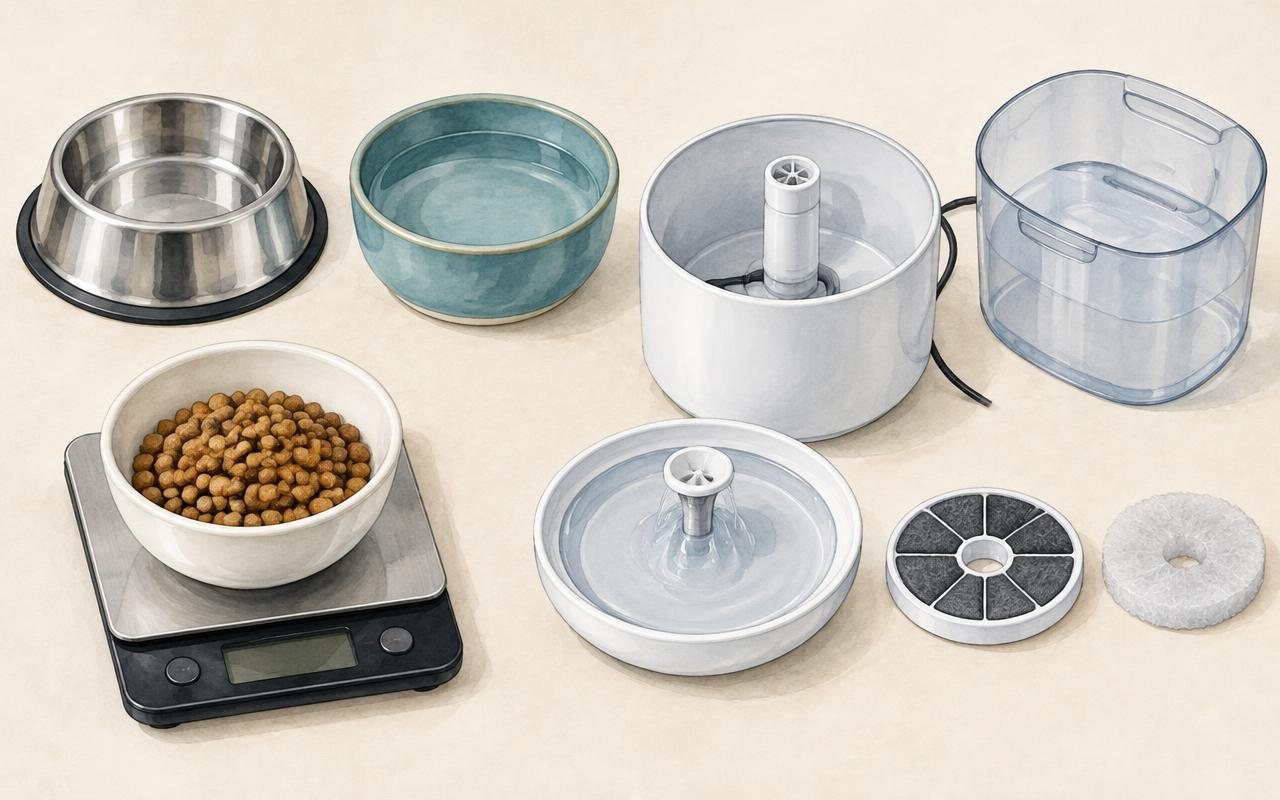
AI-generated editorial illustration; not a clinical demonstration or documentary photograph.
What to look for
- Material
- Stainless steel and sound glazed ceramic are durable and easy to clean.
- Shape
- Width, depth and edge height should match face shape and feeding posture.
- Cleaning
- Every food-contact part must be easy to dismantle and wash.
Sizing and fit
Choose enough capacity for one measured meal or a full safe water interval without encouraging oversized portions.
Safety checks
- Discard cracked plastic or chipped ceramic.
- Keep electrical cables inaccessible.
- Confirm automated feeders dispense correctly before relying on them.
Cleaning and maintenance
Wash food bowls after each meal and water containers daily; descale fountains and replace filters on schedule.
Feeding equipment: a failure-proofing checklist
| Question | Practical check |
|---|---|
| Can every animal reach it? | Observe use and provide separate accessible choices. |
| Is it cleanable? | Reach the reservoir, pump and all food-contact parts. |
| Is the portion accurate? | Weigh real deliveries with the intended food. |
| What if power fails? | Keep a manual backup and direct carer checks. |
| Does eating look uncomfortable? | Seek assessment; bowl height is not a diagnosis. |
Equipment cannot establish hydration, diagnose swallowing problems or guarantee prevention of bloat.
Start with reliable access, not automation
Map where each animal can eat and drink comfortably throughout the day. In a multi-pet home, a single shared station can hide competition: one animal may wait until another leaves, or stop approaching altogether. Offer separate accessible choices appropriate to the species and household. A fountain is optional equipment, not proof that an animal drinks enough. Keep a familiar water source available when introducing it. Rabbits and other small mammals need drinking arrangements they can actually operate; check bottle nozzles as well as bowls, and watch the individual drink rather than assuming a full container means access.
Choose surfaces you can actually clean
Inspect the inside and underside of bowls, lids and reservoirs before purchasing. Smooth intact food-contact surfaces are easier to maintain than cracked coatings, deep scratches or inaccessible seams. Stainless steel and suitable glazed ceramic can be practical, but neither material makes a damaged or neglected bowl hygienic. Ceramic must be sound, stable and appropriate for food contact. Choose a design that can be dismantled without losing small essential parts. For fountains, include the pump chamber, impeller and tubing in the cleaning plan; replacing a filter does not remove deposits elsewhere in the system.
- Wash food bowls after meals and water containers daily.
- Follow cleaning instructions and rinse away residues.
- Replace damaged food-contact parts rather than hiding cracks with repairs.
Measure the food, then check the mechanism
Use the animal's feeding plan to establish an allowance; the capacity of a bowl is not a portion recommendation. When using an automatic feeder, weigh several actual deliveries with the intended food before relying on it. Different kibble shapes, a nearly empty hopper and a jammed mechanism can alter output. Include training rewards and food used in enrichment in the same appropriate allowance. Prescribed diets and medicines mixed into food need an individual plan with the veterinary team, especially when another animal can steal a portion. Do not assume a machine can confirm that the intended animal ate.
Test comfort without promising medical benefits
Watch posture, access, tipping and willingness to use the equipment. A shallow dish may suit some cats or flat-faced animals, but preference varies and whisker contact alone does not establish a medical disorder. Avoid treating a raised bowl as a universal solution for swallowing problems or as proven prevention of gastric dilatation-volvulus. Coughing during meals, regurgitation or difficulty swallowing needs veterinary assessment. Introduce slow-feeding equipment with an easy option and check for frustration, trapped food or facial abrasion. Slower eating is not a guarantee against bloat or another medical condition.
Prepare for absence and equipment failure
Test power-loss behaviour, battery warnings and whether scheduled settings survive a restart. Keep cables inaccessible and follow electrical and water-safety instructions. Arrange a person to check animals and equipment during absences; remote video and an app notification do not replace direct care. Moist food must be handled according to its storage instructions and safe conditions, not simply left in an uncooled dispenser. Keep a backup feeding and water plan that another carer understands. New thirst, reduced intake, vomiting or weight change should prompt veterinary advice rather than another feeder purchase.
Common questions
- Does a fountain replace a water bowl?
- Not automatically. Keep reliable familiar water access while checking that the individual drinks and the equipment works.
- Can I trust the portion number on an automatic feeder?
- Check actual dispensed food by weighing repeated deliveries. Food size and equipment faults can change output.
- Do raised bowls prevent bloat?
- Do not rely on a raised bowl to prevent gastric dilatation-volvulus. Ask the veterinary team about individual feeding needs and risk.
- Can an automatic feeder replace daily care during a trip?
- No. Arrange direct checks of the animals, intake, water and equipment, with a manual backup plan.
Sources for this guide
AI-assisted educational guidance, updated 2026-10-20. Not professionally reviewed; sources do not imply endorsement.
A practical purchase and first-use check
- Match feeding and water equipment to the listed species (Dogs, Cats, Small mammals, Birds, Reptiles), the individual animal and the actual task. A product's marketing claim is not proof it meets those needs.
- Before ordering, verify fit: Choose enough capacity for one measured meal or a full safe water interval without encouraging oversized portions. Check the return policy if safe fitting cannot be established from measurements.
- Introduce new equipment gradually and watch how your animal behaves around it. Check it cannot trap, burn, injure or be chewed into a hazard, and stop using it if it causes distress.
- Plan the ongoing upkeep: Wash food bowls after each meal and water containers daily; descale fountains and replace filters on schedule. Include replacement parts and safe disposal, not only the initial price.
Educational reference, not an individual diagnosis or a verified professional review. Read our editorial policy.
Guidance libraries and further reading
These organisations publish relevant guidance. Their links are further reading, not evidence that they have reviewed this page.
- PDSA — veterinary charity pet health advice
- RSPCA — animal care and welfare advice across species
- International Cat Care — cat health, behaviour and welfare advice