
Independent guide · Updated 2026-09-20
Enrichment toys
Foraging, chewing, chasing and problem-solving equipment matched to natural behaviour and individual safety.
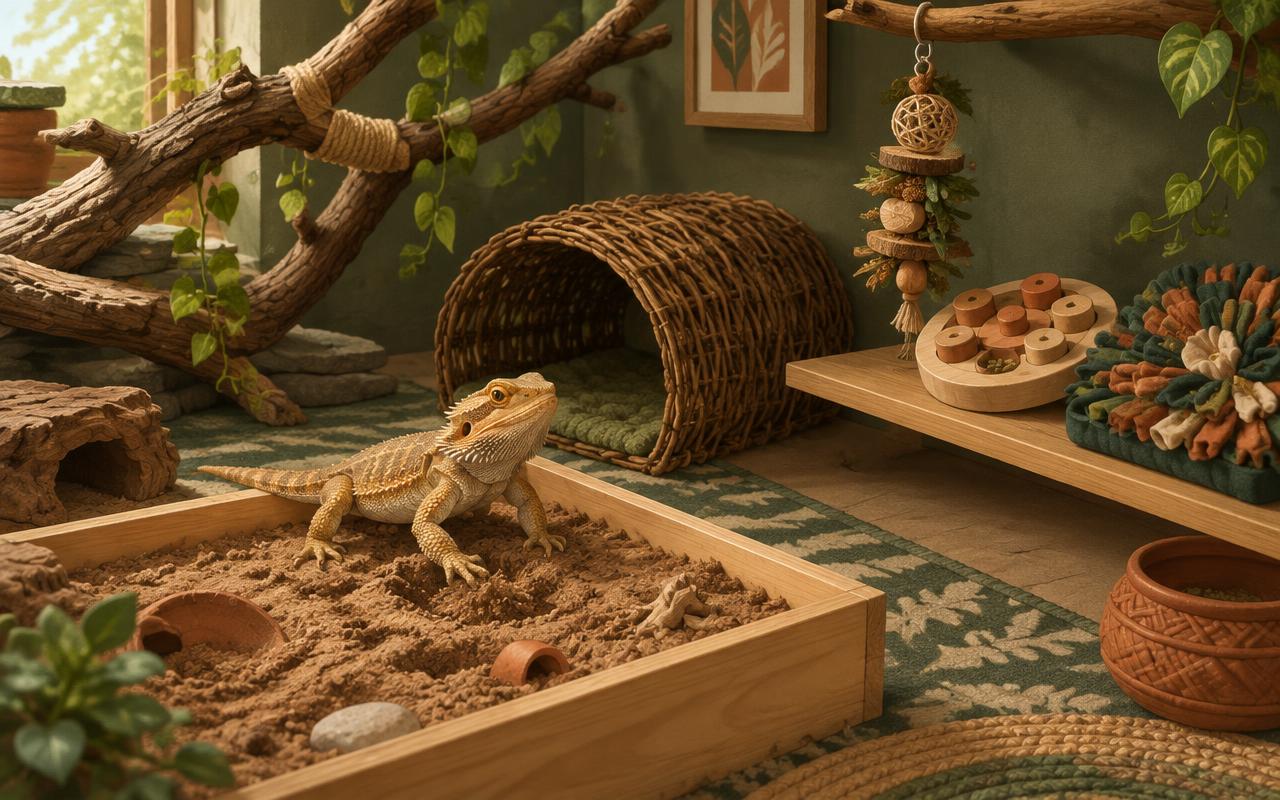
AI-generated editorial illustration of the subject; not a photograph of a specific animal, product or case.
What to look for
- Function
- Choose a toy that supports a specific natural behaviour rather than novelty alone.
- Difficulty
- Begin with a nearly effortless version; increase challenge only while the animal remains engaged.
- Durability
- Match materials, openings and component size to species, chewing strength and manipulation style; no material is universally safe.
Sizing and fit
Size and openings must prevent swallowing or entrapment while allowing comfortable access for the actual species and individual. Toy dimensions alone cannot guarantee safety.
Safety checks
- Supervise initial use and any play involving food, strings or destructible materials.
- Remove detached pieces, sharp edges, exposed filling or frayed strands promptly.
- Separate animals when competition, guarding or unsafe interaction appears.
- Rotate options to maintain choice, while ensuring each item is clean, intact and appropriate.
Cleaning and maintenance
Wash food toys after each use according to the manufacturer’s instructions; dry fully. Inspect ropes, seams, wood, fasteners and plastic before each session, and discard items that cannot be cleaned or are damaged.
Common questions
- How do I choose enrichment toys?
- Function: Choose a toy that supports a specific natural behaviour rather than novelty alone. Difficulty: Begin with a nearly effortless version; increase challenge only while the animal remains engaged. Durability: Match materials, openings and component size to species, chewing strength and manipulation style; no material is universally safe.
- What size of enrichment toys do I need?
- Size and openings must prevent swallowing or entrapment while allowing comfortable access for the actual species and individual. Toy dimensions alone cannot guarantee safety.
- What are the safety risks with enrichment toys?
- Supervise initial use and any play involving food, strings or destructible materials. Remove detached pieces, sharp edges, exposed filling or frayed strands promptly. Separate animals when competition, guarding or unsafe interaction appears. Rotate options to maintain choice, while ensuring each item is clean, intact and appropriate.
- How should enrichment toys be cleaned and maintained?
- Wash food toys after each use according to the manufacturer’s instructions; dry fully. Inspect ropes, seams, wood, fasteners and plastic before each session, and discard items that cannot be cleaned or are damaged.
- When are enrichment toys the wrong choice?
- Parts can be swallowed; The toy causes repeated frustration or guarding; Materials are toxic to the species.
A practical purchase and first-use check
- Match enrichment toys to the listed species (Dogs, Cats, Birds, Rabbits, Small mammals), the individual animal and the actual task. A product's marketing claim is not proof it meets those needs.
- Before ordering, verify fit: Size and openings must prevent swallowing or entrapment while allowing comfortable access for the actual species and individual. Toy dimensions alone cannot guarantee safety. Check the return policy if safe fitting cannot be established from measurements.
- Introduce new equipment gradually and watch how your animal behaves around it. Check it cannot trap, burn, injure or be chewed into a hazard, and stop using it if it causes distress.
- Plan the ongoing upkeep: Wash food toys after each use according to the manufacturer’s instructions; dry fully. Inspect ropes, seams, wood, fasteners and plastic before each session, and discard items that cannot be cleaned or are damaged. Include replacement parts and safe disposal, not only the initial price.
Educational reference, not an individual diagnosis or a verified professional review. Read our editorial policy.
Guidance libraries and further reading
These organisations publish relevant guidance. Their links are further reading, not evidence that they have reviewed this page.
- PDSA — veterinary charity pet health advice
- RSPCA — animal care and welfare advice across species
- International Cat Care — cat health, behaviour and welfare advice