
Independent guide · Updated 2026-10-20
Bird cages and aviaries
Secure housing designed around flight, climbing, species-safe materials, social needs and daily enrichment.
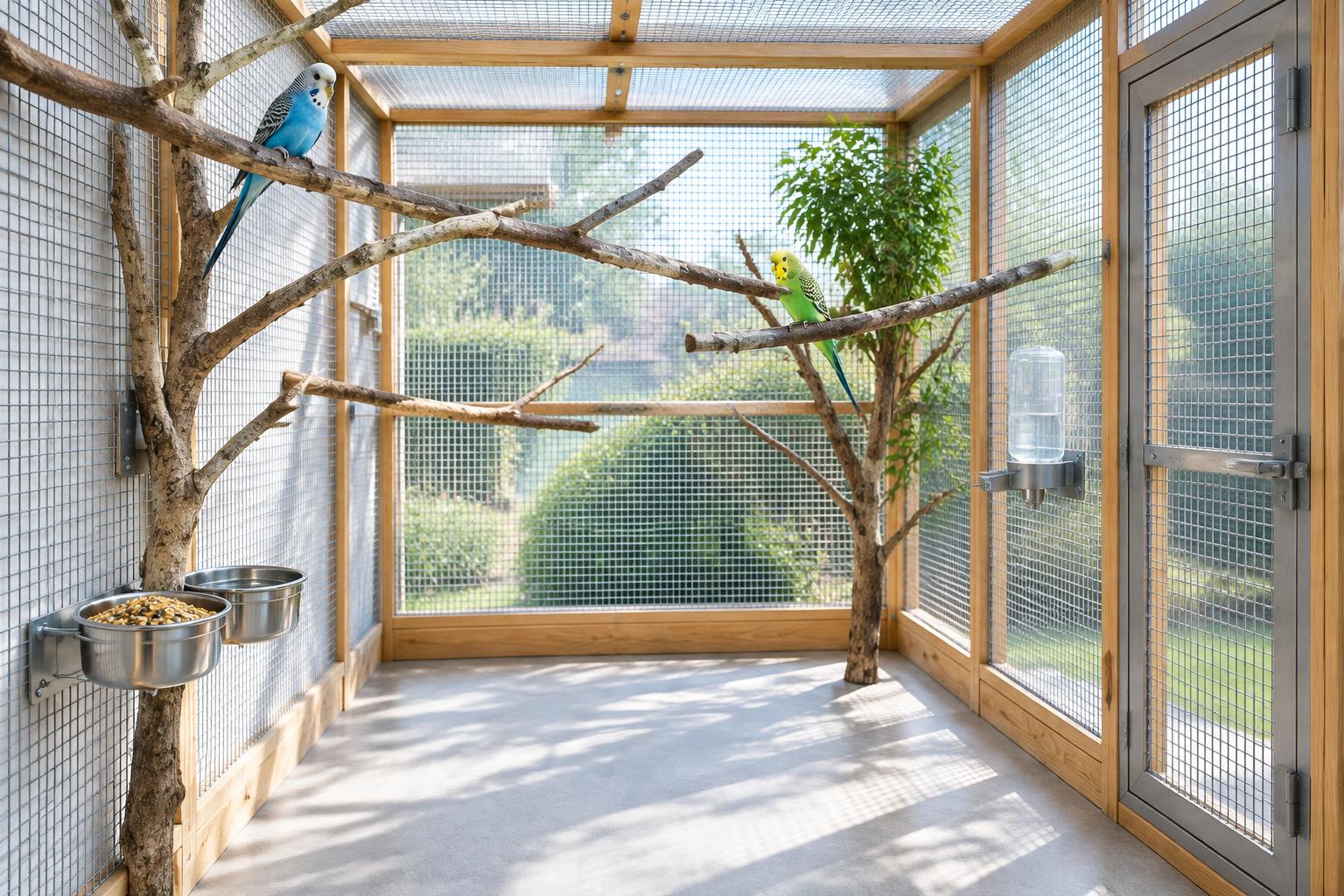
AI-generated editorial illustration; not a clinical demonstration or documentary photograph.
What to look for
- Usable space
- Width and uncluttered flight paths matter more than decorative height.
- Bar spacing
- Spacing must prevent the head becoming trapped while allowing species-appropriate climbing.
- Materials
- Coatings and metals must be durable and non-toxic to birds.
Sizing and fit
Choose the largest practical enclosure that allows full wing extension and meaningful horizontal movement after perches and enrichment are installed.
Safety checks
- Avoid zinc or lead exposure and damaged coatings.
- Check doors and feeder openings for escape routes.
- Keep kitchens, smoke, aerosols and overheating hazards away.
Cleaning and maintenance
Replace paper and wash food-contact areas daily; clean bars, perches and trays on a regular rotation without leaving harmful residues.
Bird housing: inspect the usable habitat
| Area | What to verify |
|---|---|
| Movement | Clear species-appropriate travel and landing space after equipment is fitted. |
| Bars and openings | No head, toe or escape traps; secure feeder doors too. |
| Materials | Known bird-safe materials, with intact coatings and attachments. |
| Resources | Every bird can reach food, water and rest without harassment. |
| Location | No kitchen fumes, smoke, overheating or unprotected predators. |
This table is not a cage-size standard. Species, group compatibility and local climate require specific advice.
Plan the finished space, not an empty cage
Draw the space remaining after perches, food stations and enrichment are installed. Full wing extension is a minimum movement check, not proof that housing offers enough exercise. Horizontal travel, turning and safe landing matter more than impressive decorative height. Different birds have different flight, climbing and social needs; a small finch and a large parrot cannot share a universal housing rule. Use species-specific welfare guidance and aim beyond minimum dimensions. Daily activity outside a cage, when appropriate and safely arranged, does not make severely cramped housing acceptable.
- Leave clear travel paths between useful perches.
- Check access for every bird, not only the most confident one.
- Plan a secure separation option for incompatible individuals.
Evaluate materials, openings and attachments
Confirm materials and coatings are suitable for birds, including the parts they can reach by chewing. Damaged coatings, unknown alloys and exposed lead or zinc can create poisoning risks. Bar spacing must prevent the species from trapping its head or escaping; a seller's generic bird label is insufficient. Check feeder doors, hinges and locks as well as the main entrance. Avoid gaps and attachments that can trap toes, beaks or limbs. Inspect toys and ropes for fraying and entanglement, and remove damaged items promptly rather than assuming natural-looking materials are safe.
Build useful perching and resource choices
Provide appropriately sized species-safe perches that support different comfortable foot positions, without crowding movement. Place food and water so droppings do not fall into them and every bird can use them without harassment. Enrichment should encourage suitable manipulation, foraging or exploration while preserving rest and predictable access to normal food. Observe which areas are actually used. Persistent guarding or avoidance can mean the layout or grouping needs changing. Sandpaper-covered perches are not a substitute for veterinary assessment of foot problems or appropriate nail care.
Assess the room or outdoor location
Keep housing away from cooking fumes, smoke, aerosols and other airborne hazards. Safe temperature, ventilation and lighting need planning for the species; avoid draughts and direct overheating without making the room unventilated. Outdoor aviaries need predator-resistant construction, weather shelter, secure doors and a plan for local climate extremes. Free-flight areas require safe windows, doors, fans, water containers and other household hazards to be addressed. Do not allow routine access to kitchens. A covered cage is not protection from fumes or an unsuitable room environment.
Clean while monitoring welfare
Use a cleaning routine that removes waste and food residue while limiting stress. Fresh cage-floor paper can help reveal changes in droppings, but interpretation belongs with an avian veterinarian when illness is suspected. Clean food and water equipment daily and follow suitable instructions for other surfaces, rinsing and drying as required. Recheck latches, coatings and fixings during cleaning. Changes in appetite, breathing, posture, feet or feathers may have medical causes. Another perch or toy should not delay assessment, and housing advice cannot diagnose feather damage or prescribe treatment.
Common questions
- Is wing extension enough to prove a cage is large enough?
- No. Birds also need meaningful species-appropriate movement, with space remaining after furnishings are installed.
- Can more toys compensate for a small cage?
- No. Toys can obstruct travel and do not replace suitable housing, social care or exercise.
- Are all metal cages safe for birds?
- No. Material, coating condition and chewing access matter; lead and zinc exposure can be dangerous.
- Can I keep a cage in the kitchen if it is covered?
- No. A cover does not protect against hazardous cooking fumes; choose a suitable location away from these exposures.
Sources for this guide
AI-assisted educational guidance, updated 2026-10-20. Not professionally reviewed; sources do not imply endorsement.
A practical purchase and first-use check
- Match bird cages and aviaries to the listed species (Birds), the individual animal and the actual task. A product's marketing claim is not proof it meets those needs.
- Before ordering, verify fit: Choose the largest practical enclosure that allows full wing extension and meaningful horizontal movement after perches and enrichment are installed. Check the return policy if safe fitting cannot be established from measurements.
- Introduce new equipment gradually and watch how your animal behaves around it. Check it cannot trap, burn, injure or be chewed into a hazard, and stop using it if it causes distress.
- Plan the ongoing upkeep: Replace paper and wash food-contact areas daily; clean bars, perches and trays on a regular rotation without leaving harmful residues. Include replacement parts and safe disposal, not only the initial price.
Educational reference, not an individual diagnosis or a verified professional review. Read our editorial policy.
Guidance libraries and further reading
These organisations publish relevant guidance. Their links are further reading, not evidence that they have reviewed this page.