
Independent guide · Updated 2026-10-20
Beds and resting places
Supportive, washable and choice-based resting areas for sleep, recovery and temperature regulation.
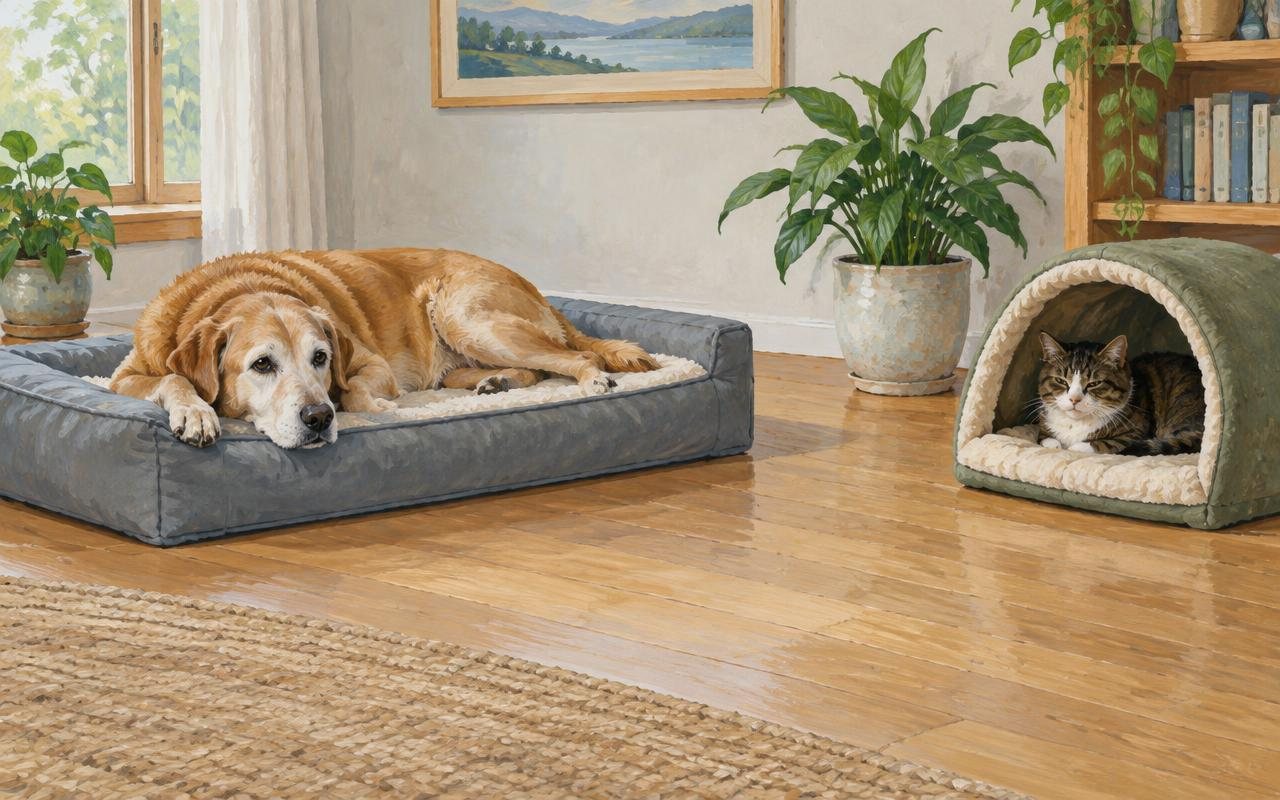
AI-generated editorial illustration; not a clinical demonstration or documentary photograph.
What to look for
- Support
- The surface should support joints without making standing difficult.
- Location
- Offer quiet rest away from draughts, foot traffic and forced interaction.
- Washability
- Removable covers and washable inner layers improve hygiene.
Sizing and fit
Measure the animal fully stretched and allow room to change position; many animals benefit from both enclosed and open options.
Safety checks
- Remove loose filling if chewing begins.
- Avoid heat pads without veterinary direction and temperature safeguards.
- Keep resting areas dry and stable.
Cleaning and maintenance
Vacuum hair frequently, wash covers on a hot-enough label-approved cycle and dry completely.
A resting-place comfort audit
| Observation | Adjustment or next step |
|---|---|
| Difficulty rising | Review entry and support; seek assessment of new mobility changes. |
| Avoiding the bed | Offer another shape or location without forcing use. |
| Wet inner padding | Replace or clean and dry all affected layers. |
| Chewed filling | Remove ingestion hazards and choose a suitable alternative. |
| Resource guarding | Provide separate choices and assess household conflict. |
No bed label proves treatment benefit. Match rest arrangements to the individual and any veterinary recovery instructions.
Observe how the animal chooses to rest
Before replacing a bed, watch several normal rest periods. Does the animal stretch, curl, seek a hide or move between warmer and cooler surfaces? Offer choices rather than forcing every rest into one fashionable design. A cat may need a quiet elevated option as well as an accessible floor-level retreat; an older dog may prefer space to extend its limbs. Rabbits and rodents have species-specific substrate and chewing needs that differ from dog bedding. A soft fabric product is unsuitable when the individual eats it. The purpose is comfortable voluntary rest, not persuading an animal to use a purchase.
Check the approach, entry and exit
Measure the animal resting fully extended, then consider space to turn and rise. Outside dimensions can disguise a small inner sleeping area. High bolsters, deep soft padding or slippery flooring may make entry and standing difficult for an animal with painful joints. A low stable surface and clear approach can be more useful than a thick bed labelled orthopaedic. Check whether another animal, a child or a closing door can block the route. Keep essential water and toileting resources accessible too. Sudden difficulty standing or reluctance to move deserves veterinary assessment rather than only a new sleeping surface.
- Observe rising as well as settling down.
- Keep a clear non-slip approach.
- Provide an alternative while trialling a new bed.
Assess support without accepting cure claims
Look for a surface that supports the individual's weight without collapsing into hard flooring or making movement unstable. A hand-pressure test can reveal obvious collapse but cannot certify comfort or clinical benefit. Terms such as memory foam or orthopaedic describe marketing or construction, not a guarantee that arthritis will improve. Ask the veterinary team about recovery needs if the animal has surgery, wounds, incontinence or impaired movement. Bedding changes support an appropriate care plan; they do not replace pain relief or treatment. Check pressure areas and moisture as advised for an animal that cannot reposition normally.
Make cleaning and temperature manageable
Choose washable covers and accessible inner layers, following the label's cleaning and drying instructions. A clean outer cover cannot compensate for a soaked inner cushion. Keep spare bedding so washing does not remove the only comfortable rest option. Remove loose buttons, exposed filling, dangling ties and damaged zips when they create chewing or entanglement risks. Place beds away from unsafe heaters, cables and direct overheating. Heated bedding needs suitable supervision and safeguards, especially for animals unable to move away. Do not use a household heat pad or hot-water bottle as an improvised treatment for illness.
Protect rest as a household resource
Put quiet choices away from busy doorways and repeated disturbance. Teach household members to leave a resting animal alone and allow it to choose another space. Separate resources can reduce competition, but watch whether each animal actually uses them comfortably. Do not drag an animal from a hide or punish it for seeking distance. Review the arrangement as health, season or household membership changes. Persistent restlessness, unusual hiding, disrupted sleep or new sensitivity may reflect pain, stress or illness. Discuss these changes with a veterinarian rather than assuming the bed's colour, scent or softness is the only explanation.
Common questions
- Does an orthopaedic label mean a bed treats arthritis?
- No. Appropriate support may help comfort, but a label does not establish clinical benefit or replace a veterinary pain plan.
- Should I force my pet to use its new bed?
- No. Offer choices and review location, support, temperature and access when the animal avoids it.
- Is washable fabric suitable for every rabbit or rodent?
- No. Species needs and individual chewing or ingestion behaviour determine suitability.
- Can a heated bed help an animal that cannot move away?
- That animal is at particular risk. Seek individual veterinary advice and do not improvise heating without safeguards.
Sources for this guide
AI-assisted educational guidance, updated 2026-10-20. Not professionally reviewed; sources do not imply endorsement.
A practical purchase and first-use check
- Match beds and resting places to the listed species (Dogs, Cats, Rabbits, Small mammals), the individual animal and the actual task. A product's marketing claim is not proof it meets those needs.
- Before ordering, verify fit: Measure the animal fully stretched and allow room to change position; many animals benefit from both enclosed and open options. Check the return policy if safe fitting cannot be established from measurements.
- Introduce new equipment gradually and watch how your animal behaves around it. Check it cannot trap, burn, injure or be chewed into a hazard, and stop using it if it causes distress.
- Plan the ongoing upkeep: Vacuum hair frequently, wash covers on a hot-enough label-approved cycle and dry completely. Include replacement parts and safe disposal, not only the initial price.
Educational reference, not an individual diagnosis or a verified professional review. Read our editorial policy.
Guidance libraries and further reading
These organisations publish relevant guidance. Their links are further reading, not evidence that they have reviewed this page.
- PDSA — veterinary charity pet health advice
- RSPCA — animal care and welfare advice across species
- International Cat Care — cat health, behaviour and welfare advice