
Independent guide · Updated 2026-10-20
Aquarium filtration
Biological, mechanical and chemical filtration selected around livestock, tank volume and maintenance capacity.
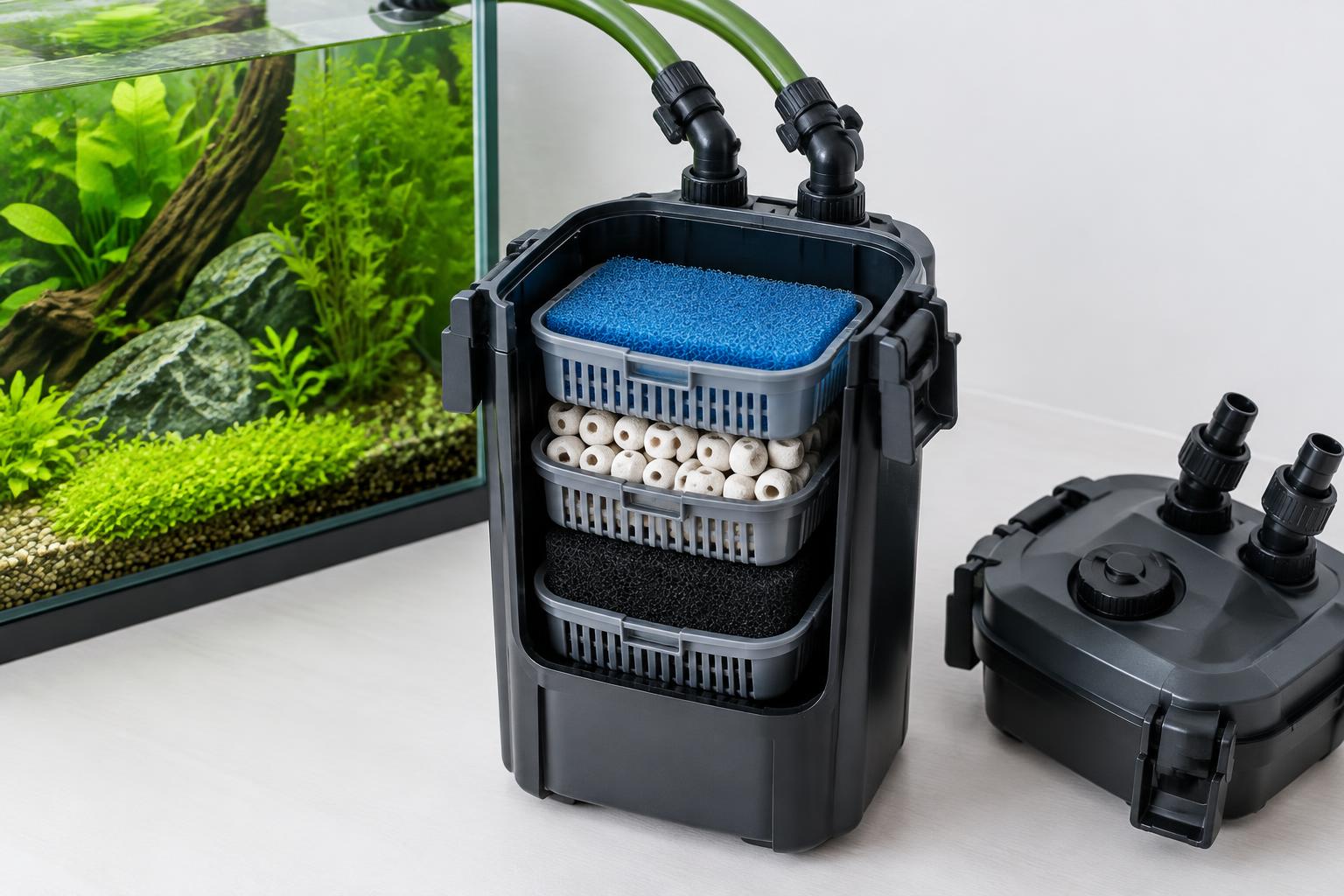
AI-generated editorial illustration; not a clinical demonstration or documentary photograph.
What to look for
- Biological capacity
- Media must support enough beneficial bacteria for the aquarium’s actual bioload.
- Flow
- Turnover and current should suit the species rather than chasing a single litres-per-hour target.
- Service access
- A filter that is easy to maintain is more likely to be maintained safely.
Sizing and fit
Use manufacturer flow as a starting point, then account for media, head height, stocking and species that need gentle flow.
Safety checks
- Protect intakes for fry, shrimp and axolotls.
- Keep filter media wet during short maintenance.
- Never replace all mature biological media at once.
Cleaning and maintenance
Rinse mechanical media in removed aquarium water and service components on a staggered schedule without sterilising the biofilter.
Filter problems: check the system
| Finding | What to check |
|---|---|
| Clear water | Still test ammonia and nitrite; appearance is not evidence of safety. |
| Weak flow | Check intake, media and impeller following electrical-safety instructions. |
| Animals pushed by current | Provide species-appropriate flow and safe resting areas. |
| Major media change | Protect mature biological filtration and monitor chemistry. |
| Power outage | Follow a backup plan and check oxygenation and water quality. |
This is equipment guidance, not a treatment protocol. Species, freshwater/marine systems and source water require individual planning.
Separate the jobs a filter performs
Mechanical media catch suspended debris; biological media provide surfaces for microorganisms that process nitrogenous waste; chemical media have specific adsorption or other functions. These jobs are related but not interchangeable. Clear water can still contain harmful ammonia or nitrite, and a filter with a large advertised flow rate is not proof that an aquarium is ready for animals. Assess the livestock, feeding, tank volume and water chemistry together. A filter cannot make unsuitable stocking or a neglected water-change routine safe.
- Test water rather than judging clarity alone.
- Keep biological media and mechanical cleaning roles distinct.
- Choose equipment you can service without dismantling the whole habitat.
Establish biological filtration before stocking
Plan a suitable fishless cycling method and verify progress with appropriate ammonia and nitrite tests before adding animals. A calendar or bottled additive is not enough to establish readiness. Add livestock cautiously and keep testing because the waste load can change faster than the biofilter adapts. Use suitable water conditioning for the source water. If animals are already in an uncycled aquarium, seek species-specific advice promptly and manage exposure using water tests and appropriate partial water changes; do not simply wait for the filter to mature while animals become ill.
Match current and intakes to the inhabitants
Manufacturer flow ratings are measured under particular conditions; media, height differences and blocked fittings reduce delivered flow. Observe whether fish or aquatic amphibians can rest and feed comfortably. Axolotls and some other animals need gentler current than a high-flow setup provides. Guard intakes against trapping small animals, while checking that a protective sponge has not clogged. Position outlets to maintain appropriate circulation without eliminating quiet areas. There is no single turnover number that makes every aquarium suitable, and marine systems have additional requirements beyond this general introduction.
Service without stripping the biofilter
Prepare supplies before switching equipment off. Remove accumulated debris from accessible mechanical parts and rinse biological media gently in removed aquarium water or appropriately conditioned water when needed. Avoid sterilising mature biological media or replacing all of it at once. Keep it wet during short service periods, and restart promptly according to the equipment instructions. Different media have different replacement needs; a manufacturer's cartridge schedule should not be confused with a requirement to discard the entire biological filter. Monitor water chemistry after major maintenance or equipment changes.
Have a plan for failure
Check normal flow, leaks and unusual noise routinely so a blocked intake or stalled impeller is noticed early. Use appropriate electrical protection and safe cable arrangements; unplug equipment before handling water-contact parts as directed. Power failures can interrupt oxygen supply and filtration, so prepare an aquarium-specific backup plan rather than assuming wet media are safe indefinitely. After a prolonged outage, inspect the system and test water before treating it as normal. Gasping, abnormal movement or sudden deaths need immediate environmental checks and advice from an aquatic veterinarian or suitably experienced professional.
Common questions
- Does clear water mean the filter is working safely?
- No. Harmful ammonia and nitrite may be present in clear water; suitable water tests are necessary.
- Can I replace all filter media together?
- Avoid removing all mature biological media at once. Distinguish biological media from components that require replacement.
- Is the biggest flow rating always best?
- No. Actual flow and current must suit the animals; excessive current can prevent comfortable rest and feeding.
- Can a filter replace water changes?
- No. Filtration is part of a system that also needs appropriate stocking, testing and water maintenance.
Sources for this guide
AI-assisted educational guidance, updated 2026-10-20. Not professionally reviewed; sources do not imply endorsement.
A practical purchase and first-use check
- Match aquarium filtration to the listed species (Freshwater fish, Marine fish, Aquatic amphibians), the individual animal and the actual task. A product's marketing claim is not proof it meets those needs.
- Before ordering, verify fit: Use manufacturer flow as a starting point, then account for media, head height, stocking and species that need gentle flow. Check the return policy if safe fitting cannot be established from measurements.
- Introduce new equipment gradually and watch how your animal behaves around it. Check it cannot trap, burn, injure or be chewed into a hazard, and stop using it if it causes distress.
- Plan the ongoing upkeep: Rinse mechanical media in removed aquarium water and service components on a staggered schedule without sterilising the biofilter. Include replacement parts and safe disposal, not only the initial price.
Educational reference, not an individual diagnosis or a verified professional review. Read our editorial policy.
Guidance libraries and further reading
These organisations publish relevant guidance. Their links are further reading, not evidence that they have reviewed this page.