Food safety
Pet Food Storage: Freshness, Hygiene and Recall Safety
Keep dry and wet pet food safer with original packaging, clean containers, sensible portions and a reliable recall record.
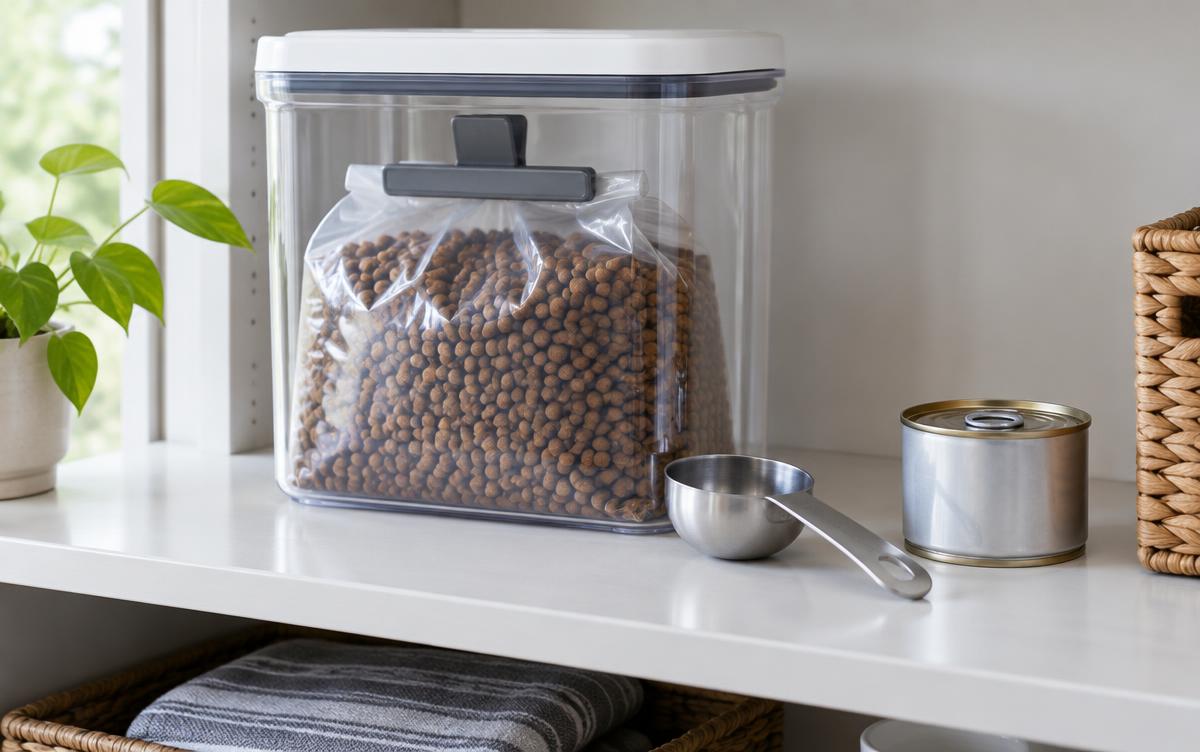
AI-generated editorial image; illustrative, not a clinical demonstration or documentary photograph.
Keep the original packaging
The original bag is more than advertising: it carries the product name, batch or lot number, best-before date and manufacturer's contact information. These details let you identify a recall and help a veterinary team investigate a suspected food problem. Keep them until all the food has been used.
If you use a storage bin, place the closed original bag inside it rather than pouring kibble straight into the container. A liner also limits contact between food and residues left in the bin. Clip the bag closed and follow the manufacturer's storage instructions.
Choose a cool, dry storage location
Heat, humidity and direct sunlight make a poor storage environment. A garage, shed or hot car may be convenient but can expose food to temperature swings and pests. Use an indoor cupboard that children and animals cannot open, away from cleaning chemicals.
Buy a pack size you can use within the maker's recommended period after opening. A printed best-before date is not permission to ignore opening instructions. There is no single safe opened-bag lifetime for every recipe, package and household.
- Mark the opening date on the bag
- Keep food off damp floors
- Use a clean, dry scoop
- Do not mix a new batch into old leftovers
Refrigerate opened wet food promptly
Cover and refrigerate unused wet food promptly, following its label for temperature and use-by advice. Use a clean utensil to serve it. Food that has been sitting in a bowl is not the same as an untouched portion stored in the refrigerator.
Wash food bowls after use and dry them thoroughly. Warm conditions shorten the time food can reasonably remain out. Ask the manufacturer about the specific product rather than applying one universal rule to tins, pouches, fresh diets and raw foods.
Clean the container between bags
When a bag is finished, wash the secondary container and scoop, rinse them well and allow them to dry completely before adding the next bag. Old crumbs and fat residues are a reason to clean, not to simply top up.
Discard food with mould, an unusual smell, damaged packaging or evidence of pests. An apparently normal smell cannot guarantee safety. If several pets become unwell after eating the same food, contact a veterinarian and retain the packaging and a sample if the veterinary team asks for one.
Plan for a recall without wasting food
Keep a photograph of the lot number with your shopping record. If a recall is announced, match the exact product and batch rather than discarding every food from that manufacturer. Follow the recall instructions and prevent access to the affected food.
Reducing waste should never override nutritional adequacy or food safety. Do not feed expired or contaminated food to wildlife, shelter animals or another household. Ask your vet how to transition a pet with a medical diet when a replacement is needed.
Frequently asked questions
- Can I pour kibble into an airtight bin?
- FDA guidance recommends keeping the original bag, ideally placing the whole bag inside the container. Retain the batch details and clean the bin between bags.
- How long does opened wet food last?
- Follow the specific label or manufacturer's advice, cover it and refrigerate promptly. There is no single storage period that fits every product.
References
- Proper storage of pet food and treats — US Food and Drug Administration