
Interviews
Inside Shelter Veterinary Care: An Editorial Overview
How shelter veterinary teams approach intake, daily care, behaviour, infection control and adoption support—an editorial overview, not an interview.
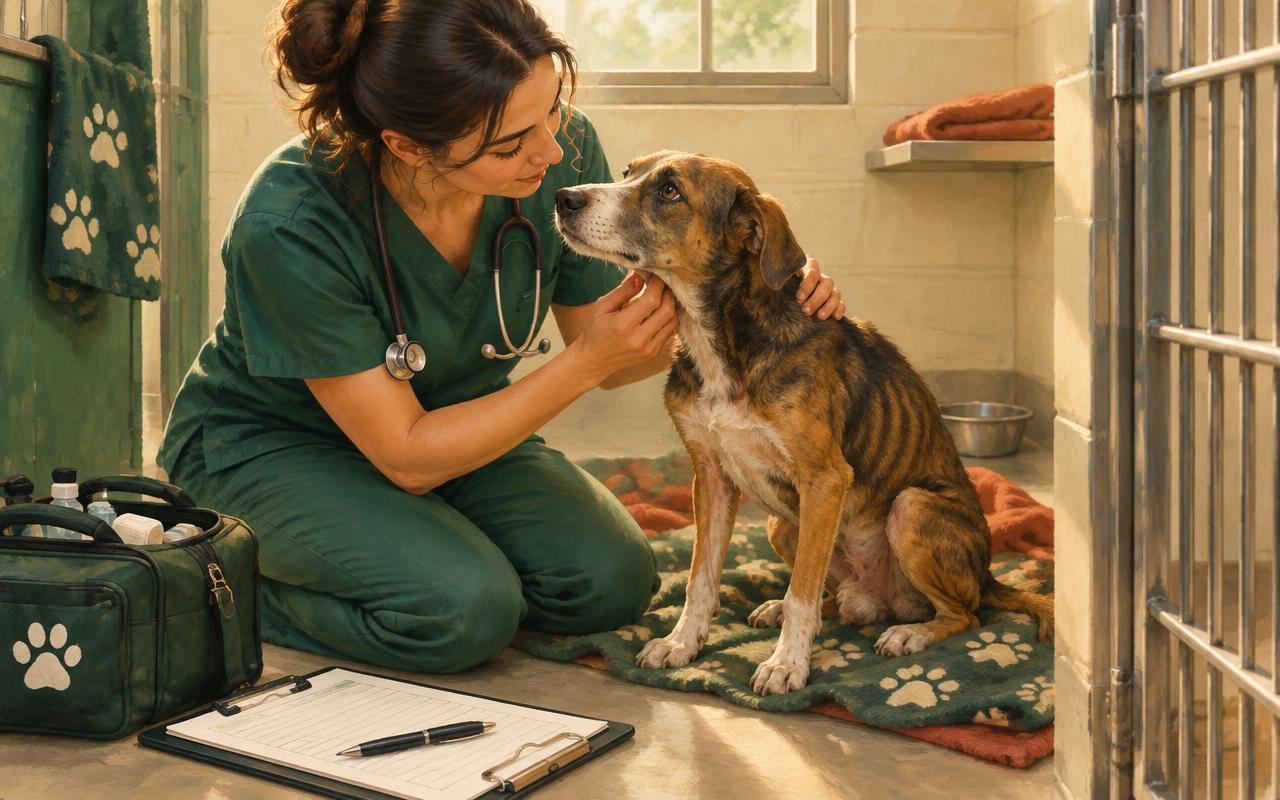
AI-generated editorial illustration of the subject; not a photograph of a specific animal, product or case.
Editorial overview—not a reported interview
This page explains common responsibilities in shelter veterinary work. It is not a transcript, a visit report or testimony from a named veterinarian, and it contains no attributed quotations. Shelters differ by funding, staffing, species, intake policy and local law. The examples describe questions an interested reader can ask, not a claim that every shelter follows the same schedule.
A shelter's veterinary team may work with animal carers, behaviour professionals, foster coordinators and external clinics. The central challenge is caring for individuals while managing risks and resources across a changing population. Neither a busy appearance nor a quiet kennel corridor is enough to assess the quality of care.
Intake combines individual assessment and population planning
A newly arrived animal may need urgent triage, identification checks, a history and a safe placement. Staff consider illness, injury, pregnancy, age, handling needs and possible infectious exposure. Vaccination and parasite-control decisions follow local protocols and veterinary assessment; this page does not prescribe a universal medicine schedule.
Separation arrangements can protect animals while more information becomes available. The team also needs usable records so later carers understand what was observed and what remains uncertain. An unknown history should be documented as unknown, not converted into a confident breed, age or behavioural claim.
Daily rounds look for changes as well as diagnoses
Carers often provide the first useful observations: an animal did not eat, a litter tray changed, a cough appeared or handling became difficult. Veterinary rounds bring those reports together with examinations and treatment reviews. A single snapshot may miss a trend, so consistent recording matters.
In a shelter, several similar signs can also indicate a population problem. The team may review housing, ventilation, hygiene, movement between areas and contacts between animals. Infection control should be planned with veterinary leadership, not improvised by repeatedly adding disinfectants or isolating animals without attention to their welfare.
Behaviour and physical health cannot be separated neatly
Pain can affect handling and behaviour, while fear and environmental stress can make care harder. Quiet behaviour does not always mean comfort, and a frightened animal's response in a shelter may not predict its behaviour in a settled home. Teams should describe context rather than label an animal from one stressful encounter.
Low-stress handling, suitable rest, species-appropriate resources and positive interactions can support welfare. For difficult cases, behaviour and veterinary professionals may collaborate. The aim is not to suppress visible distress for visitors but to address the underlying experience and maintain safety.
Treatment and adoption need continuity
An animal recovering from illness may move between hospital care, a shelter area and a foster home. Written treatment instructions, follow-up arrangements and clear responsibility help prevent gaps. At adoption, families need honest information about known conditions, ongoing costs and uncertainties. Concealing a medical need to speed placement undermines welfare and trust.
Ask how the organisation handles follow-up questions, returns and urgent deterioration after placement. Arrangements vary, so obtain the actual policy. Adoption suitability should consider the individual animal and household rather than promise that every animal will be easy after a short adjustment period.
Questions that reveal more than a dramatic story
Ask who oversees medical protocols, how staff report concerns, what happens out of hours and how outcomes are reviewed. Ask about capacity and what changes when the shelter is full. Standards help structure these discussions, but a logo or an appealing story is not a guarantee of compliance. Support can include fostering, volunteering or donations matched to the organisation's documented needs.
Frequently asked questions
- Was a veterinarian interviewed for this page?
- No. This is an editorial overview, not a reported interview or attributed testimony.
- Do all shelters follow the same routine?
- No. Staffing, population, resources, species and local rules affect operations.
- Can shelter behaviour predict home behaviour exactly?
- No. Context, stress and health matter; observations should be communicated with their limitations.
- What should adopters ask about medical care?
- Ask about known conditions, treatment, follow-up, costs and the organisation's actual support and return policies.
References
- Guidelines for standards of care in animal shelters — Association of Shelter Veterinarians
- Animal welfare principles — WOAH