
Grain
Plain air-popped popcorn
Occasional plain popcorn is safe for dogs; buttered and salted versions are not.
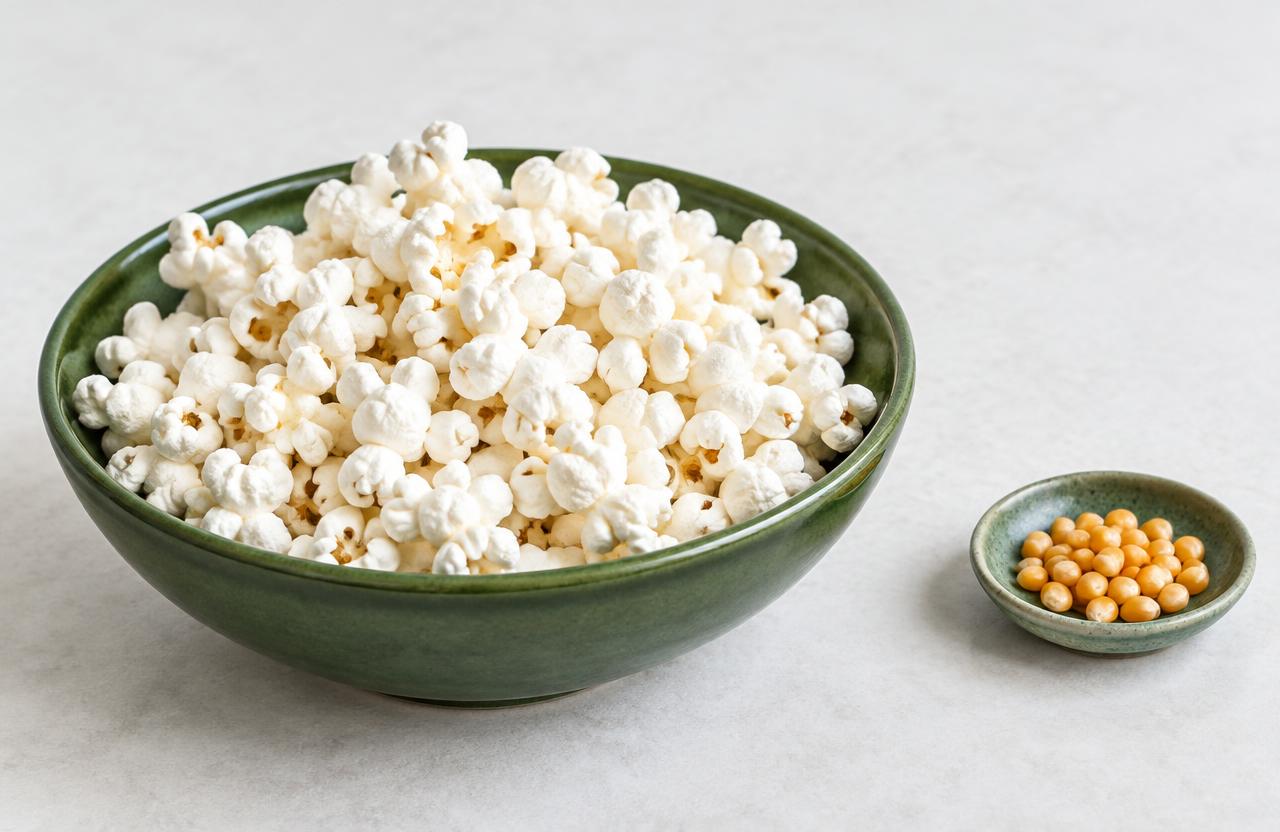
AI-generated editorial illustration; not a clinical demonstration or documentary photograph.
Who can eat it
Not suitable for
Benefits
- Low calorie when plain
- Some fibre
Risks
- Butter, salt and flavourings are harmful
- Unpopped kernels break teeth and choke
- Hulls lodge between teeth
Preparation and serving
- Preparation
- Air-popped only, no toppings; discard unpopped kernels.
- Serving guidance
- A small handful, rarely.
Popcorn: treat the whole snack as more than kernels
| Decision | Practical guidance |
|---|---|
| Fully popped and plain | Only an optional small dog treat. |
| Hard kernels | Remove before offering; do not let the dog browse the bowl. |
| Toppings or microwave mixes | Do not apply plain-popcorn guidance. |
| Gulping or swallowing problems | Choose a different reward with veterinary advice. |
| Choking or breathing difficulty | Seek emergency help. |
This is general feeding information, not an individually formulated diet.
Popcorn: treat the whole snack as more than kernels
Plain, air-popped popcorn is an optional treat for dogs only; it is not a required food and should not displace a complete diet. Keep portions modest and consider all treats together, especially for pets on a weight-management plan.
Choose plain ingredients and treat the food as an optional addition rather than a substitute for the animal’s complete, species-appropriate everyday diet. Needs vary with species, age, body condition and health. Where the diet is restricted, the animal is growing, pregnant, or has ongoing illness, check with the treating veterinary team before making a routine change.
Preparation, portions and when to ask
Remove every unpopped kernel and supervise while offering a few fully popped pieces. Hard kernels can injure teeth or pose choking concerns, while hulls may irritate the mouth. Avoid butter, salt, oils, caramel, cheese powders and seasoned microwave products.
Separate a dog treat from a movie-night snack
A bowl shared during a film is hard to portion and may contain mixed ingredients. Put the dog’s optional share in a separate small dish before adding anything to your own popcorn, then store the rest out of reach. Check that every piece is fully popped and cool. Picking kernels out of a large bowl while the dog eats is not dependable supervision. Offer pieces individually to an animal that chews comfortably rather than tossing them into the air or encouraging rapid catching.
Popcorn does not clean teeth or supply a missing nutrient in a complete dog food. A dog that gulps snacks, has swallowing difficulty or is following a restricted diet may need a different reward or no extra at all. Ask the veterinary team whether part of the usual ration can serve as training rewards instead. If a dog raids flavoured popcorn, retain the packaging and describe the ingredients and possible quantity when calling. Coughing, choking or breathing difficulty requires urgent help rather than another snack to wash the food down.
Sources for this reference
AI-assisted educational guidance, updated 19 October 2026. Not professionally reviewed; sources do not imply endorsement of this page.
Before offering plain air-popped popcorn
- Check the exact animal and preparation: the listed suitability is Dogs (occasionally). A food being edible does not make it a complete diet.
- Follow the preparation advice: Air-popped only, no toppings; discard unpopped kernels. Do not substitute a seasoned or processed version and assume the same safety.
- Portion guidance: A small handful, rarely. For a pet on a prescribed diet, discuss extras with the vet first.
- If your pet develops vomiting, diarrhoea or discomfort, stop offering the extra and seek advice. Suspected poisoning or breathing difficulty needs immediate veterinary help.
Educational reference, not an individual diagnosis or a verified professional review. Read our editorial policy.
Guidance libraries and further reading
These organisations publish relevant guidance. Their links are further reading, not evidence that they have reviewed this page.
- WSAVA — global veterinary guidelines on nutrition, vaccination, pain and dental care
- PDSA — veterinary charity pet health advice
- Dogs Trust — dog care, behaviour and welfare advice