
Ranoidea caerulea
White's Tree Frog
White's tree frogs are one of the hardier, more approachable pet frog species, tolerating occasional gentle handling and modest husbandry mistakes better than most amphibians, though their nocturnal croaking can surprise unprepared owners.
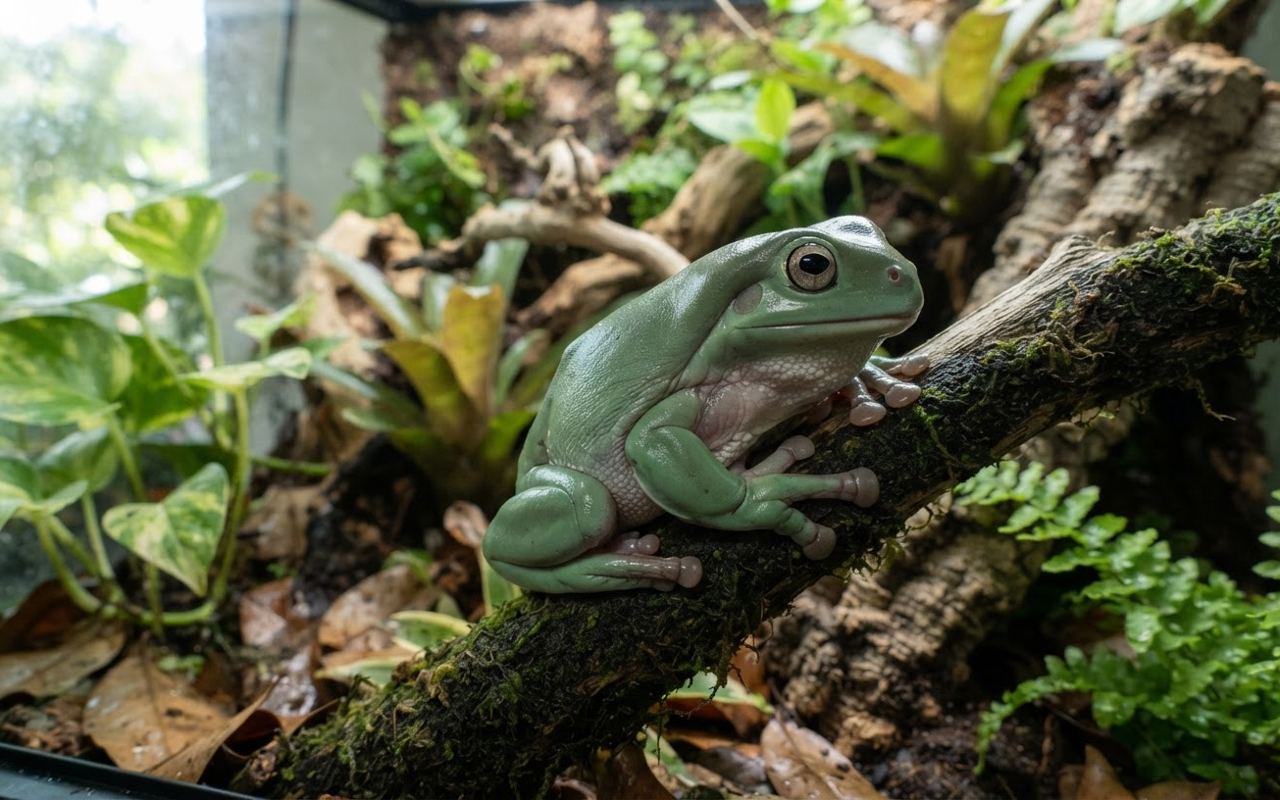
AI-generated editorial illustration of the subject; not a photograph of a specific animal, product or case.
At a glance
- Scientific name
- Ranoidea caerulea
- Family
- Pelodryadidae
- Origin
- Woodland and wetland edges of northern and eastern Australia and southern New Guinea
- Lifespan
- 10–16 years
- Adult size
- 8–12 cm
- Weight
- 50–100 g
- Temperament
- Docile and tolerant of gentle handling by amphibian standards
- Activity level
- Low to moderate; nocturnal with long daytime resting periods
- Social needs
- Can be housed in small compatible groups of similar size
- Intelligence
- Basic learned feeding-cue association
- Noise
- Loud, resonant croaking, mainly at night, particularly from males
Housing and environment
- Housing
- Vertically oriented vivarium at least 45 x 45 x 60 cm with sturdy branches and a water dish large enough to soak in
- Space requirement
- Height for climbing more important than floor area
- Temperature
- 24–28°C
- Humidity
- 50–70%, with daily misting
- Exercise
- Vertical climbing space and floor area for occasional foraging
- Grooming
- Not applicable; skin should be kept free of shedding debris
Life stages and changing needs
Expanded care guidance · Updated 7 October 2026 · Not professionally reviewed
Juvenile
Young White's tree frogs are hardy by frog standards but still need a tall, humid enclosure with climbing branches, secure climbing surfaces and dechlorinated water from the start. They grow quickly into one of the larger, hardier tree frogs, which is why they are often recommended to beginners — but beginner-friendly for a frog still means meticulous attention to water quality, humidity and supplementation. Handle as rarely as possible, always with wet, powder-free gloves or wet hands.
Adult
Adult White's tree frogs are placid, long-lived — often fifteen years or more — and tolerate gentle, occasional handling better than most amphibians, though it should still be rare and brief. They do well in pairs or small groups in a tall vivarium with strong branches, a large shallow water area of dechlorinated water, moderate humidity with a drier period between mistings, and temperatures around 24 to 28 degrees. They are enthusiastic feeders and become obese easily, which is one of the main health problems of the species in captivity.
Senior
Older White's tree frogs often remain active but may develop cataracts, reduced mobility and a tendency to gain weight as metabolism slows; reduce feeding frequency to match body condition rather than habit. Keep the water area easy to climb into, maintain humidity carefully, and have any persistent skin changes, bloating or lethargy checked by an exotics vet. Their longevity means a keeper should expect equipment replacement and evolving care over a decade and a half.
Diet and feeding
Appropriately sized crickets, roaches and occasional pinky mice for large adults, dusted with supplement
Feed gut-loaded crickets, roaches and occasional waxworms or hornworms as treats, dusted with calcium and vitamin supplements on a regular schedule; adults typically eat two to three times a week, and the portion should be judged against body condition because these frogs will eat far past their needs. A frog whose body is wider than its head is overweight.
Avoid wild-caught insects and anything caught near sprayed gardens, and never feed processed human food. Water must always be dechlorinated — tap water chlorine and chloramine harm amphibian skin — and the water dish should be cleaned and refilled daily, since these frogs soak and often defecate in it.
Daily care and ongoing checks
Every day
Check temperature and humidity, mist as needed to keep the enclosure comfortably humid without being constantly wet, and refresh the water dish with dechlorinated water every day. Confirm the frogs are resting in normal positions — tucked, alert-eyed, on their usual perches.
Regular maintenance and prevention
Look over skin condition regularly: healthy White's tree frogs have smooth, moist-looking skin and a plump but not bloated body. Reddened skin, cloudy eyes, or a frog sitting in the water dish constantly can signal water-quality or health problems, and any handling session is a good opportunity for a close look.
Behaviour and compatibility
Nocturnal foraging, water-soaking, deep resonant croaking call from males, skin secretion for defence
- With children
- Reasonably tolerant of brief, damp-handed, supervised handling, though frequent handling should still be avoided
- With other animals
- Keep only with similarly sized, compatible tree frogs
- Training difficulty
- Not applicable
Health
- Chytrid fungus
- Obesity from overfeeding
- Bacterial skin infections from poor water hygiene
Needs an amphibian-experienced reptile vet; always wash and rinse hands before handling to avoid transferring residues to sensitive skin
Special care requirements
Handle with clean, damp hands only, as dry skin contact and residues such as soap or lotion can harm the frog's permeable skin
Arboreal ease and moisture-level stability
White's tree frogs are hardy, climbing-loving amphibians that need substantial vertical space and stable, controlled humidity in their enclosure. They are prone to obesity in captivity, so closely monitor food portions and protein intake to ensure they maintain a healthy, active body weight throughout their lives.
Before you take one on
Sources and further guidance
These welfare and veterinary resources inform general husbandry advice; they do not certify this profile or replace a species-experienced professional. Confirm exact environmental settings and feeding plans for your animal.
Can your home meet white's tree frog needs?
- Plan for a lifespan of 10–16 years, including holiday cover and, where one is available, a vet familiar with this species. Lifespan ranges are not guarantees.
- Arrange the social setting before arrival. Social guidance for this species: Can be housed in small compatible groups of similar size. Do not assume another animal of any species is a suitable companion.
- Habitat priority for this species: Height for climbing more important than floor area. Make sure your setup can provide this consistently. Measure temperatures and humidity with thermometers and a hygrometer rather than guessing.
- Key care point: Handle with clean, damp hands only, as dry skin contact and residues such as soap or lotion can harm the frog's permeable skin. Discuss diet and any specialist needs with the supplier, rescue and a vet who treats this species, and check local legal requirements before acquiring an animal.
Educational reference, not an individual diagnosis or a verified professional review. Read our editorial policy.
Guidance libraries and further reading
These organisations publish relevant guidance. Their links are further reading, not evidence that they have reviewed this page.