
Uromastyx spp.
Uromastyx
A rewarding companion for an owner who has researched its needs honestly. As with every animal on this site, this profile is a starting point: confirm details with a vet or specialist before bringing one home.
AgamidaeLifespan 15–20 yearsCare complexity 4/5Not a beginner animal
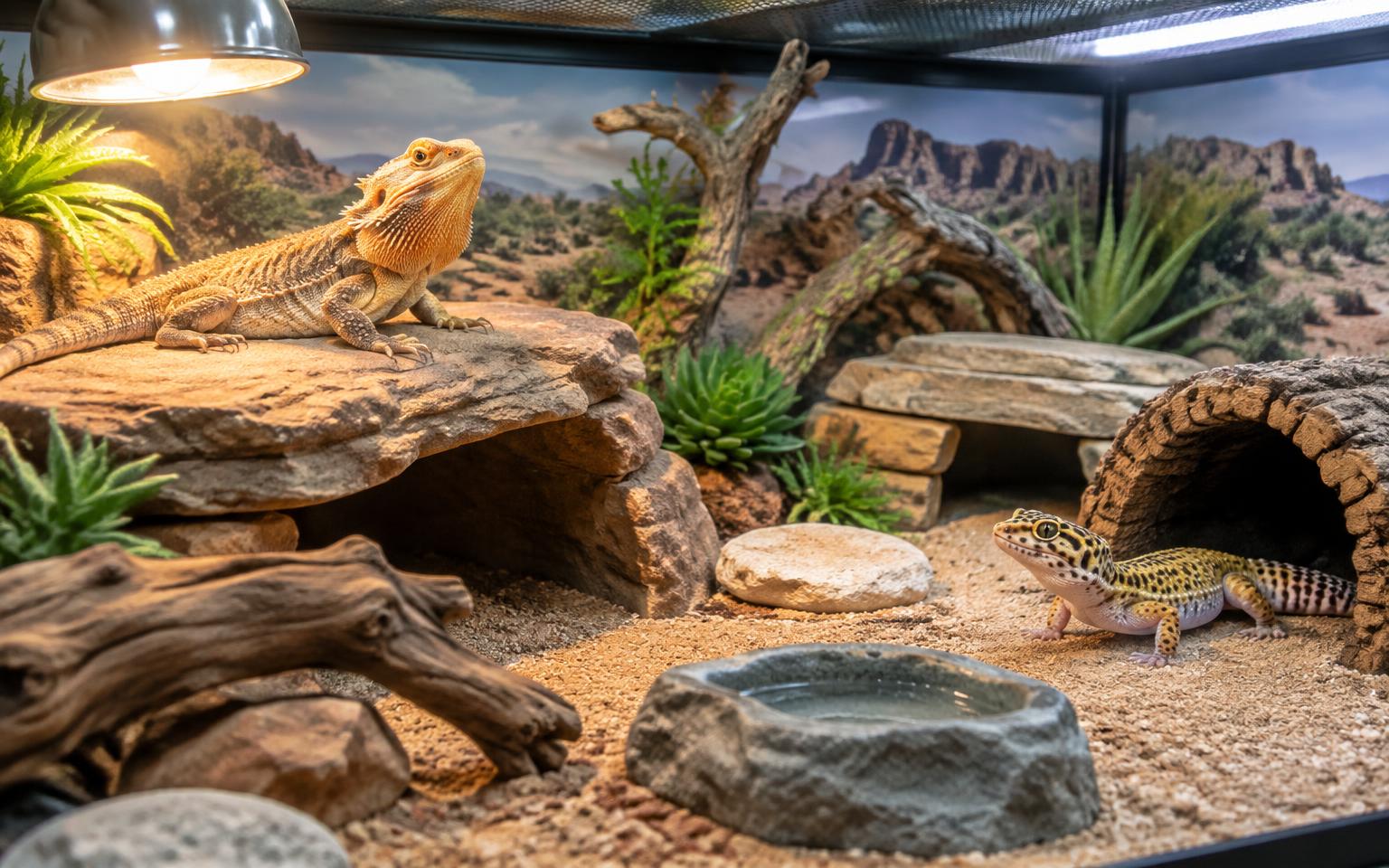
Representative reptiles photography; individual appearances vary.
At a glance
- Scientific name
- Uromastyx spp.
- Family
- Agamidae
- Origin
- North Africa and the Middle East
- Lifespan
- 15–20 years
- Adult size
- 25–40 cm depending on species
- Weight
- 150–500 g
- Temperament
- Generally calm and tolerant of handling once settled; spiny tail used for defence, not aggression.
- Activity level
- Moderate; active during the day, burrows at night.
- Social needs
- Solitary; house singly.
- Intelligence
- Modest; recognises keepers and routines.
- Noise
- Silent.
Housing and environment
- Housing
- Minimum 120 × 60 × 60 cm for an adult, with deep substrate for burrowing and intense basking heat.
- Space requirement
- Large terrestrial vivarium.
- Temperature
- Basking spot 45–50 °C; cool end 26–30 °C.
- Humidity
- Low, 20–35%; a dry-desert specialist.
- Exercise
- Roams a large hot enclosure by day.
- Grooming
- Sheds in patches; warm soaks help stuck shed.
Diet and feeding
Almost entirely herbivorous: leafy greens, lentils, seeds and flowers. Very little animal protein.
Behaviour and compatibility
Hardy once established but needs some of the hottest basking temperatures of any pet reptile.
- With children
- Good with calm, supervised older children.
- With other animals
- House alone; keep away from other pets.
- Training difficulty
- Tames with patient handling.
Health
- Metabolic bone disease without strong UVB
- Dehydration masked by their desert adaptations
- Tail injuries
- Respiratory infection if kept too cool
The extreme basking heat is non-negotiable; a reptile vet should check new arrivals, ideally with a faecal exam.
Special care requirements
See the housing, diet and health sections — this species has needs that are easy to underestimate.