
Centrochelys sulcata
Sulcata Tortoise
A rewarding companion for an owner who has researched its needs honestly. As with every animal on this site, this profile is a starting point: confirm details with a vet or specialist before bringing one home.
TestudinidaeLifespan 50–100+ yearsCare complexity 5/5Not a beginner animal
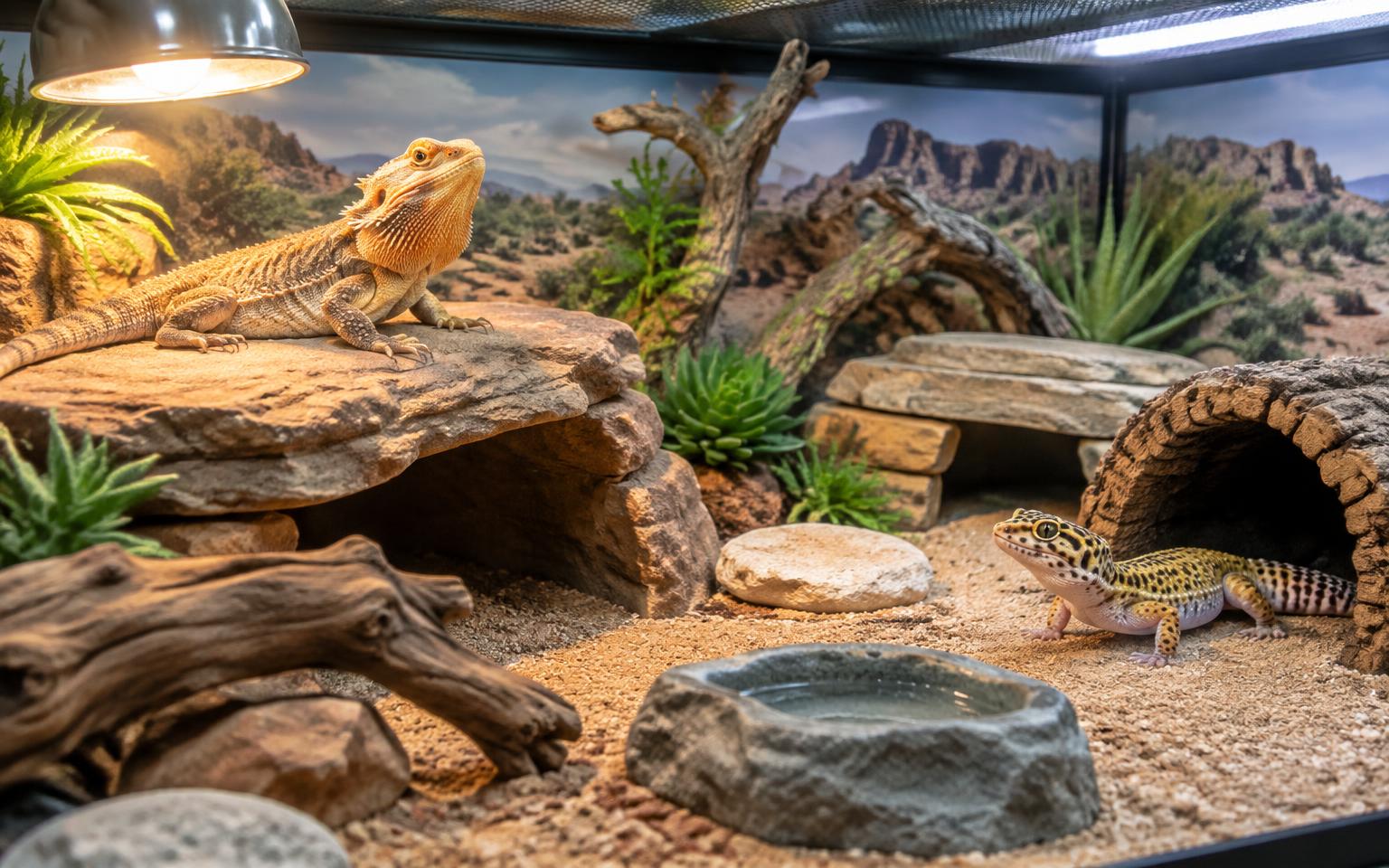
Representative reptiles photography; individual appearances vary.
At a glance
- Scientific name
- Centrochelys sulcata
- Family
- Testudinidae
- Origin
- Southern Sahara and Sahel, Africa
- Lifespan
- 50–100+ years
- Adult size
- 60–80 cm shell length
- Weight
- 30–50 kg, sometimes over 80 kg
- Temperament
- Determined, strong and surprisingly interactive; a bulldozer in a shell.
- Activity level
- High for a tortoise; walks and digs constantly.
- Social needs
- Solitary by nature; adults often fight if housed together.
- Intelligence
- Modest but learns routines and recognises keepers.
- Noise
- Silent apart from huffing.
Housing and environment
- Housing
- Adults need a garden-sized, escape-proof enclosure with deep substrate for digging and a heated shelter; indoor keeping is only realistic for juveniles.
- Space requirement
- Very large — plan for at least 10 × 10 metres outdoors for an adult.
- Temperature
- Basking 35–40 °C; ambient 26–32 °C; needs frost-free winter housing.
- Humidity
- Low ambient, but juveniles benefit from humid hides to support smooth shell growth.
- Exercise
- Needs a large secure outdoor enclosure in warm weather.
- Grooming
- Soaks for hydration; beak and nail trims by a vet if overgrown.
Diet and feeding
High-fibre grasses and weeds; hay-based. Fruit and vegetables should be rare treats. Overfeeding protein causes pyramiding.
Behaviour and compatibility
Digs extensive burrows and can demolish fences, walls and garden features.
- With children
- Fine with supervision; too powerful for children to manage alone.
- With other animals
- Generally ignores other animals but may ram them.
- Training difficulty
- Learns feeding routines; otherwise not trainable.
Health
- Shell pyramiding from poor diet and low humidity
- Respiratory infections in cold, damp conditions
- Bladder stones
- Metabolic bone disease without UVB
A genuine lifetime-plus commitment that will outlive most owners; plan for its care in your will. Rescue centres are full of surrendered adults.
Special care requirements
See the housing, diet and health sections — this species has needs that are easy to underestimate.