
Forpus coelestis
Parrotlet
A rewarding companion for an owner who has researched its needs honestly. As with every animal on this site, this profile is a starting point: confirm details with a vet or specialist before bringing one home.
PsittacidaeLifespan 15–20 yearsCare complexity 3/5Suitable for beginners
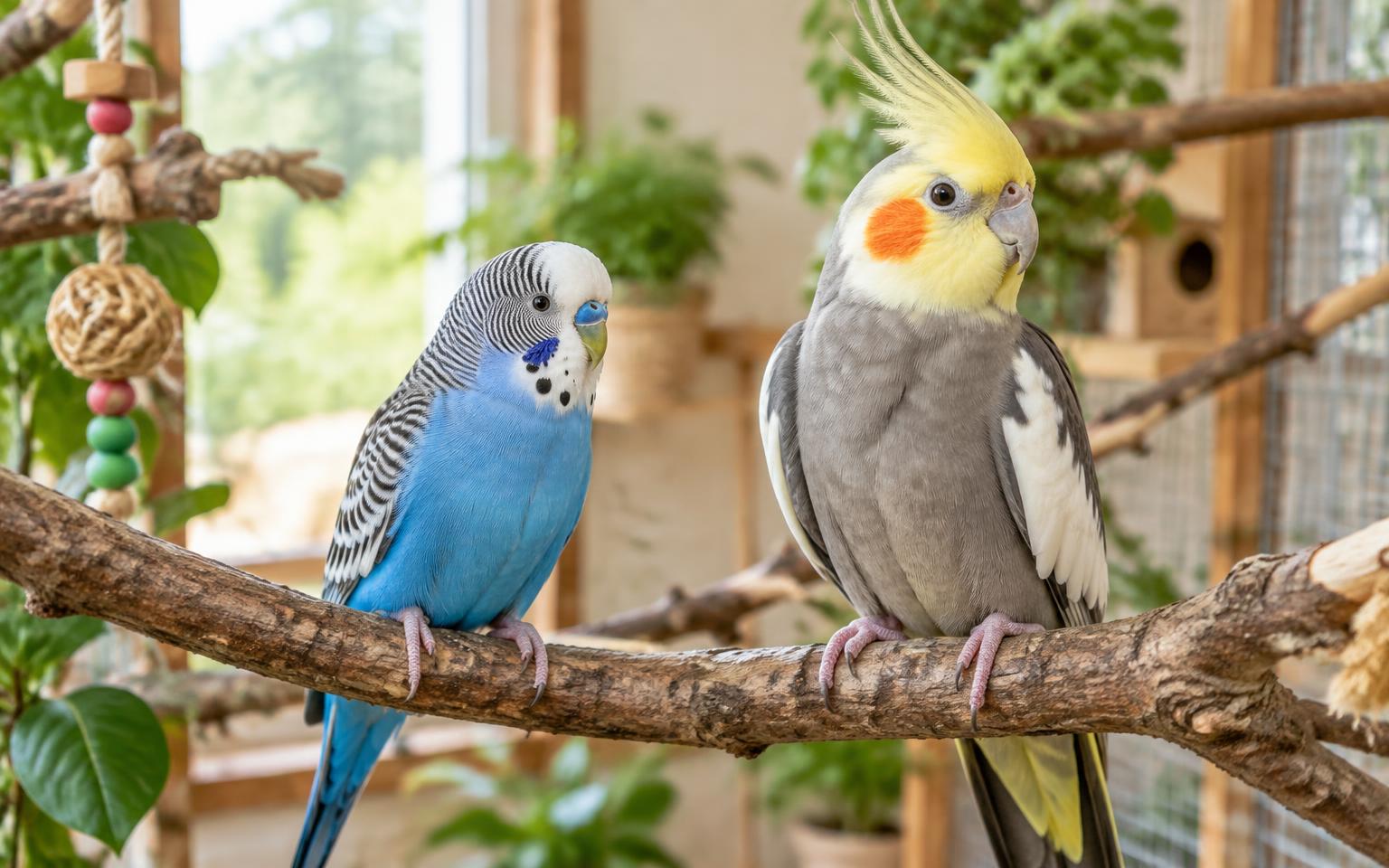
Representative birds photography; individual appearances vary.
At a glance
- Scientific name
- Forpus coelestis
- Family
- Psittacidae
- Origin
- South America (Ecuador, Peru)
- Lifespan
- 15–20 years
- Adult size
- 12–14 cm
- Weight
- 25–35 g
- Temperament
- Bold, curious and feisty despite their tiny size; often described as a big parrot in a small body.
- Activity level
- High — needs daily out-of-cage flight and play.
- Social needs
- Very social; bonds strongly with one person or a companion bird. Needs hours of daily interaction.
- Intelligence
- High; learns tricks and can mimic some sounds and words.
- Noise
- Moderate — chirps and chatter rather than screaming; suitable for many flats.
Housing and environment
- Housing
- Cage at least 45 × 45 × 45 cm with horizontal bars for climbing; larger is better.
- Space requirement
- A dedicated bird-safe room for flight time.
- Temperature
- 18–27 °C, away from draughts and kitchens.
- Humidity
- 40–60%.
- Exercise
- At least 2–3 hours of supervised out-of-cage time daily.
- Grooming
- Baths or misting several times a week; nail trims as needed.
Diet and feeding
Quality small-parrot pellets, fresh vegetables, small amounts of fruit and seed as treats.
Behaviour and compatibility
Can be territorial over cages and favourite people; consistent gentle handling from a young age helps.
- With children
- Better with older, calm children; small beaks still deliver painful bites.
- With other animals
- Often fearless around larger birds and pets, which puts them at risk; supervise all contact.
- Training difficulty
- Moderate; intelligent but strong-willed.
Health
- Psittacosis
- Feather destructive behaviour
- Obesity on seed-heavy diets
- Egg binding in females
Find an avian vet before you need one; small birds hide illness until they are very sick.
Special care requirements
See the housing, diet and health sections — this species has needs that are easy to underestimate.