
Ceratophrys ornata
Pacman Frog
Pacman frogs are hardy, striking and almost entirely sedentary — an excellent choice for keepers who want a low-activity display amphibian.
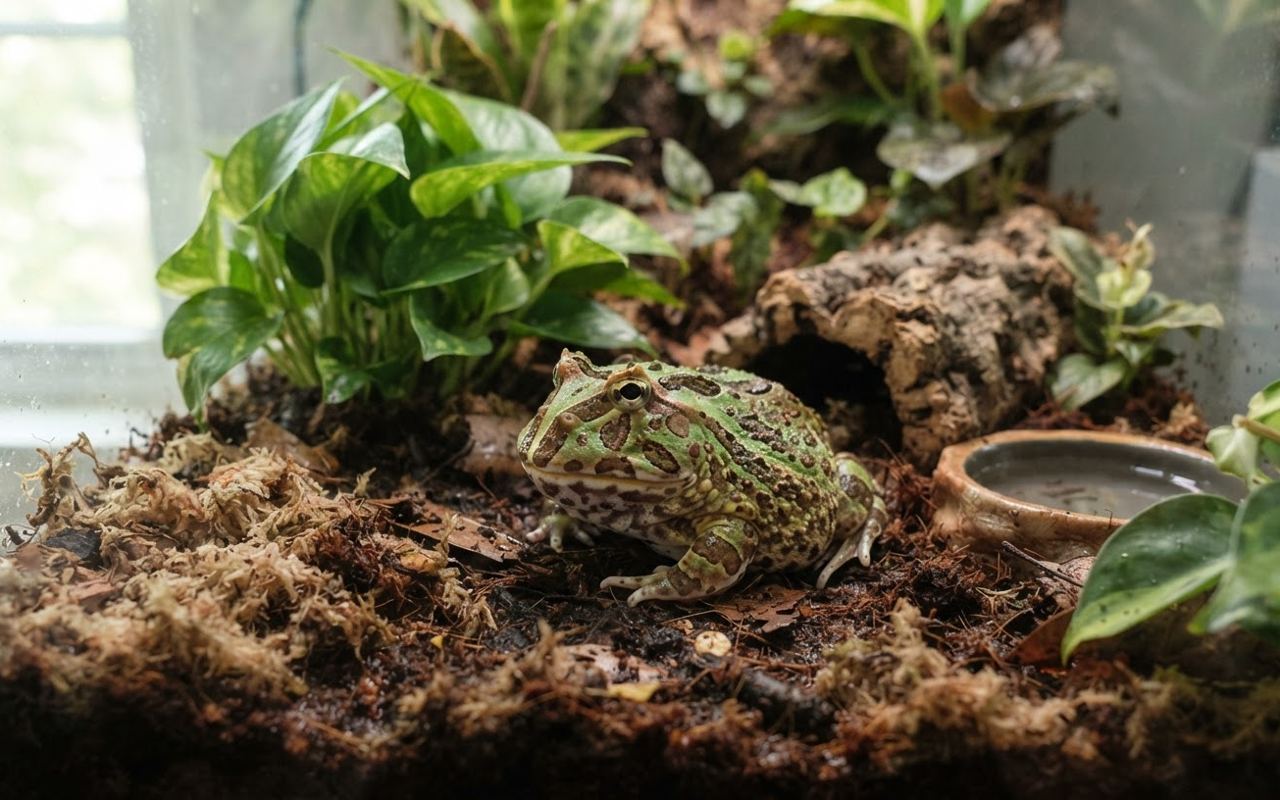
AI-generated editorial illustration of the subject; not a photograph of a specific animal, product or case.
At a glance
- Scientific name
- Ceratophrys ornata
- Family
- Ceratophryidae
- Origin
- Grasslands of Argentina, Uruguay and Brazil
- Lifespan
- 6–10 years
- Adult size
- 10–17 cm
- Weight
- 300–500 g
- Temperament
- Sedentary ambush predator with a strong feeding response
- Activity level
- Very low; buried most of the time
- Social needs
- Strictly solitary — they eat each other
- Intelligence
- Learns feeding schedules
- Noise
- Occasional loud croaks
Housing and environment
- Housing
- Minimum 45 x 45 x 30 cm with 10–15 cm of moist substrate
- Space requirement
- Small footprint but deep, clean substrate
- Temperature
- 24–28°C day, 21–24°C night
- Humidity
- 60–80%
- Exercise
- Minimal; deep substrate for burrowing is the key need
- Grooming
- Not applicable; skin absorbs everything in its environment
Life stages and changing needs
Expanded care guidance · Updated 7 October 2026 · Not professionally reviewed
Young animals and settling in
Growing froglets need prey they can capture and a habitat that prevents dehydration without becoming stagnant. Identify the species and its developmental stage before choosing substrate, water depth or food. A recently metamorphosed frog is not simply a small adult with an identical feeding schedule. Obtain a written care plan from an amphibian-experienced professional.
Adult care and reproductive changes
Adult behaviour depends on the species: an ambush-feeding ground frog may sit still for long periods, while a tree frog uses vertical routes. Make the enclosure fit that behaviour. Do not add a companion to solve presumed loneliness; competition and predation can be serious. Breeding requires extra space, biosecurity and a plan for offspring.
Later life and changing needs
As frogs age, maintain easy access to appropriate hiding, feeding and water areas. Observe changes against the individual’s usual pattern rather than expecting a mammal-like senior stage. Weight loss, repeated poor shedding or abnormal posture warrants investigation. Seasonal inactivity should not be accepted as normal until enclosure conditions and health have been checked.
Diet and feeding
Appropriately sized insects and occasional rodents for adults, dusted with calcium
Offer appropriately sized, responsibly sourced prey and use a species-specific supplementation plan. Gut-loading prey improves its nutritional value but does not replace the correct calcium and vitamin regime. Wild insects may bring pesticide exposure or parasites. Mammal meat and large vertebrate prey are not routine substitutes for a balanced amphibian feeding plan.
Use a feeding record to connect appetite with body condition and environmental readings. Remove uneaten insects because they can injure or disturb a resting frog. Avoid feeding ever-larger portions to a sedentary species. If the animal stops eating, inspect the habitat and ask an amphibian vet before force-feeding or introducing unverified remedies.
Daily care and ongoing checks
Every day
Check temperature and humidity at the animal’s level, assess substrate condition and refresh appropriate water supplies daily. Provide ventilation as well as moisture: a permanently soaked, poorly ventilated habitat is not automatically safe. Clean water must be treated appropriately, and the frog must be able to enter and leave its water area safely.
Regular maintenance and prevention
Remove waste and spoiled prey promptly, and follow a species-appropriate cleaning routine that leaves no disinfectant residue. Handle only when necessary; skin absorbs contaminants and squeezing can cause injury. Use separate tools between habitats and quarantine newcomers. Wash hands before and after enclosure work, keeping amphibian equipment away from kitchen surfaces.
Behaviour and compatibility
Burying, ambushing and aestivating in a skin cocoon if conditions dry out
- With children
- Observation only — they bite hard
- With other animals
- House alone
- Training difficulty
- Not applicable
Health
- Impaction
- Obesity from overfeeding
- Bacterial skin infections
- Metabolic bone disease
- Toxin absorption through the skin
Exotics vet; use only dechlorinated water for misting and soaking
Special care requirements
Never handle with bare, lotioned or soapy hands; use clean wet gloves when handling is necessary
Ambush feeding and individual housing
Pacman frogs are terrestrial ambush predators and are usually housed singly because they can swallow or injure companions. Provide a suitable moist burrowing substrate, ventilation and a safely accessible shallow water area. A still frog may be behaving normally, but inactivity with poor body condition or skin changes is not reassuring.
Choose prey by safe size and nutritional suitability rather than the frog’s very large mouth. Routine rodent feeding can create dietary and weight problems. Use feeding tools safely and never offer fingers as a target. A refusal to eat needs an environmental and health review, particularly if accompanied by swelling or abnormal posture.
Before you take one on
Sources and further guidance
These welfare and veterinary resources inform general husbandry advice; they do not certify this profile or replace a species-experienced professional. Confirm exact environmental settings and feeding plans for your animal.
Can your home meet pacman frog needs?
- Plan for a lifespan of 6–10 years, including holiday cover and, where one is available, a vet familiar with this species. Lifespan ranges are not guarantees.
- Arrange the social setting before arrival. Social guidance for this species: Strictly solitary — they eat each other. Do not assume another animal of any species is a suitable companion.
- Habitat priority for this species: Small footprint but deep, clean substrate. Make sure your setup can provide this consistently. Measure temperatures and humidity with thermometers and a hygrometer rather than guessing.
- Key care point: Never handle with bare, lotioned or soapy hands; use clean wet gloves when handling is necessary. Discuss diet and any specialist needs with the supplier, rescue and a vet who treats this species, and check local legal requirements before acquiring an animal.
Educational reference, not an individual diagnosis or a verified professional review. Read our editorial policy.
Guidance libraries and further reading
These organisations publish relevant guidance. Their links are further reading, not evidence that they have reviewed this page.