
Forpus coelestis
Pacific parrotlet
A big parrot personality in a pocket-sized body — charming but bossy, and needs confident, consistent handling.
PsittacidaeLifespan 15–20 yearsCare complexity 3/5Not a beginner animal
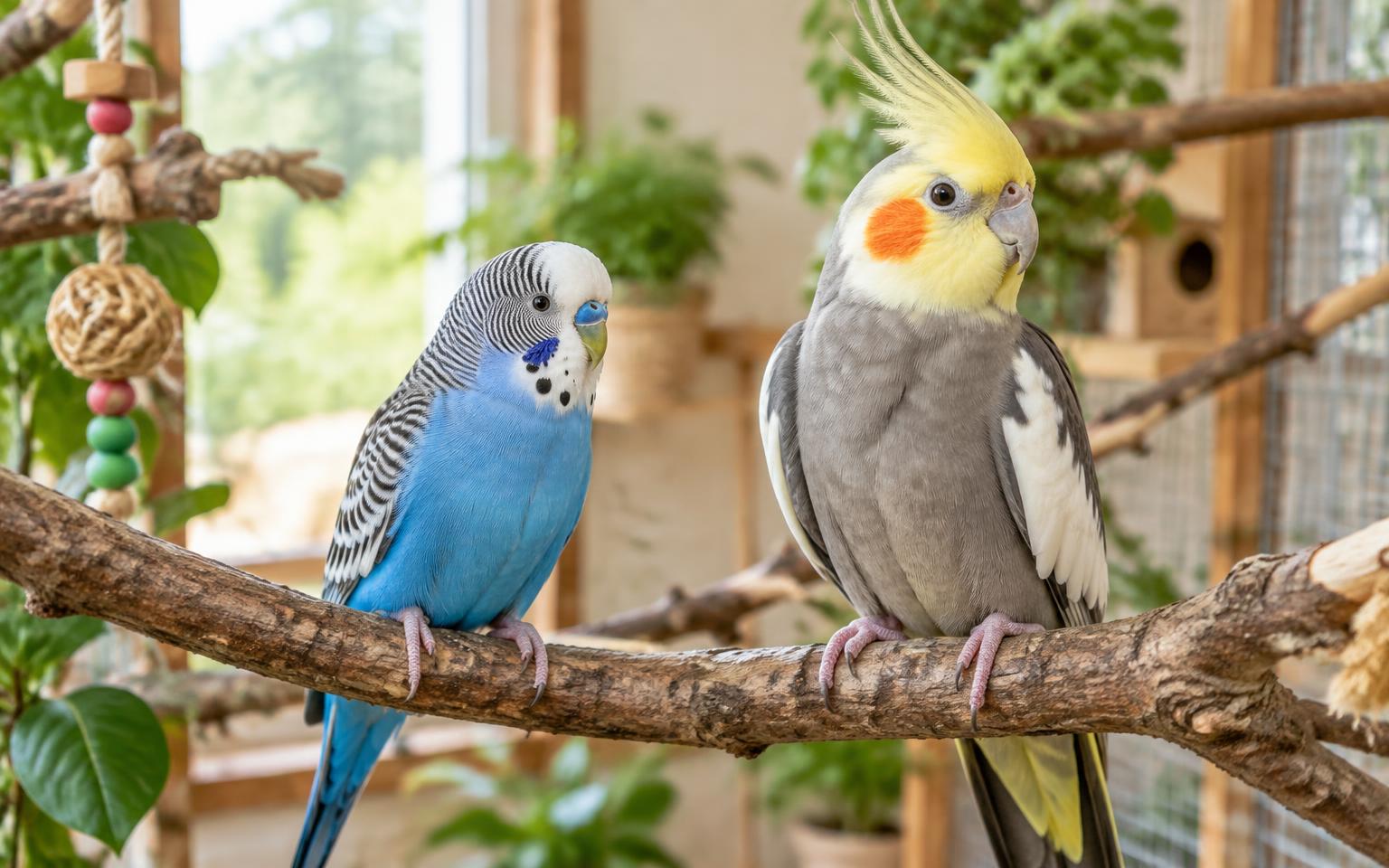
Representative birds photography; individual appearances vary.
At a glance
- Scientific name
- Forpus coelestis
- Family
- Psittacidae
- Origin
- Ecuador and Peru
- Lifespan
- 15–20 years
- Adult size
- About 13 cm
- Weight
- 28–35 g
- Temperament
- Bold and feisty despite tiny size; bonds closely with one person
- Activity level
- High — very active flier and climber
- Social needs
- Needs daily human interaction; often kept singly or in carefully managed pairs
- Intelligence
- High for its size; can learn tricks and a few words
- Noise
- Low to moderate — chirps rather than screams
Housing and environment
- Housing
- Cage at least 45 × 45 × 60 cm with narrow bar spacing
- Space requirement
- Cage plus a bird-safe flight room
- Temperature
- 18–26 °C
- Humidity
- 40–60%
- Exercise
- Daily out-of-cage flight time in a safe room
- Grooming
- Baths or misting; nail trims as needed
Diet and feeding
Small-parrot pellets with vegetables; seeds limited
Behaviour and compatibility
Fearless and busy; can be territorial over its cage
- With children
- Not ideal for young children — small, fast and will bite if mishandled
- With other animals
- Keep away from cats and dogs
- Training difficulty
- Challenging
Health
- Respiratory infections
- Egg binding in females
- Fatty liver disease
Annual avian vet checks; tiny birds hide illness well, so weigh weekly.
Special care requirements
Bar spacing must be narrow (around 1.25 cm) — they can squeeze through wider gaps.