Oryctolagus cuniculus
Netherland Dwarf rabbit
The smallest popular rabbit breed — adorable but delicate, with higher dental risk and a need for patient, gentle handling.
LeporidaeLifespan 10–12 yearsCare complexity 3/5Not a beginner animal
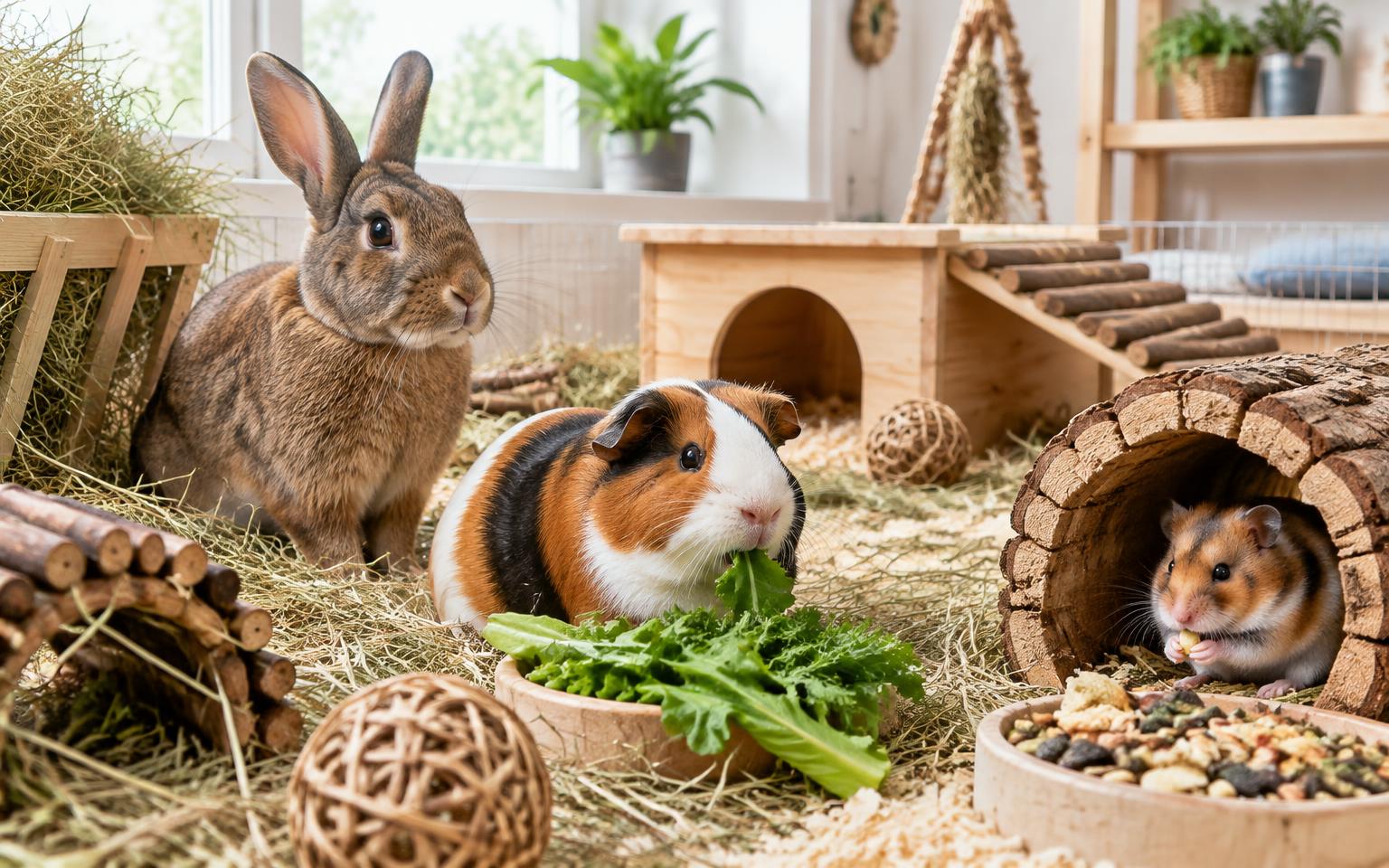
Representative small mammals photography; individual appearances vary.
At a glance
- Scientific name
- Oryctolagus cuniculus
- Family
- Leporidae
- Origin
- Netherlands
- Lifespan
- 10–12 years
- Adult size
- 0.8–1.2 kg
- Weight
- 0.8–1.2 kg
- Temperament
- Bright and active; can be nervous or nippy without gentle, consistent handling
- Activity level
- Moderate to high despite tiny size
- Social needs
- Needs a neutered rabbit companion
- Intelligence
- Moderate; learns litter habits
- Noise
- Quiet
Housing and environment
- Housing
- Minimum 3 m × 2 m × 1 m of combined space, as for any rabbit
- Space requirement
- Small body, big space needs
- Temperature
- 15–21 °C; vulnerable to heat
- Humidity
- 40–60%
- Exercise
- Large pen or rabbit-proofed room daily
- Grooming
- Weekly brushing; more when moulting
Diet and feeding
Hay-based, measured pellets — tiny rabbits gain weight easily
Behaviour and compatibility
Active and curious; delicate build means careful handling
- With children
- Not ideal for young children — fragile and easily frightened
- With other animals
- Keep separate from predator pets
- Training difficulty
- Challenging
Health
- Dental disease (very common in dwarf breeds)
- Gut stasis
- Eye problems from flat face shape
Choose a rabbit-savvy vet; dental checks matter more in dwarf breeds.
Special care requirements
Their flat faces predispose them to tear-duct and dental problems — check eyes and eating daily.