
Poecilia sphenops
Molly
The molly is a peaceful livebearer that thrives in hard, warm water and sometimes slightly brackish conditions. It needs more space and stable water quality than its beginner reputation suggests.
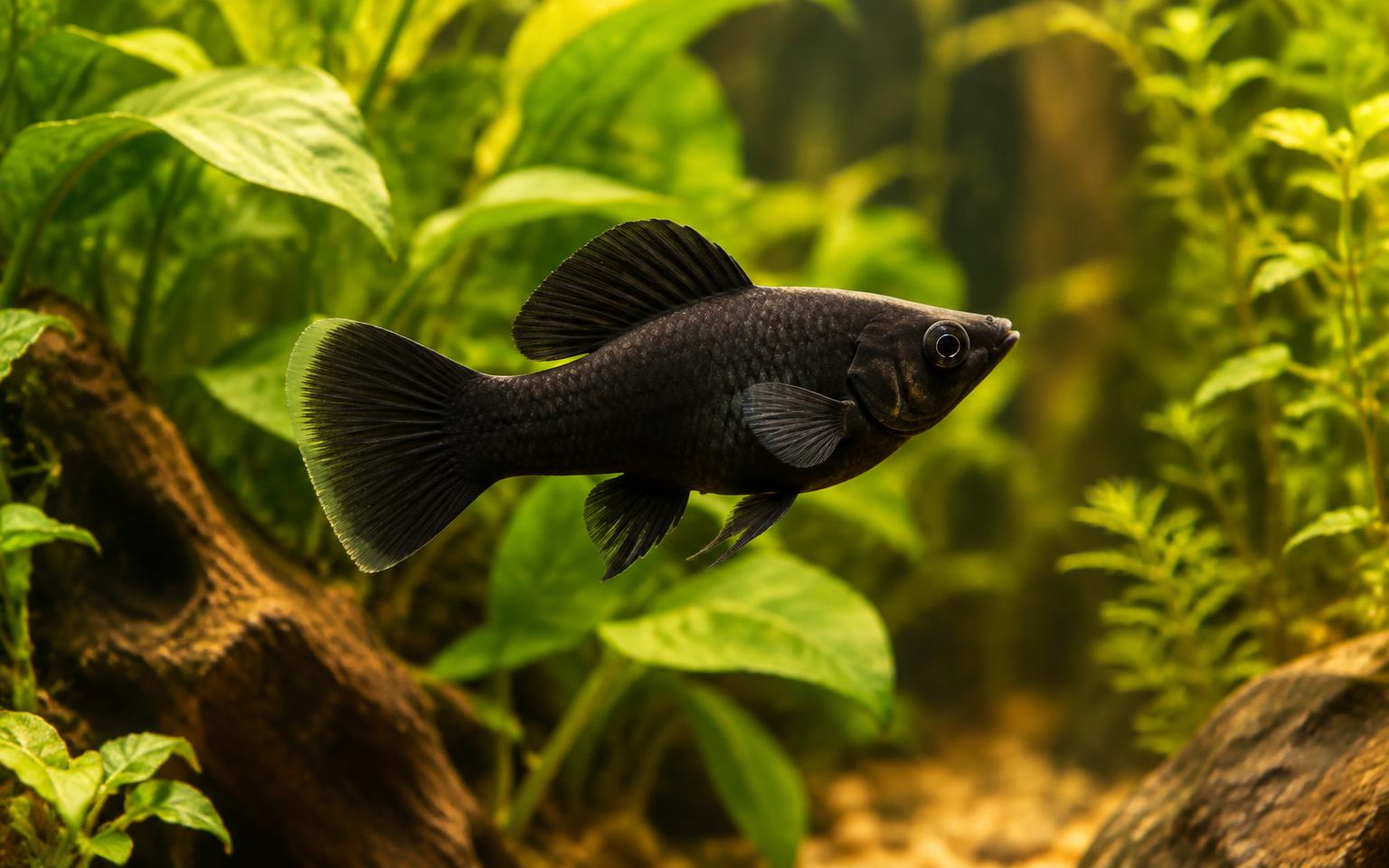
Illustrative cover using relevant category imagery; it does not depict the exact subject.
At a glance
- Scientific name
- Poecilia sphenops
- Family
- Poeciliidae
- Origin
- Central and South America
- Lifespan
- 3–5 years
- Adult size
- 8–12 cm
- Weight
- 3–6 g
- Temperament
- Generally peaceful livebearer; larger and more boisterous than platies.
- Activity level
- Moderate to high.
- Social needs
- Keep in groups with at least two females per male.
- Intelligence
- Modest.
- Noise
- Silent.
Housing and environment
- Housing
- Minimum 80 litres; appreciates slightly hard, alkaline water.
- Space requirement
- Community tank.
- Temperature
- 24–28 °C.
- Humidity
- Not applicable.
- Exercise
- Active mid-water swimmer.
- Grooming
- Not applicable.
Life stages and changing needs
Expanded care guidance · Updated 7 October 2026 · Not professionally reviewed
Young animals and settling in
Young livebearers are miniature free-swimming fish, not eggs attached to plants. If fry appear, provide cover and an intake guard, and check that food reaches them without fouling the water. A crowded breeding box is not a long-term nursery. Plan homes and filtration capacity before intentionally breeding; never release surplus fish into drains, ponds or waterways.
Adult care and reproductive changes
Adults may breed repeatedly, and females can produce later broods after separation from males. Watch for persistent chasing, damaged fins and fish hiding from companions. Add visual barriers and reassess stocking rather than assuming harassment is harmless. A single-sex group can avoid ongoing reproduction, but it still needs adequate space and compatibility monitoring.
Later life and changing needs
There is no reliable birthday at which these fish become senior. Follow the individual: body condition, swimming control and ability to reach food matter more than a calendar label. A fish becoming thin or inactive needs water tests and a health assessment; ageing does not explain ulcers, rapid breathing or a sudden loss of appetite.
Diet and feeding
Omnivorous with a strong need for vegetable matter; algae wafers and spirulina flake help.
Use a complete food intended for the species, with appropriate plant ingredients, rather than treating algae as a complete ration. Choose particles small enough to swallow and offer variety through suitable prepared or frozen foods. Bread, kitchen scraps and mammal meat do not provide balanced fish nutrition. Store food dry and replace stale supplies.
Feed small amounts while observing every fish, including timid individuals. Remove uneaten food and reduce the next portion if it accumulates. More food means more waste, not necessarily faster healthy growth. A change in appetite should prompt checks of temperature, ammonia, nitrite and other species-relevant water parameters before adding medications or changing multiple variables.
Daily care and ongoing checks
Every day
Each day check filter flow, heater operation where used, swimming, respiration and feeding response. Count fish and inspect for injuries. A mature biological filter is essential before stocking; clear water can still contain harmful nitrogen waste. Treat replacement water for chlorine or chloramine and avoid sudden temperature or chemistry changes.
Regular maintenance and prevention
Keep a log of water tests, partial water changes and new arrivals. Base maintenance on test results and stocking, not a fixed promise that one weekly change fits every aquarium. Preserve filter bacteria by avoiding untreated tap-water rinses of biological media. Use separate quarantine equipment and ask an aquatic vet about an appropriate quarantine plan.
Behaviour and compatibility
Prolific breeder; fry survive only with dense plant cover.
- With children
- Good family fish.
- With other animals
- Peaceful with similarly sized community fish.
- Training difficulty
- Not trainable.
Health
- Ich
- Molly disease (shimmying) in soft or acidic water
- Fin rot
Shimmying is usually a water-chemistry problem, not an infection; test before medicating.
Special care requirements
See the housing, diet and health sections — this species has needs that are easy to underestimate.
Water chemistry and measured feeding
Mollies generally suit mineral-rich water; persistent shimmying should trigger a water and health assessment, not an automatic diagnosis. Different molly varieties and origins can have different tolerances. Do not routinely add salt to a mixed freshwater tank, because companions and plants may have incompatible needs.
Provide plant-containing complete food, swimming space and shelter from persistent courtship. Watch for dominant fish excluding others. Rounded body shapes do not make obesity or pregnancy easy to distinguish, and balloon varieties can have welfare problems associated with their altered conformation. Ask an aquatic professional when body shape or movement changes.
Before you take one on
Sources and further guidance
These welfare and veterinary resources inform general husbandry advice; they do not certify this profile or replace a species-experienced professional. Confirm exact environmental settings and feeding plans for your animal.
Can your home meet molly needs?
- Plan for a lifespan of 3–5 years, including holiday cover and, where one is available, a vet familiar with this species. Lifespan ranges are not guarantees.
- Arrange the social setting before arrival. Social guidance for this species: Keep in groups with at least two females per male. Do not assume another animal of any species is a suitable companion.
- Habitat priority for this species: Community tank. Make sure your setup can provide this consistently. Check temperature and water quality with a thermometer and test kits rather than guessing.
- Key care point: See the housing, diet and health sections — this species has needs that are easy to underestimate. Discuss diet and any specialist needs with the supplier, rescue and a vet who treats this species, and check local legal requirements before acquiring an animal.
Educational reference, not an individual diagnosis or a verified professional review. Read our editorial policy.
Guidance libraries and further reading
These organisations publish relevant guidance. Their links are further reading, not evidence that they have reviewed this page.