
Cyprinus rubrofuscus (ornamental varieties)
Koi
A rewarding companion for an owner who has researched its needs honestly. As with every animal on this site, this profile is a starting point: confirm details with a vet or specialist before bringing one home.
CyprinidaeLifespan 25–35 years, occasionally over 50Care complexity 4/5Not a beginner animal
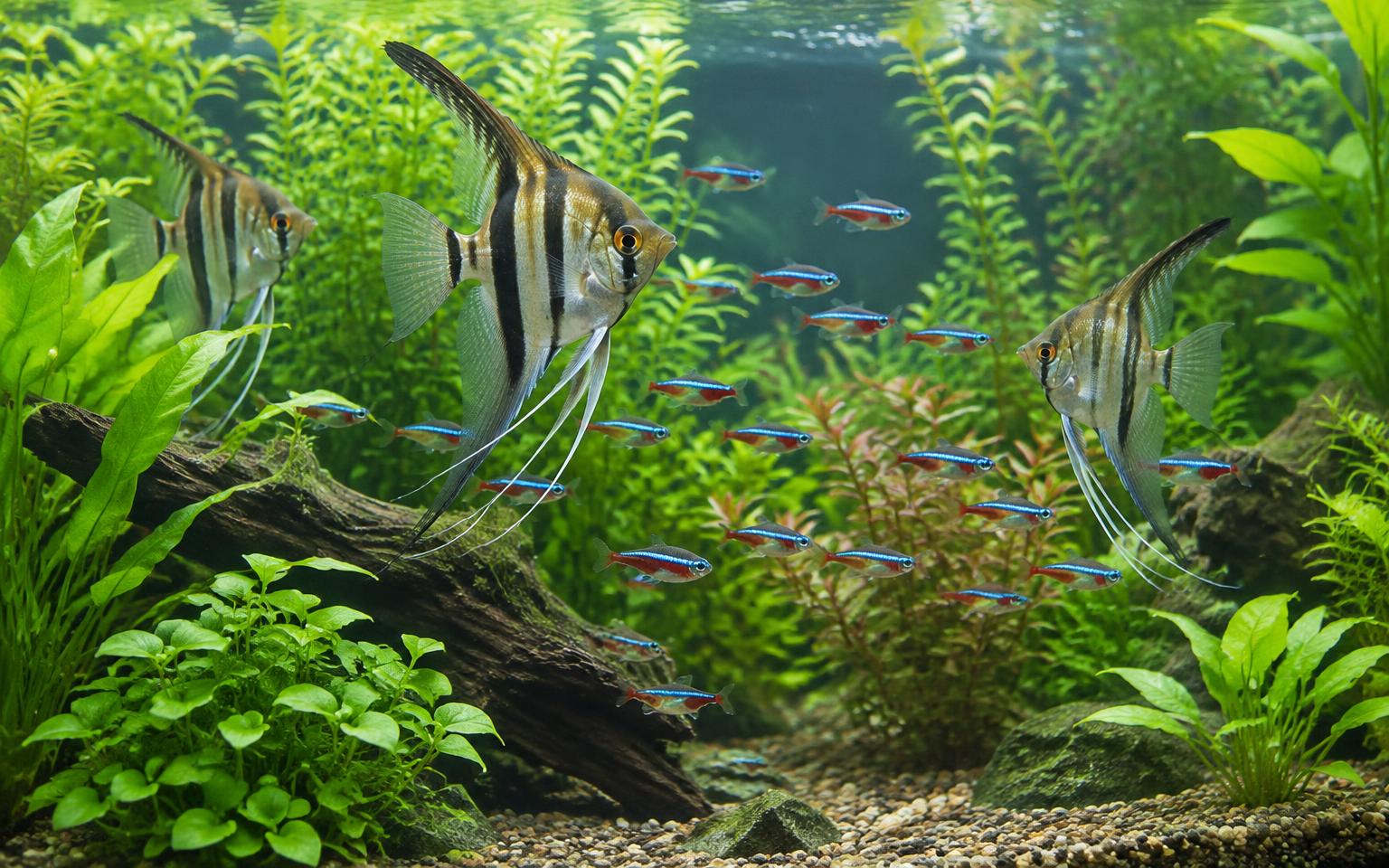
Representative fish photography; individual appearances vary.
At a glance
- Scientific name
- Cyprinus rubrofuscus (ornamental varieties)
- Family
- Cyprinidae
- Origin
- Selectively bred in Japan from Amur carp
- Lifespan
- 25–35 years, occasionally over 50
- Adult size
- 60–90 cm
- Weight
- 5–15 kg
- Temperament
- Tame, interactive pond fish that learns to feed from the hand.
- Activity level
- Moderate; graceful, steady swimmers.
- Social needs
- Gregarious; keep at least three together.
- Intelligence
- Modest but recognises keepers.
- Noise
- Silent.
Housing and environment
- Housing
- A pond of at least 4,500 litres and 1.2 m deep for a small group; filtration sized generously.
- Space requirement
- Garden pond only — never an aquarium long-term.
- Temperature
- Tolerates 2–30 °C with seasonal acclimatisation; needs an ice-free gas-exchange hole in winter.
- Humidity
- Not applicable.
- Exercise
- Needs a large, deep pond to swim and overwinter.
- Grooming
- Not applicable.
Diet and feeding
Pond pellets adjusted seasonally; wheatgerm-based food in cool water.
Behaviour and compatibility
Long-lived commitment measured in decades; herons and cats are real predators.
- With children
- Wonderful family pond fish with supervision around water.
- With other animals
- Keep with other koi or large goldfish; protect from predators.
- Training difficulty
- Learns feeding routines readily.
Health
- Koi herpesvirus from unquarantined new fish
- Parasites (flukes, anchor worm)
- Ulcers in poor water
- Winter stress in shallow ponds
Quarantine every new koi for at least four weeks; KHV is incurable and devastating.
Special care requirements
See the housing, diet and health sections — this species has needs that are easy to underestimate.