
Trigonostigma heteromorpha
Harlequin Rasbora
Harlequin rasboras are hardy, peaceful shoaling fish that suit new fishkeepers wanting an active, colourful community tank without the fussiness of some tetra species.
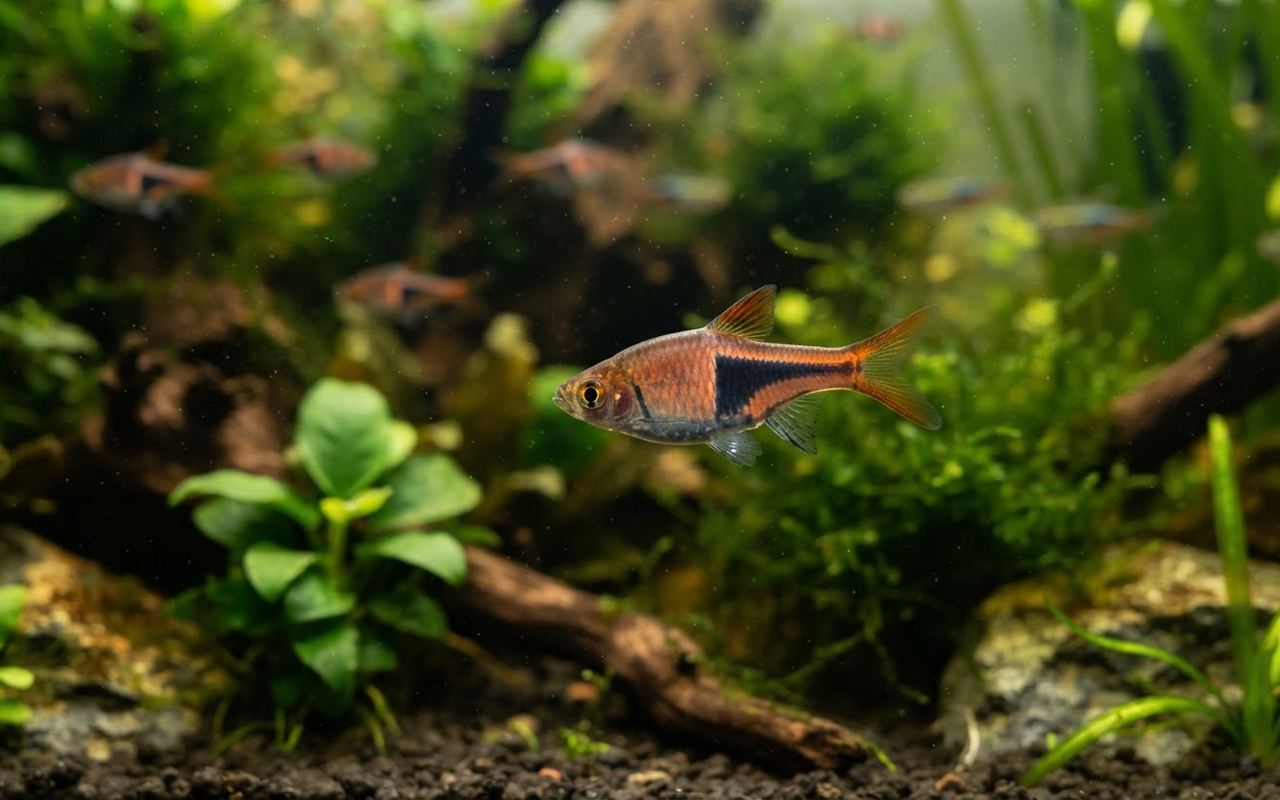
AI-generated editorial illustration of the subject; not a photograph of a specific animal, product or case.
At a glance
- Scientific name
- Trigonostigma heteromorpha
- Family
- Cyprinidae
- Origin
- Slow blackwater streams of Malaysia, Sumatra and Thailand
- Lifespan
- 5–8 years
- Adult size
- 3–4.5 cm
- Weight
- Not typically measured
- Temperament
- Calm, sociable shoaling fish that rarely nips fins
- Activity level
- Moderate; steady mid-water shoaling
- Social needs
- High; needs a shoal of eight or more to display confident, natural behaviour
- Intelligence
- Simple shoaling and feeding-response behaviour
- Noise
- Silent
Housing and environment
- Housing
- Planted aquarium of at least 55 litres with soft, slightly acidic water
- Space requirement
- Horizontal swimming space with dense planting for security
- Temperature
- 22–27°C
- Humidity
- Not applicable, aquatic species
- Exercise
- Provided by tank length and shoal swimming
- Grooming
- Not applicable
Life stages and changing needs
Expanded care guidance · Updated 7 October 2026 · Not professionally reviewed
Young animals and settling in
Young schooling fish need an established aquarium, appropriately sized food and protection from filter intakes. Many are egg-layers with specialised fry care; do not assume they reproduce like guppies. Choose an appropriately sized compatible group and confirm species identity before stocking. A new tank needs biological cycling before animals arrive.
Adult care and reproductive changes
Adults need same-species companionship and room to school, alongside hiding cover that does not remove swimming space. One fish alone or a token pair may not display normal behaviour. Assess tank mates for predation, fin-nipping and incompatible water requirements. Do not increase the group beyond the aquarium’s mature filtration and space capacity.
Later life and changing needs
There is no reliable birthday at which these fish become senior. Follow the individual: body condition, swimming control and ability to reach food matter more than a calendar label. A fish becoming thin or inactive needs water tests and a health assessment; ageing does not explain ulcers, rapid breathing or a sudden loss of appetite.
Diet and feeding
Small flake and micro-pellet foods with occasional live or frozen daphnia
Offer a complete food suitable for the exact species and mouth size, complemented where appropriate with suitable frozen or prepared foods. These fish are not all herbivores, and algae is not a balanced diet. Spread small portions so dominant fish do not monopolise feeding. Avoid bread, table scraps and wild prey from contaminated water.
Feed small amounts while observing every fish, including timid individuals. Remove uneaten food and reduce the next portion if it accumulates. More food means more waste, not necessarily faster healthy growth. A change in appetite should prompt checks of temperature, ammonia, nitrite and other species-relevant water parameters before adding medications or changing multiple variables.
Daily care and ongoing checks
Every day
Each day check filter flow, heater operation where used, swimming, respiration and feeding response. Count fish and inspect for injuries. A mature biological filter is essential before stocking; clear water can still contain harmful nitrogen waste. Treat replacement water for chlorine or chloramine and avoid sudden temperature or chemistry changes.
Regular maintenance and prevention
Keep a log of water tests, partial water changes and new arrivals. Base maintenance on test results and stocking, not a fixed promise that one weekly change fits every aquarium. Preserve filter bacteria by avoiding untreated tap-water rinses of biological media. Use separate quarantine equipment and ask an aquatic vet about an appropriate quarantine plan.
Behaviour and compatibility
Tight shoaling, distinctive triangular black marking display, egg-laying on the underside of broad leaves
- With children
- Good community fish for supervised feeding and observation
- With other animals
- Compatible with other small peaceful community species and shrimp
- Training difficulty
- Not applicable
Health
- Ich
- Fin rot from poor water quality
- Fungal infections after injury
No individual veterinary treatment is realistic; quarantine new stock and maintain stable water quality
Special care requirements
Soft, slightly acidic water improves colour and long-term health compared with hard tap water
Schooling cover and appropriate food size
Harlequin rasboras are schooling fish, not livebearers. A suitable same-species group and unobstructed swimming area support more natural behaviour, while planting provides refuge. Choose peaceful companions with compatible water requirements and avoid predators or boisterous fish that prevent the group from feeding or using the open water.
Their small mouths need suitably sized particles. Spread a modest feeding portion and observe the quieter fish; activity at the surface does not mean all have eaten. If breeding is attempted, eggs and fry require separate specialised care. Do not crowd a community aquarium in the hope that a larger school compensates for limited space.
Before you take one on
Sources and further guidance
These welfare and veterinary resources inform general husbandry advice; they do not certify this profile or replace a species-experienced professional. Confirm exact environmental settings and feeding plans for your animal.
Can your home meet harlequin rasbora needs?
- Plan for a lifespan of 5–8 years, including holiday cover and, where one is available, a vet familiar with this species. Lifespan ranges are not guarantees.
- Arrange the social setting before arrival. Social guidance for this species: High; needs a shoal of eight or more to display confident, natural behaviour. Do not assume another animal of any species is a suitable companion.
- Habitat priority for this species: Horizontal swimming space with dense planting for security. Make sure your setup can provide this consistently. Check temperature and water quality with a thermometer and test kits rather than guessing.
- Key care point: Soft, slightly acidic water improves colour and long-term health compared with hard tap water. Discuss diet and any specialist needs with the supplier, rescue and a vet who treats this species, and check local legal requirements before acquiring an animal.
Educational reference, not an individual diagnosis or a verified professional review. Read our editorial policy.
Guidance libraries and further reading
These organisations publish relevant guidance. Their links are further reading, not evidence that they have reviewed this page.