
Chloebia gouldiae
Gouldian Finch
Gouldian finches are strikingly colourful aviary birds prized for their appearance rather than interaction. They reward a stable, warm, well-planted flight with quiet colour and song but do not tolerate handling or careless temperature swings.
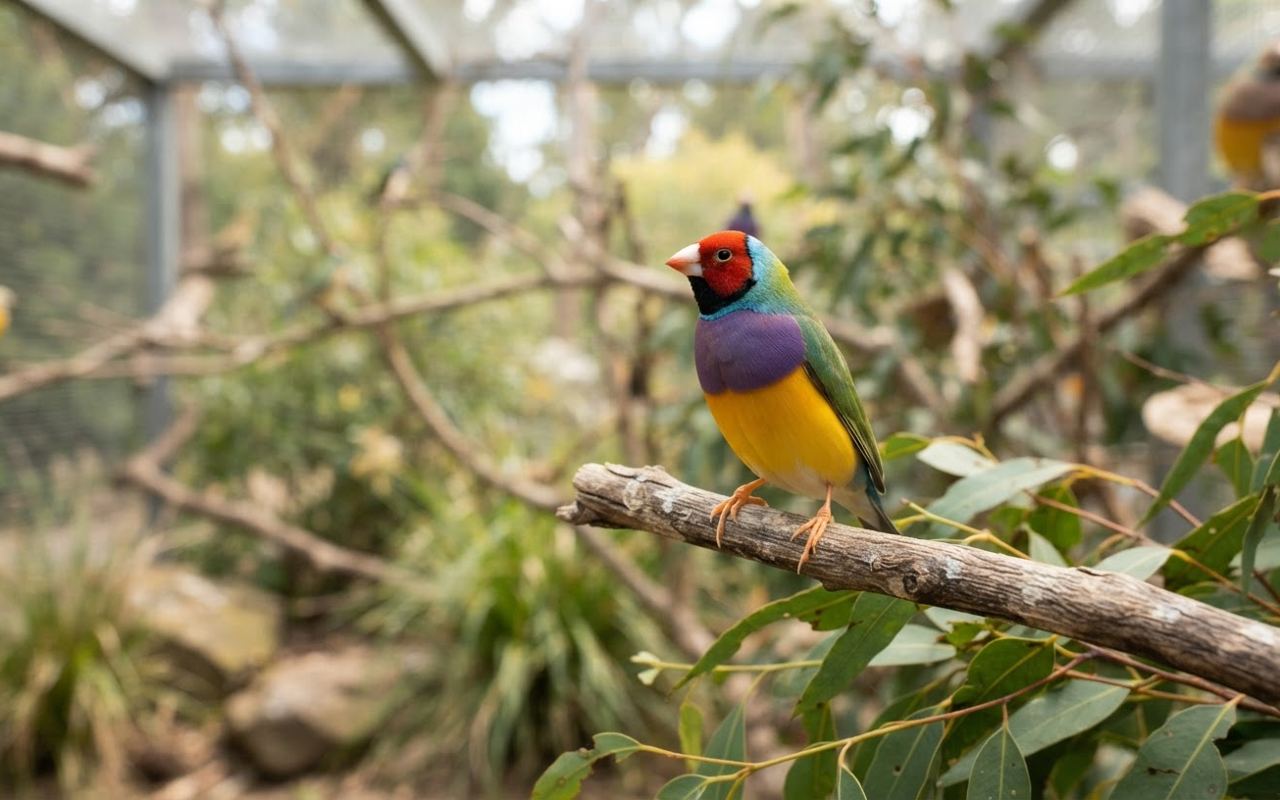
AI-generated editorial illustration of the subject; not a photograph of a specific animal, product or case.
At a glance
- Scientific name
- Chloebia gouldiae
- Family
- Estrildidae
- Origin
- Tropical savannah woodland of northern Australia
- Lifespan
- 5–8 years
- Adult size
- 12–14 cm
- Weight
- 12–16 g
- Temperament
- Shy, gentle and skittish; not a hands-on pet
- Activity level
- Moderate; active flitting between perches through daylight hours
- Social needs
- High need for company of its own species, low need for human interaction
- Intelligence
- Simple, instinct-driven flock behaviour
- Noise
- Quiet, soft chirps and warbles
Housing and environment
- Housing
- Flight cage at least 100 cm long, or outdoor aviary in mild climates
- Space requirement
- Horizontal flying space matters far more than height
- Temperature
- 20–28°C; sensitive to cold and draughts
- Humidity
- 50–60%
- Exercise
- Flight within a long flight cage or aviary
- Grooming
- Self-maintained; a shallow bathing dish should be offered several times a week
Life stages and changing needs
Expanded care guidance · Updated 7 October 2026 · Not professionally reviewed
Young animals and settling in
Adopt a fully weaned bird that is eating independently. Hand-feeding an unweaned chick is not a beginner bonding exercise and carries aspiration and nutritional risks. Record initial weight using a suitable scale, let the bird settle with predictable routines, and confirm its current diet before making changes. Young birds still need room to fly and opportunities to forage.
Adult care and reproductive changes
Adults may become territorial or start laying eggs even without a mate. Do not encourage breeding with nest boxes unless you have specialist support and a plan for chicks. Species-specific social needs matter: a bird that tolerates a neighbour is not necessarily safe sharing a cage. Introduce any compatible companions gradually with separate quarantine arrangements.
Later life and changing needs
Older birds may benefit from easier routes between perches and food, while retaining flight or climbing opportunities suited to their ability. Choose secure, comfortable perches and watch feet and grip. New inactivity, weight loss, altered droppings or sitting low in the cage is not normal ageing. Avian veterinary checks can identify changes before obvious illness.
Diet and feeding
Finch seed mix, live or dried insects while breeding, leafy greens and cuttlebone
A seed-only diet is not automatically balanced, but diet conversion must respect the exact species. Ask an avian veterinarian about an appropriate formulated food and fresh-food plan; parrots and finches do not have identical requirements. Remove spoiled fresh food promptly and check that the bird is actually swallowing food rather than only scattering it.
Change diets gradually while monitoring weight and intake; never starve a bird into accepting pellets. Provide hygienic drinking water and clean dishes. Avoid avocado, chocolate, caffeine, alcohol and heavily salted human foods. Vitamin and mineral products should follow a veterinary plan, especially when a formulated diet already supplies these nutrients.
Daily care and ongoing checks
Every day
Check appetite, droppings, posture, breathing and activity each day. Offer safe foraging opportunities and flight space appropriate to the individual. Natural perches of varied suitable diameter help foot use; abrasive sandpaper covers are not nail care. Keep birds away from cooking fumes, overheated non-stick materials, smoke and aerosol sprays.
Regular maintenance and prevention
Clean dishes and soiled surfaces frequently and inspect toys for loose fibres or entrapment. Protect a quiet sleep period and allow withdrawal from interaction. Have an avian-vet contact and a transport carrier ready. Quarantine new birds with separate tools and arrange a health assessment before allowing contact with established birds.
Behaviour and compatibility
Flocking, quiet warbling song from males, colour-based mate preference
- With children
- Best observed rather than handled; too delicate for young children to hold
- With other animals
- Keep only with other calm, similarly sized finch species
- Training difficulty
- Not applicable; not a hand-tamed species
Health
- Air-sac mite infestation
- Chilling and respiratory infection
- Egg binding in breeding hens
Avian vet review recommended if breathing sounds clicky or feathers stay fluffed for more than a day
Special care requirements
Very sensitive to stress and cold; sudden temperature drops can be fatal within hours
Warmth, flock housing and colour-coded husbandry
Gouldian finches are more sensitive to cold and draughts than many commonly kept finches, reflecting their tropical Australian origin, so maintain a consistently warm, draught-free environment, particularly overnight and during colder months. They are social, flock-living birds and should not be kept alone; provide at least one compatible companion and ideally a small same-species group in a flight large enough for sustained flying.
This species can be prone to respiratory infections and air-sac mite infestations, so watch for tail-bobbing, open-mouth breathing or clicking sounds and seek avian veterinary advice promptly rather than waiting. Offer a varied seed mix alongside fresh greens and a cuttlebone or mineral block, and avoid sudden temperature swings around moulting, when finches are generally more vulnerable to stress and illness.
Before you take one on
Sources and further guidance
These welfare and veterinary resources inform general husbandry advice; they do not certify this profile or replace a species-experienced professional. Confirm exact environmental settings and feeding plans for your animal.
Can your home meet gouldian finch needs?
- Plan for a lifespan of 5–8 years, including holiday cover and, where one is available, a vet familiar with this species. Lifespan ranges are not guarantees.
- Arrange the social setting before arrival. Social guidance for this species: High need for company of its own species, low need for human interaction. Do not assume another animal of any species is a suitable companion.
- Habitat priority for this species: Horizontal flying space matters far more than height. Make sure your setup can provide this consistently. Check the room stays within the listed temperature range with a thermometer rather than judging by feel.
- Key care point: Very sensitive to stress and cold; sudden temperature drops can be fatal within hours. Discuss diet and any specialist needs with the supplier, rescue and a vet who treats this species, and check local legal requirements before acquiring an animal.
Educational reference, not an individual diagnosis or a verified professional review. Read our editorial policy.
Guidance libraries and further reading
These organisations publish relevant guidance. Their links are further reading, not evidence that they have reviewed this page.