
Octodon degus
Degu
Degus are sociable, sunlight-loving rodents from Chile that need daytime activity, dust baths and a very low-sugar diet. Their intelligence makes them rewarding but demanding pets.
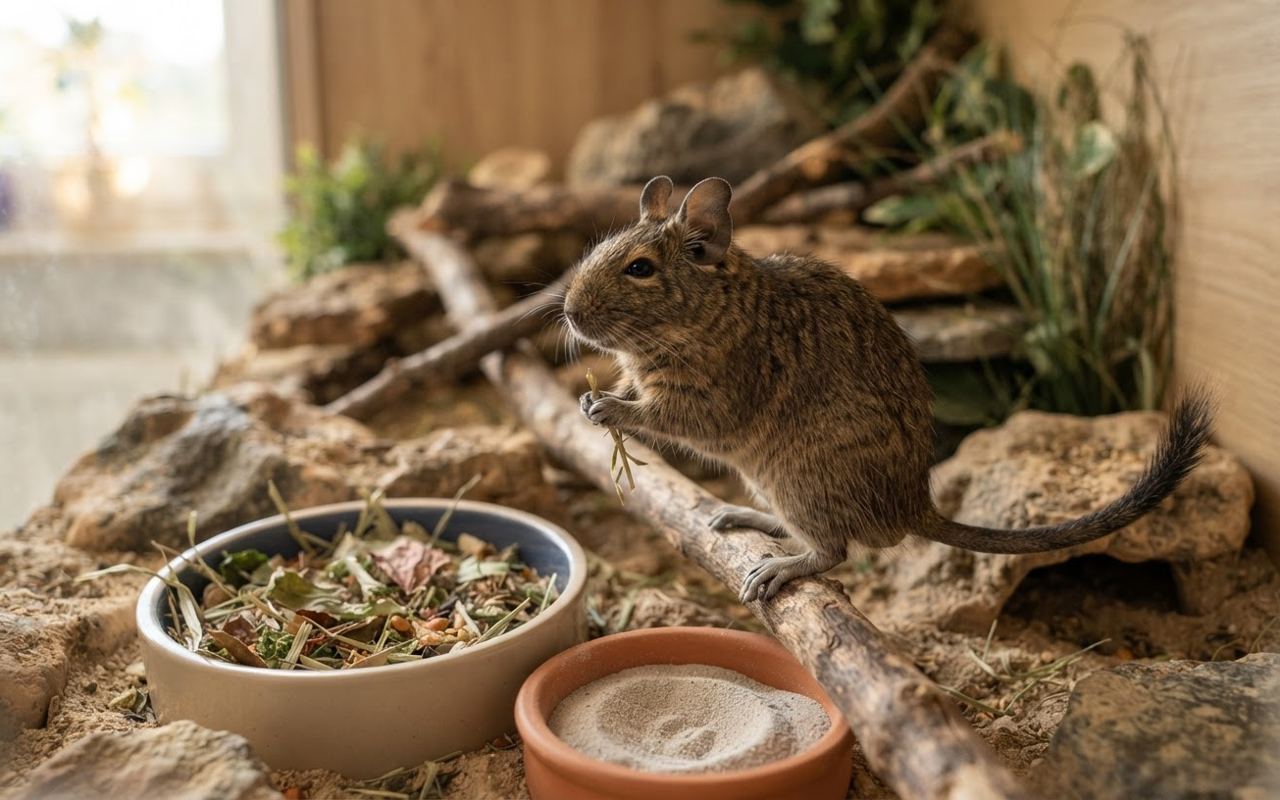
AI-generated editorial illustration of the subject; not a photograph of a specific animal, product or case.
At a glance
- Scientific name
- Octodon degus
- Family
- Octodontidae
- Origin
- Central Chile
- Lifespan
- 5–8 years, occasionally longer
- Adult size
- 12–20 cm body length, plus a long tail
- Weight
- 170–300 g
- Temperament
- Highly social, diurnal and intelligent
- Activity level
- High, active mostly during the day unlike many rodents
- Social needs
- Very high; must be kept in same-sex groups of two or more
- Intelligence
- Excellent problem-solvers; use varied vocalisations and recognise individuals
- Noise
- Chirps and calls through the day, generally not disruptive
Housing and environment
- Housing
- Large multi-level cage at least 100 x 60 x 100 cm with metal bars, not plastic
- Space requirement
- As much horizontal and vertical space as possible for climbing and jumping
- Temperature
- 18–22°C; sensitive to heat and humidity
- Humidity
- Low; degus cope poorly with damp, hot conditions
- Exercise
- Large solid-surface wheel, climbing branches and digging boxes
- Grooming
- Needs regular access to a chinchilla-sand dust bath, typically several times a week, to keep its dense coat in condition
Life stages and changing needs
Expanded care guidance · Updated 7 October 2026 · Not professionally reviewed
Young animals and settling in
A young degu should already be weaned and ideally stay with littermates or a same-sex group rather than being rehomed alone, since degus are highly social animals that need the company of other degus to thrive. Provide a large, multi-level enclosure with branches and platforms before arrival, since degus are active climbers in the wild and a small cage restricts natural behaviour from the start. Confirm the diet the breeder or rescue has been feeding and change gradually.
Adult care and reproductive changes
Adults need to stay in pairs or small same-sex groups, or one neutered male with females, since solitary housing causes measurable stress; introductions between unfamiliar degus should be done gradually and carefully, as they can be territorial. Provide a dust bath with suitable chinchilla-type sand two or three times a week for coat care, but do not leave it in permanently, since constant access is not necessary and can affect coat condition.
Later life and changing needs
Degus typically live six to nine years, a relatively long lifespan for a small rodent, so continued commitment to company, space and diet matters throughout their life, not just at the start. Keep monitoring teeth, which grow continuously and are naturally yellow-orange in this species; white teeth can actually be a sign of illness rather than health. An older degu that goes off food, seems less active, or shows cloudy eyes or excessive thirst and urination needs a vet check, since degus are prone to diabetes and cataracts.
Diet and feeding
Grass hay as the staple plus a low-sugar guinea-pig-style pellet; sugar and fruit must be strictly limited
Degus are herbivores and are very prone to diabetes, so their diet must be high in fibre and low in sugar and fat. Provide unlimited good-quality hay as the foundation of the diet, supplemented with a modest daily amount, around one to two tablespoons, of a commercial degu-specific pellet formulated to be low in sugar; chinchilla or guinea-pig food can sometimes substitute if a true degu food is unavailable, but check the sugar and fat content first.
Do not feed fruit, sugary treats or sweetened snacks, and keep nuts and seeds to rare, tiny amounts at most, since this species' susceptibility to diabetes makes sugary or fatty foods a genuine health risk rather than a harmless indulgence. Offer a small amount of fresh, low-sugar vegetables and leafy greens, and watch for increased thirst, weight loss or lethargy, which can indicate diabetes and need prompt veterinary attention.
Daily care and ongoing checks
Every day
Provide constant access to hay and fresh water, and check daily that the degu is eating normally, since a drop in appetite in a prey species can signal a problem that needs quick attention. Offer branches, platforms and a solid-roofed enclosure, since degus can be startled by movement overhead as a natural response to aerial predators, and need vertical space to climb, jump and feel secure.
Regular maintenance and prevention
Check teeth, coat and activity level each day, and provide safe wooden chew items to help manage the continuously growing teeth. Clean the enclosure regularly to control odour and bacterial buildup, and offer a dust bath on a scheduled basis rather than leaving it available at all times.
Behaviour and compatibility
Chirping communication, dust bathing, digging and daytime foraging
- With children
- Best observed rather than heavily handled; can nip if startled
- With other animals
- Keep only with other degus
- Training difficulty
- Moderate; responds to consistent, gentle handling and food rewards
Health
- Diabetes-like illness from sugary diets
- Dental overgrowth
- Cataracts
- Tail degloving if grabbed
Needs a vet experienced with unusual small mammals; diet-related illness is common and preventable
Special care requirements
Sugar, including most fruit, must be avoided entirely to prevent diabetes-like disease
Diabetes-aware feeding and active group housing
Because degus are unusually prone to diabetes among small pets, treat sugary and fatty treats as a genuine health risk rather than an occasional harmless reward, and choose a degu-specific or otherwise low-sugar pellet rather than a generic small-mammal mix that may contain dried fruit or added sugars. Watch for increased thirst, cloudy eyes or weight loss, which can indicate diabetes or cataracts developing.
Degus are intensely social and active, so a solitary degu or one kept in a small, low cage is likely to show signs of stress or frustration; provide a same-sex group or a neutered male with females, and a tall, multi-level enclosure with branches and a solid roof, since this species is easily startled by movement from above. Offer a scheduled dust bath rather than leaving it available constantly.
Before you take one on
Sources and further guidance
These welfare and veterinary resources inform general husbandry advice; they do not certify this profile or replace a species-experienced professional. Confirm exact environmental settings and feeding plans for your animal.
Can your home meet degu needs?
- Plan for a lifespan of 5–8 years, occasionally longer, including holiday cover and, where one is available, a vet familiar with this species. Lifespan ranges are not guarantees.
- Arrange the social setting before arrival. Social guidance for this species: Very high; must be kept in same-sex groups of two or more. Do not assume another animal of any species is a suitable companion.
- Habitat priority for this species: As much horizontal and vertical space as possible for climbing and jumping. Make sure your setup can provide this consistently. Check the room stays within the listed temperature range with a thermometer rather than judging by feel.
- Key care point: Sugar, including most fruit, must be avoided entirely to prevent diabetes-like disease. Discuss diet and any specialist needs with the supplier, rescue and a vet who treats this species, and check local legal requirements before acquiring an animal.
Educational reference, not an individual diagnosis or a verified professional review. Read our editorial policy.
Guidance libraries and further reading
These organisations publish relevant guidance. Their links are further reading, not evidence that they have reviewed this page.