
Correlophus ciliatus
Crested Gecko
Crested geckos need no live-food colony and no complex heating, making them one of the simplest reptiles to keep well in a planted vertical vivarium.
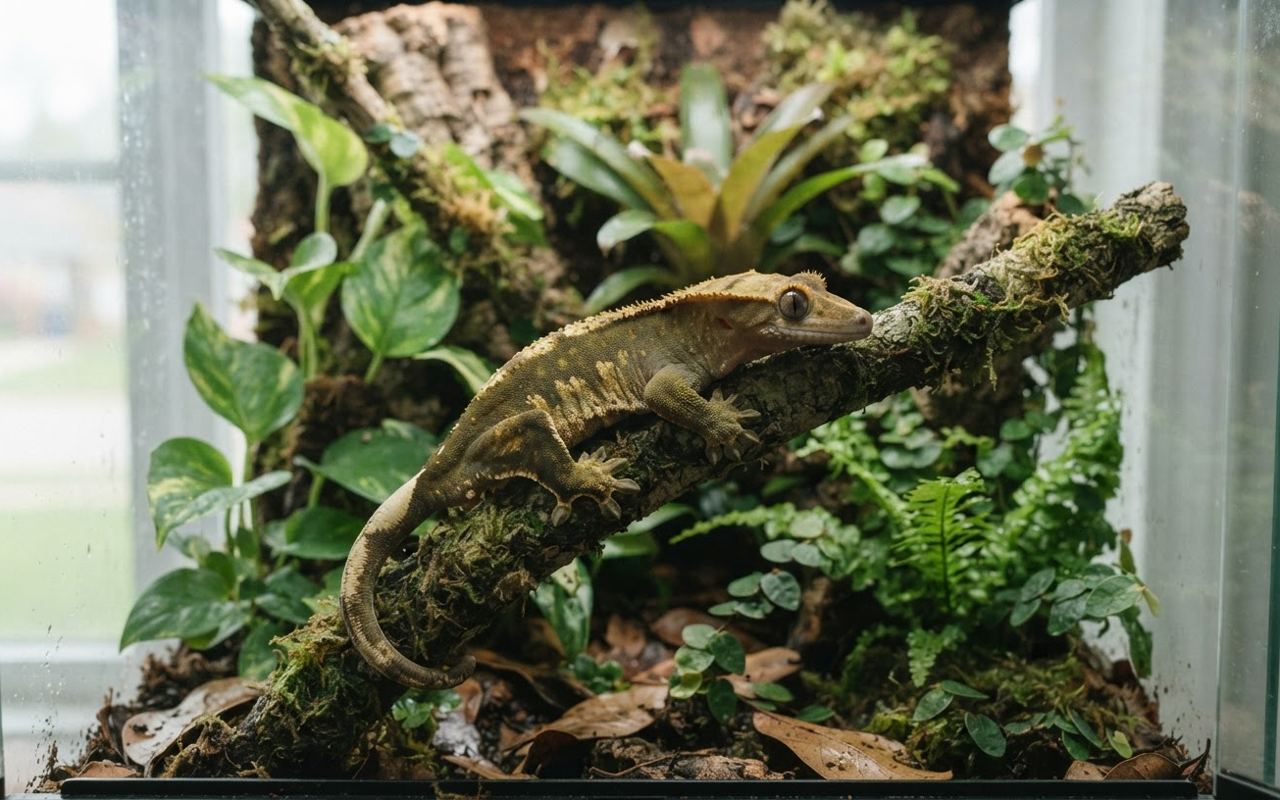
AI-generated editorial illustration of the subject; not a photograph of a specific animal, product or case.
At a glance
- Scientific name
- Correlophus ciliatus
- Family
- Diplodactylidae
- Origin
- New Caledonia
- Lifespan
- 15–20 years
- Adult size
- 17–25 cm
- Weight
- 35–55 g
- Temperament
- Calm but jumpy; tolerates short handling
- Activity level
- Nocturnal and arboreal
- Social needs
- Solitary; never house males together
- Intelligence
- Learns feeding stations quickly
- Noise
- Occasional chirps and barks
Housing and environment
- Housing
- Minimum 45 x 45 x 60 cm tall for an adult, heavily planted
- Space requirement
- Height over floor area
- Temperature
- 22–26°C; above 28°C is dangerous
- Humidity
- 60–80% at night, drying out during the day
- Exercise
- Vertical climbing space with dense foliage
- Grooming
- Needs high humidity for clean sheds, especially on toes and tail
Life stages and changing needs
Expanded care guidance · Updated 7 October 2026 · Not professionally reviewed
Young animals and settling in
Young geckos need a secure habitat with feeding stations they can find and climbing routes suitable for their size. Record weight and feeding without repeatedly restraining the animal. Do not assume growth must follow an online monthly chart. Establish independently feeding animals and ask a reptile veterinarian about the exact species and its lighting and supplementation needs.
Adult care and reproductive changes
Adults need structured vertical space, hides and safe routes between feeding and resting areas. Keep these geckos individually unless a specialist has assessed a particular arrangement; apparent tolerance does not exclude competition or injury. Females may lay infertile eggs and need monitoring. Breeding is not required for health and adds nutritional and housing demands.
Later life and changing needs
Later-life changes should be assessed through weight, grip, movement and intake. If climbing becomes difficult, provide accessible routes rather than eliminating environmental choices. Keep the normal species-appropriate temperature and humidity cycle. Weakness, tremors, swollen joints or persistent poor appetite needs a reptile-vet examination instead of an assumption that the animal is simply old.
Diet and feeding
Complete powdered crested gecko diet mixed with water, plus occasional insects
Use a complete formulated diet explicitly intended for the species as the dietary foundation. Fresh fruit or baby food alone is not nutritionally complete. Mix according to the maker’s instructions, keep preparation tools clean and discard spoiled food. Suitable feeder insects may form part of a species-specific plan, with gut-loading and supplementation guided by a professional.
Watch actual intake: food drying in a bowl is not proof that it was eaten. Position dishes where the gecko can reach them easily and use weight records to assess portions. Avoid oversized insects and remove live prey left uneaten. Do not stack multiple calcium and vitamin products on top of a complete diet without checking total intake.
Daily care and ongoing checks
Every day
Check temperatures, ventilation, water and substrate daily. Humidity should follow the species’ needs with appropriate opportunities for surfaces to dry; constant saturation can cause problems. Protect against overheating, particularly in warm rooms. Heat and lighting arrangements need independent measurement, secure fittings and a veterinary or specialist plan rather than a guess based on tropical origin.
Regular maintenance and prevention
Inspect toes and the tail area after shedding, and never pull retained skin. Spot-clean waste, wash food dishes and check climbing supports for looseness or sharp edges. Handle gently and briefly only when necessary; a dropped tail does not regrow. Keep dogs and cats away even if the gecko appears calm during contact.
Behaviour and compatibility
Jumping between branches, licking eyes clean, dropping the tail when stressed
- With children
- Supervised handling only — they jump unpredictably
- With other animals
- House alone
- Training difficulty
- Not applicable
Health
- Metabolic bone disease
- Floppy tail syndrome
- Retained shed
- Impaction
- Heat stress
Reptile vet required; a dropped tail does not regrow in this species
Special care requirements
Usually needs no strong heat source in a room kept at about 22–26°C, but overheats above about 28°C, so check summer temperatures
Complete food and safe vertical routes
Crested geckos need climbing cover and secure resting places at different heights. They can be vulnerable to overheating, so monitor the enclosure during summer rather than adding strong heat by default. A tail lost in a defensive response does not regrow; minimise unnecessary restraint and keep predator pets away.
Use a complete crested-gecko diet, not fruit purée or baby food as the staple. Place feeding stations where the gecko actually travels and monitor its weight if intake is unclear. A permanently damp habitat is not the aim: plan appropriate humidity changes and ventilation, with safe access to drinking water.
Before you take one on
Sources and further guidance
These welfare and veterinary resources inform general husbandry advice; they do not certify this profile or replace a species-experienced professional. Confirm exact environmental settings and feeding plans for your animal.
Can your home meet crested gecko needs?
- Plan for a lifespan of 15–20 years, including holiday cover and, where one is available, a vet familiar with this species. Lifespan ranges are not guarantees.
- Arrange the social setting before arrival. Social guidance for this species: Solitary; never house males together. Do not assume another animal of any species is a suitable companion.
- Habitat priority for this species: Height over floor area. Make sure your setup can provide this consistently. Measure temperatures and humidity with thermometers and a hygrometer rather than guessing.
- Key care point: Usually needs no strong heat source in a room kept at about 22–26°C, but overheats above about 28°C, so check summer temperatures. Discuss diet and any specialist needs with the supplier, rescue and a vet who treats this species, and check local legal requirements before acquiring an animal.
Educational reference, not an individual diagnosis or a verified professional review. Read our editorial policy.
Guidance libraries and further reading
These organisations publish relevant guidance. Their links are further reading, not evidence that they have reviewed this page.