
Pantherophis guttatus
Corn Snake
Corn snakes are widely regarded as the best beginner snake: modest in size, calm in temperament and undemanding in their requirements.
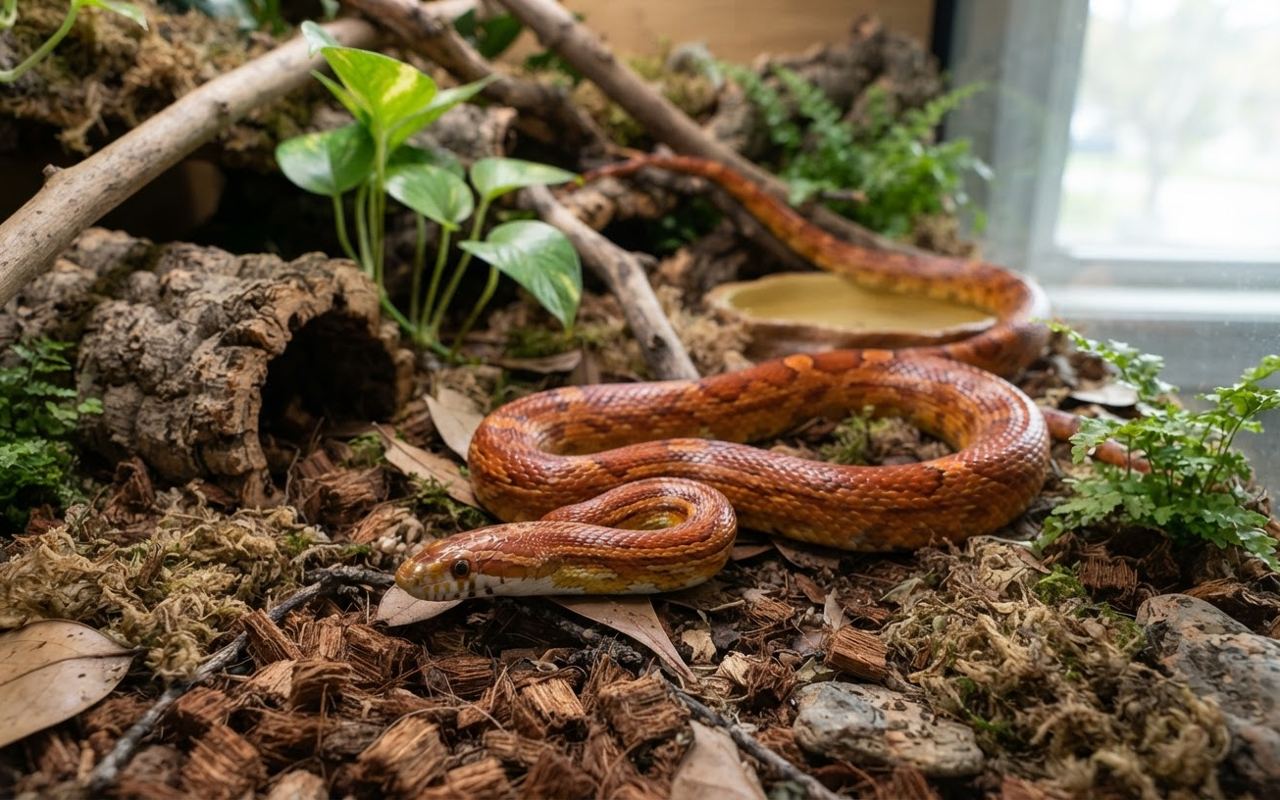
AI-generated editorial illustration of the subject; not a photograph of a specific animal, product or case.
At a glance
- Scientific name
- Pantherophis guttatus
- Family
- Colubridae
- Origin
- Southeastern United States
- Lifespan
- 15–20 years
- Adult size
- 120–180 cm
- Weight
- 500–900 g
- Temperament
- Placid, rarely defensive and easy to handle
- Activity level
- Crepuscular and exploratory
- Social needs
- Solitary
- Intelligence
- Learns handling routines and enclosure layout
- Noise
- Silent
Housing and environment
- Housing
- Minimum 120 x 60 x 60 cm with an absolutely secure lid
- Space requirement
- Length is more important than height, though corn snakes enjoy climbing
- Temperature
- Warm end 29–32°C, cool end 21–24°C
- Humidity
- 40–50%, raised during shedding
- Exercise
- Climbing branches and deep substrate for burrowing
- Grooming
- Provide a humid hide during shedding
Life stages and changing needs
Expanded care guidance · Updated 7 October 2026 · Not professionally reviewed
Young animals and settling in
Choose an established, independently feeding juvenile and request records of meals, sheds and any treatments. Set up and test the enclosure before arrival. Give the snake quiet settling time with secure hides, and avoid repeatedly handling it to see whether it has become friendly. Growth changes prey size and enclosure requirements; neither should be judged from age alone.
Adult care and reproductive changes
An adult needs space to move, stretch and explore, not just a hide large enough to contain its coils. Reproductive and seasonal changes can influence activity and feeding, but breeding is optional and creates extra welfare responsibilities. Keep snakes separately and manage introductions only with specialist advice. Check locks and cable openings as the animal grows stronger.
Later life and changing needs
There is no universal senior age or automatic need to reduce heat. Older snakes still need a measured thermal gradient, water and comfortable hiding options. Track weight and muscle condition over time. New lumps, persistent weakness, mouth changes or a worsening feeding pattern deserve a reptile-vet assessment rather than being attributed to normal ageing.
Diet and feeding
Appropriately sized frozen-thawed rodents every 7–14 days
For these rodent-eating snakes, appropriately sized whole prey supplies nutrients that muscle meat alone cannot. Use commercially sourced frozen-thawed prey and thaw hygienically; do not microwave it or refreeze thawed food. Live rodents can seriously injure a snake, including one that is not interested in eating. Do not add supplements to whole prey unless prescribed.
Feeding frequency and prey size depend on species, body condition, age and health. Keep a record rather than increasing portions whenever the snake appears to search. Avoid handling around meals and after feeding. If a meal is refused, check enclosure conditions and recent shed history; repeated refusal with weight loss needs a veterinary plan, not force-feeding at home.
Daily care and ongoing checks
Every day
Check the thermostat, independent temperature readings, water, hides and security daily. Provide a warm and cool choice; room temperature is not a substitute for a controlled gradient. Heat sources need guards where appropriate, and unregulated heat rocks can cause burns. Remove waste promptly and wash hands after contact with the animal or its equipment.
Regular maintenance and prevention
Inspect each shed, especially the eye caps and tail tip, and review humidity if sheds are incomplete. Never peel retained eye caps or pull stuck skin. Keep cleaning supplies separate from food preparation and disinfect using products and methods suitable for reptiles. Ask a reptile veterinarian about baseline examinations and parasite testing for a new snake.
Behaviour and compatibility
Burrowing, climbing, musking when first handled
- With children
- Good for supervised older children
- With other animals
- House alone
- Training difficulty
- Not applicable; tames with regular gentle handling
Health
- Respiratory infections
- Scale rot from damp substrate
- Retained eye caps
- Mites
- Regurgitation from handling after feeding
Reptile vet required; never handle for 48 hours after a meal
Special care requirements
Escape-proofing is critical — corn snakes find every gap in an enclosure
Climbing opportunities and safe handling
Corn snakes explore narrow openings and can escape through small gaps around doors and cables. Provide secure climbing structures and ground-level hides without sharp edges or unstable decorations. Recheck enclosure security as the snake grows, and keep a written plan for carers rather than assuming the lid is self-explanatory.
A young corn snake may be defensive when exposed or restrained. Support its body, keep sessions brief and allow retreat; do not handle during a shed or around feeding. Seasonal appetite changes need interpretation alongside weight and conditions. Planned winter cooling is not a routine treatment for an animal that has stopped eating.
Before you take one on
Sources and further guidance
These welfare and veterinary resources inform general husbandry advice; they do not certify this profile or replace a species-experienced professional. Confirm exact environmental settings and feeding plans for your animal.
Quick answers
- Where do corn snakes live in the wild?
- Corn snakes (Pantherophis guttatus) are native to the south-eastern United States. They live in overgrown fields, forest openings, pine woodland and around farm buildings, and they often shelter underground or under debris. Smithsonian's National Zoo
Can your home meet corn snake needs?
- Plan for a lifespan of 15–20 years, including holiday cover and, where one is available, a vet familiar with this species. Lifespan ranges are not guarantees.
- Arrange the social setting before arrival. Social guidance for this species: Solitary. Do not assume another animal of any species is a suitable companion.
- Habitat priority for this species: Length is more important than height, though corn snakes enjoy climbing. Make sure your setup can provide this consistently. Measure temperatures and humidity with thermometers and a hygrometer rather than guessing.
- Key care point: Escape-proofing is critical — corn snakes find every gap in an enclosure. Discuss diet and any specialist needs with the supplier, rescue and a vet who treats this species, and check local legal requirements before acquiring an animal.
Educational reference, not an individual diagnosis or a verified professional review. Read our editorial policy.
Guidance libraries and further reading
These organisations publish relevant guidance. Their links are further reading, not evidence that they have reviewed this page.