
Neocaridina davidi
Cherry Shrimp
Cherry shrimp are small, bright red freshwater shrimp that clean algae and biofilm in planted tanks. They need a cycled, copper-free aquarium and stable water rather than much hands-on care.
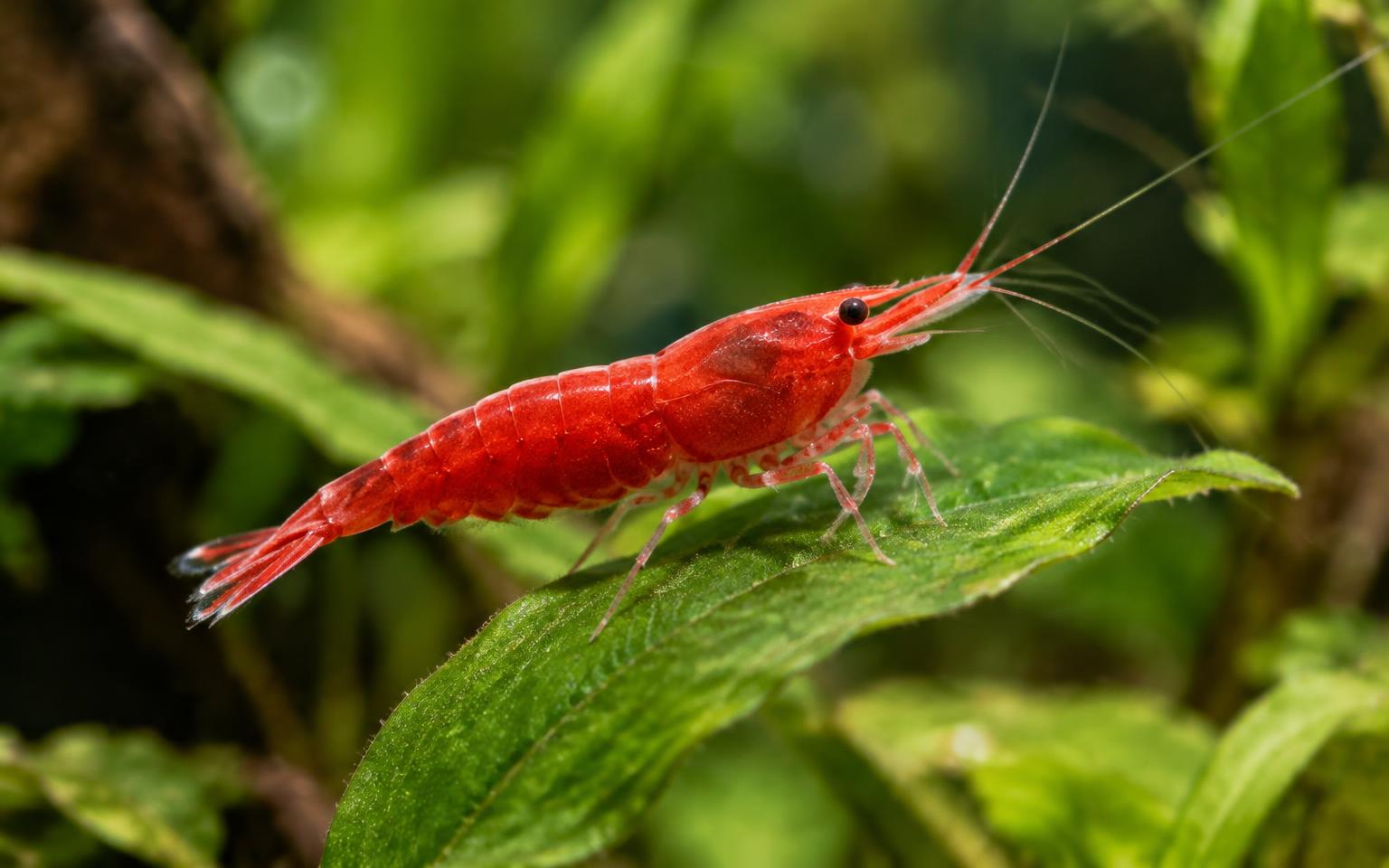
Illustrative cover using relevant category imagery; it does not depict the exact subject.
At a glance
- Scientific name
- Neocaridina davidi
- Family
- Atyidae
- Origin
- Taiwan (selectively bred from wild Neocaridina)
- Lifespan
- 1–2 years
- Adult size
- 2–4 cm
- Weight
- Under 1 g
- Temperament
- Peaceful, industrious algae-grazer; bright red in good grades.
- Activity level
- Constant grazing.
- Social needs
- Highly social; keep in groups of at least 6–10.
- Intelligence
- Minimal.
- Noise
- Silent.
Housing and environment
- Housing
- Minimum 20 litres, densely planted, with a sponge filter or covered intake.
- Space requirement
- Nano-tank suitable.
- Temperature
- 20–26 °C.
- Humidity
- Not applicable.
- Exercise
- Grazes surfaces all day.
- Grooming
- Moults as it grows; leave shed exoskeletons to be eaten.
Life stages and changing needs
Expanded care guidance · Updated 7 October 2026 · Not professionally reviewed
Young animals and settling in
Juvenile dwarf shrimp are extremely sensitive to water chemistry swings and copper, which is lethal to invertebrates even in trace amounts found in some medications and certain tap water sources. Drip-acclimatise new arrivals slowly over an hour or more rather than simply floating the bag, since sudden parameter changes are a common cause of early losses. Provide dense planting or moss for newly released young to hide in, since fish and other larger tank mates readily eat them.
Adult care and reproductive changes
Adult dwarf shrimp breed readily in stable, mature, well-planted aquariums without special intervention, with females carrying visible eggs under their tails before releasing fully formed miniature shrimp rather than a larval stage. Avoid fish species that will eat shrimp or their young if a breeding colony is the goal, and recognise that a mixed-colour population can revert toward wild colouration over generations without deliberate selective breeding.
Later life and changing needs
Dwarf shrimp moult throughout their lives, and a discarded, intact-looking shell is a normal moult rather than a dead shrimp; do not remove a shed skin thinking it is a casualty, since shrimp often eat it afterward to recover minerals. Older shrimp or an unstable moulting cycle can suggest insufficient calcium or unstable water parameters, so review supplementation and testing rather than treating infrequent moult problems as purely age-related.
Diet and feeding
Biofilm and algae, supplemented with shrimp pellets and blanched vegetables.
Dwarf shrimp mainly graze on biofilm and algae growing on surfaces within a mature, well-established aquarium, supplemented with small amounts of specialist shrimp food or blanched vegetables offered sparingly. Overfeeding is a more common problem than underfeeding, since excess uneaten food fouls the water quickly in a small-volume invertebrate setup and can crash water quality overnight. A tank that is too new or too clean may not provide enough natural grazing and will need more deliberate supplemental feeding.
Avoid any food, medication or tap water source containing copper, since this element is highly toxic to shrimp and other invertebrates even at concentrations considered safe for fish. Remove uneaten supplemental food within a few hours to prevent ammonia spikes, which affect this sensitive species faster than most community fish. Calcium-rich foods or mineral supplements support healthy shell development, particularly in soft water.
Daily care and ongoing checks
Every day
Check water parameters regularly given this species' sensitivity to ammonia, nitrite and copper, and observe that shrimp are active, feeding and showing normal colouration rather than pale or lethargic. Top up evaporated water with appropriately treated water to avoid concentrating minerals or toxins, since shrimp tanks are often smaller volumes where evaporation changes chemistry faster than in a large aquarium.
Regular maintenance and prevention
Avoid introducing anything metal, copper-containing or chemically treated into the tank, including some decorations and poorly rinsed new plants, which can carry residues from fertilisers or pest treatments. Inspect for shed moults, egg-carrying females and general population trends as an ongoing health indicator, since a declining shrimp count over time, rather than a single visible death, is often the clearest sign of a developing water-quality problem.
Behaviour and compatibility
Breeds readily in stable water; colour intensity reflects line quality and conditions.
- With children
- Good observed pet; too delicate for handling.
- With other animals
- Any fish large enough will eat them; keep with small peaceful fish or alone.
- Training difficulty
- Not trainable.
Health
- Copper poisoning from medications and tap water
- Failed moults in unstable water
- Bacterial infections in poor conditions
Never use copper-based treatments in a shrimp tank; check medication labels carefully.
Special care requirements
See the housing, diet and health sections — this species has needs that are easy to underestimate.
Copper sensitivity and stable water chemistry
Cherry shrimp are extremely sensitive to copper, which is lethal even in trace amounts found in some medications and tap water sources; never introduce copper-containing treatments, decorations or poorly rinsed plants into their tank. Drip-acclimatise new arrivals slowly, since sudden parameter changes are a common cause of early losses.
A shed, intact-looking shell on the substrate is a normal moult rather than a dead shrimp and is often eaten afterward to recover minerals. A sudden mass die-off or shrimp turning pale needs an immediate water test and partial water change rather than waiting to see if the colony recovers.
Before you take one on
Sources and further guidance
These welfare and veterinary resources inform general husbandry advice; they do not certify this profile or replace a species-experienced professional. Confirm exact environmental settings and feeding plans for your animal.
Can your home meet cherry shrimp needs?
- Plan for a lifespan of 1–2 years, including holiday cover and, where one is available, a vet familiar with this species. Lifespan ranges are not guarantees.
- Arrange the social setting before arrival. Social guidance for this species: Highly social; keep in groups of at least 6–10. Do not assume another animal of any species is a suitable companion.
- Habitat priority for this species: Nano-tank suitable. Make sure your setup can provide this consistently. Check temperature and water quality with a thermometer and test kits rather than guessing.
- Key care point: See the housing, diet and health sections — this species has needs that are easy to underestimate. Discuss diet and any specialist needs with the supplier, rescue and a vet who treats this species, and check local legal requirements before acquiring an animal.
Educational reference, not an individual diagnosis or a verified professional review. Read our editorial policy.
Guidance libraries and further reading
These organisations publish relevant guidance. Their links are further reading, not evidence that they have reviewed this page.