
Salvator merianae
Argentine Black and White Tegu
A rewarding companion for an owner who has researched its needs honestly. As with every animal on this site, this profile is a starting point: confirm details with a vet or specialist before bringing one home.
TeiidaeLifespan 15–20 yearsCare complexity 5/5Not a beginner animal
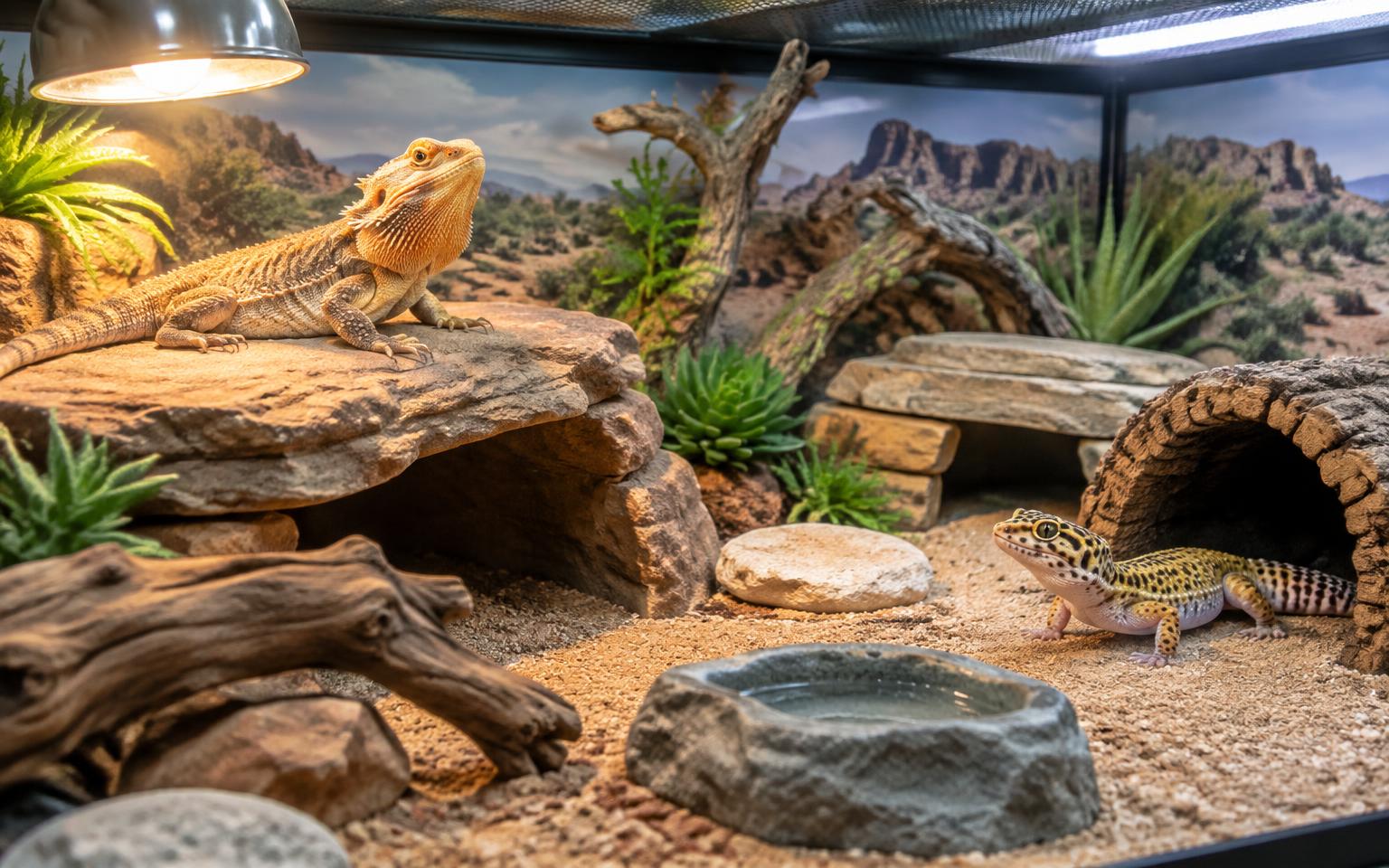
Representative reptiles photography; individual appearances vary.
At a glance
- Scientific name
- Salvator merianae
- Family
- Teiidae
- Origin
- Argentina and surrounding regions
- Lifespan
- 15–20 years
- Adult size
- 90–120 cm
- Weight
- 3–7 kg
- Temperament
- Famously dog-tame when well socialised, but powerful, food-motivated and demanding.
- Activity level
- High; an active, intelligent forager.
- Social needs
- Solitary; bonds with keepers through regular calm handling.
- Intelligence
- Exceptional for a lizard; learns targets, names and routines.
- Noise
- Huffs and tail-thumps when annoyed.
Housing and environment
- Housing
- Adults need a custom enclosure of at least 240 × 120 × 120 cm with deep burrowing substrate.
- Space requirement
- Effectively needs its own room.
- Temperature
- Basking 40–45 °C; ambient 24–30 °C.
- Humidity
- 60–80% — much higher than most large lizards; essential for healthy sheds.
- Exercise
- Needs daily roaming time in a secure room outside the enclosure.
- Grooming
- Soaks and sheds; nails may need trimming.
Diet and feeding
Omnivorous: whole prey, eggs, insects, fruit and vegetables; prone to obesity.
Behaviour and compatibility
Brumates (a winter dormancy) for months each year, which surprises unprepared owners.
- With children
- Only with experienced adult supervision; a food-associated bite is serious.
- With other animals
- Will hunt small pets; supervise rigorously.
- Training difficulty
- Highly trainable with food rewards, but requires expert commitment.
Health
- Obesity and fatty liver disease
- Metabolic bone disease
- Retained shed
- Respiratory infection in cold, dry conditions
Only for experienced keepers with space, budget and an exotic vet willing to treat large lizards.
Special care requirements
See the housing, diet and health sections — this species has needs that are easy to underestimate.