
Atelerix albiventris
African Pygmy Hedgehog
African pygmy hedgehogs are solitary, nocturnal insectivores that need a warm, stable enclosure and patient handling to stay tame. Their strict temperature needs catch many new owners out.
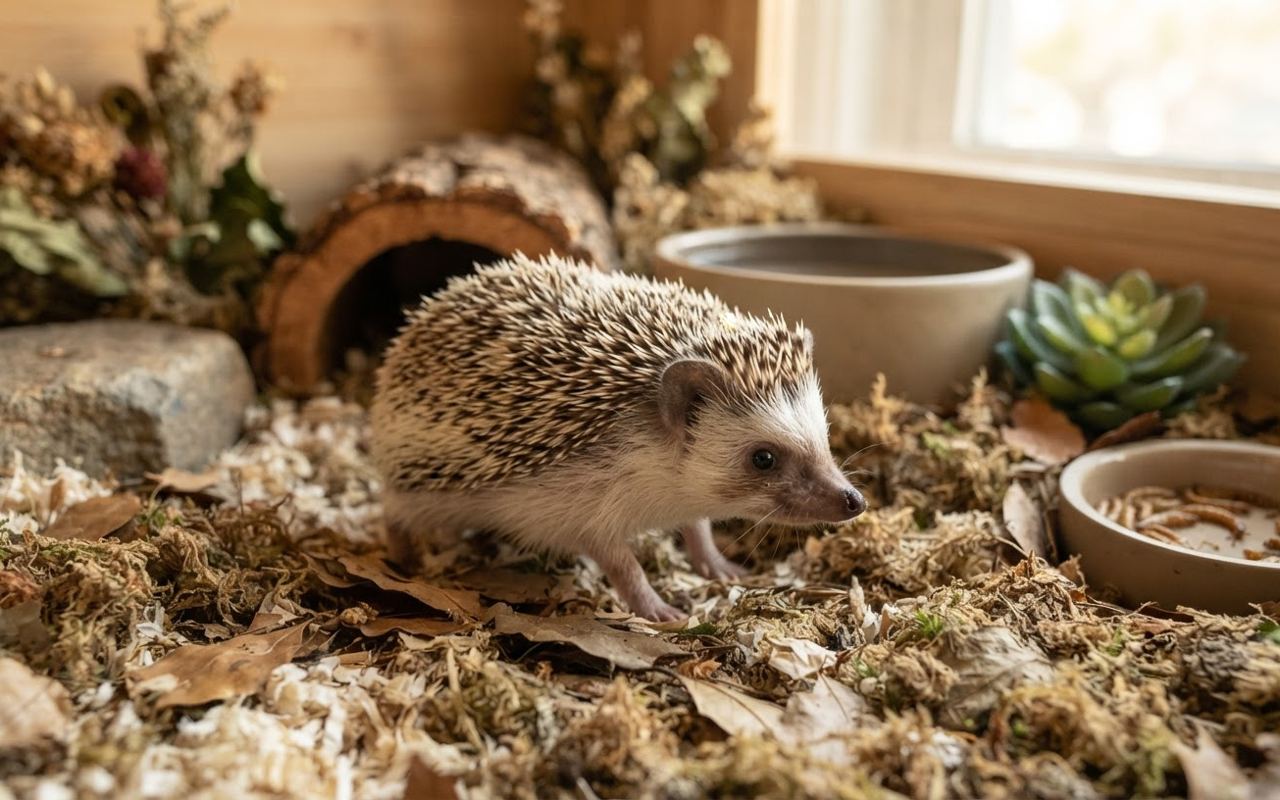
AI-generated editorial illustration of the subject; not a photograph of a specific animal, product or case.
At a glance
- Scientific name
- Atelerix albiventris
- Family
- Erinaceidae
- Origin
- Hybrid of African hedgehog species, originally from central and eastern Africa
- Lifespan
- 4–6 years
- Adult size
- 15–22 cm
- Weight
- 300–600 g
- Temperament
- Solitary, defensive when startled, can become calm with regular gentle handling
- Activity level
- High at night; largely inactive during the day
- Social needs
- Low; must be housed alone as adults, as they fight if paired
- Intelligence
- Simple but capable of learning routines such as feeding times and handling
- Noise
- Quiet; occasional huffing or clicking when alarmed
Housing and environment
- Housing
- Minimum 60 x 90 cm solid-floor enclosure with a hide and heat source
- Space requirement
- Warm, draught-free enclosure with room to roam at night
- Temperature
- 24–29°C constantly — cooler temperatures can trigger dangerous attempted hibernation
- Humidity
- 40–60%
- Exercise
- Solid-surface exercise wheel at least 30 cm diameter and supervised floor time
- Grooming
- Occasional shallow bathing; nail trims are important
Life stages and changing needs
Expanded care guidance · Updated 7 October 2026 · Not professionally reviewed
Juvenile
A young African pygmy hedgehog needs a consistently warm environment, roughly 24 to 27 degrees Celsius, because these animals attempt a dangerous pseudo-hibernation when chilled, which can be fatal in captivity. Buy only from a responsible breeder who handles hoglets regularly, and expect a settling-in period of quiet, brief evening handling sessions; hedgehogs are nocturnal and will never become cuddly daytime pets. A large, well-ventilated enclosure of at least four square feet of floor space with a solid-surface running wheel is the minimum sensible setup.
Adult
Adult hedgehogs are strictly solitary and must be housed alone; attempts to keep pairs lead to injuries. They need a stable warm temperature year-round, a wheel for the long nightly distances they naturally run, hiding places, and enrichment such as tunnels and scatter-fed insects. Handle regularly with confidence — a hedgehog that is never handled becomes increasingly defensive — and expect some huffing, balling and spines-raising even from a well-socialised animal, since this is normal communication rather than aggression.
Senior
Hedgehogs commonly live four to six years and are prone to obesity, dental disease, skin problems including mites, and sadly a relatively high rate of cancers as they age. Older animals benefit from slightly warmer ambient temperatures, easy ramped access to food and wheel, and regular weight checks, since gradual weight loss is often the first sign of serious disease. Wobbly hedgehog syndrome, a progressive neurological condition, appears in this species; any hind-leg weakness or wobbliness needs prompt assessment by an exotics vet.
Diet and feeding
High-quality low-fat cat kibble or specialist hedgehog food, plus occasional insects
Feed a high-quality insectivore or hedgehog-specific food, or a high-protein, moderate-fat cat kibble used as the base, supplemented with gut-loaded insects such as mealworms, crickets and dubia roaches; insects should be treats rather than the whole diet to avoid obesity. Hedgehogs are prone to gaining weight, so measure portions and adjust to body condition rather than feeding ad libitum.
Never feed milk or dairy — hedgehogs are lactose intolerant and it causes severe digestive upset — and avoid grapes, raisins, onions, avocado, chocolate and raw egg. Live or dried insects must come from reptile or pet suppliers rather than the garden, where slug pellets and parasites are a real risk, and fresh water should always be available in a heavy bowl or bottle.
Daily care and ongoing checks
Every day
Check the enclosure temperature first thing, since a cold night is the most common husbandry emergency in this species, and confirm food has been eaten and water is fresh. Spot-clean the wheel and toilet area daily; most hedgehogs use their wheel as a latrine and it needs frequent washing.
Regular maintenance and prevention
Offer a short handling or out-of-enclosure exploration session in the evening when the hedgehog is naturally waking, and use this time to look over the skin, ears, feet and teeth area for quill loss, scabs, overgrown nails or lumps, all of which are easier to treat when caught early.
Behaviour and compatibility
Nocturnal foraging, self-anointing with saliva, curling into a spiked ball when scared
- With children
- Only for calm, gentle older children; spines and defensive huffing can deter younger ones
- With other animals
- Keep away from all other pets
- Training difficulty
- Moderate; needs patient, frequent handling to stay tame
Health
- Wobbly hedgehog syndrome
- Obesity
- Mite infestations
- Dental disease
- Cancer, relatively common in older individuals
Requires an exotics vet; temperature drops can trigger a dangerous false hibernation state
Special care requirements
Enclosure temperature must never be allowed to drop, or the hedgehog can enter a fatal attempted hibernation
Temperature-controlled insectivorous needs
African Pygmy hedgehogs are nocturnal and need stable, warm temperatures year-round, as they are not adapted to cold climates. A well-balanced, high-insect-protein diet is critical for their health, as is minimizing stress from frequent handling during their active hours.
Before you take one on
Sources and further guidance
These welfare and veterinary resources inform general husbandry advice; they do not certify this profile or replace a species-experienced professional. Confirm exact environmental settings and feeding plans for your animal.
Can your home meet african pygmy hedgehog needs?
- Plan for a lifespan of 4–6 years, including holiday cover and, where one is available, a vet familiar with this species. Lifespan ranges are not guarantees.
- Arrange the social setting before arrival. Social guidance for this species: Low; must be housed alone as adults, as they fight if paired. Do not assume another animal of any species is a suitable companion.
- Habitat priority for this species: Warm, draught-free enclosure with room to roam at night. Make sure your setup can provide this consistently. Check the room stays within the listed temperature range with a thermometer rather than judging by feel.
- Key care point: Enclosure temperature must never be allowed to drop, or the hedgehog can enter a fatal attempted hibernation. Discuss diet and any specialist needs with the supplier, rescue and a vet who treats this species, and check local legal requirements before acquiring an animal.
Educational reference, not an individual diagnosis or a verified professional review. Read our editorial policy.
Guidance libraries and further reading
These organisations publish relevant guidance. Their links are further reading, not evidence that they have reviewed this page.