
Hymenochirus boettgeri
African Dwarf Frog
African dwarf frogs are peaceful, fully aquatic amphibians that suit a small, gently filtered species tank.
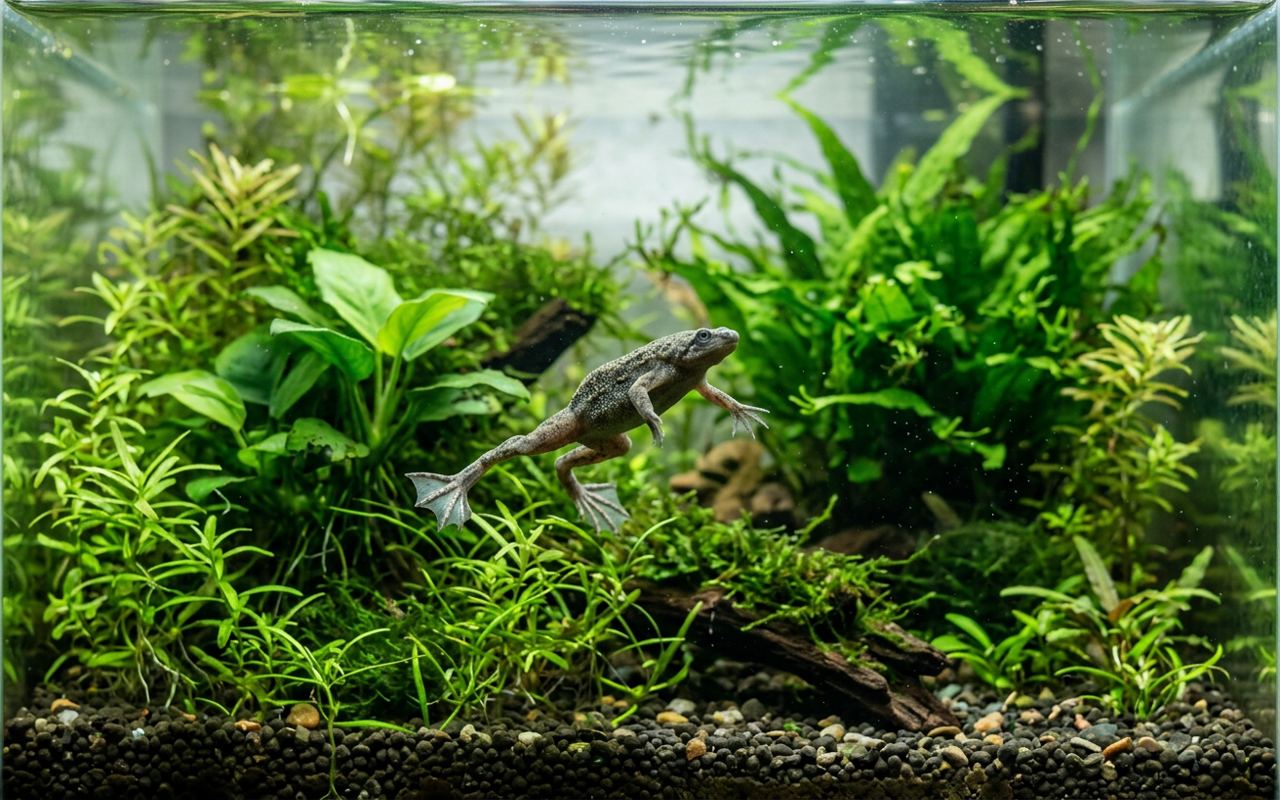
AI-generated editorial illustration of the subject; not a photograph of a specific animal, product or case.
At a glance
- Scientific name
- Hymenochirus boettgeri
- Family
- Pipidae
- Origin
- Equatorial African streams and pools
- Lifespan
- 5–10 years
- Adult size
- 3–4 cm
- Weight
- Under 10 g
- Temperament
- Peaceful and social
- Activity level
- Moderate, active at dusk
- Social needs
- Keep in groups of three or more
- Intelligence
- Learns feeding spots
- Noise
- Faint humming from males
Housing and environment
- Housing
- Minimum 40 litres for a group, no deeper than about 30 cm, with a tight lid
- Space requirement
- Horizontal space with hiding places and gentle filtration
- Temperature
- 22–26°C
- Humidity
- Fully aquatic
- Exercise
- Shallow swimming space with easy surface access
- Grooming
- Not applicable
Life stages and changing needs
Expanded care guidance · Updated 7 October 2026 · Not professionally reviewed
Young animals and settling in
Larvae and adults may have very different feeding and habitat needs. Establish which stage you are adopting and obtain a species-specific plan before arrival. Some species retain aquatic larval traits throughout life, while others undergo metamorphosis. Do not assume that care for a tadpole, an axolotl and an adult newt is interchangeable.
Adult care and reproductive changes
Adults need an established, escape-proof aquatic system with easy access to the surface when required. Size differences can create predation and biting risks even among the same species. Do not casually combine frogs, newts, fish or shrimp. Breeding and egg care require separate planning, and unwanted offspring must never be released into local water.
Later life and changing needs
In later life, keep the environment stable and make food and resting areas accessible without changing the animal into a shallower or warmer setup arbitrarily. Document body condition and feeding response. Reduced movement may signal unsuitable water or illness, not simply age. A veterinarian experienced with amphibians can distinguish a care problem from disease.
Diet and feeding
Sinking frog pellets, frozen bloodworm and brine shrimp
Use foods appropriate to the exact amphibian and its size, such as suitable complete amphibian diets and responsibly sourced invertebrates. A varied diet is different from random leftovers. Do not assume fish flakes provide a complete ration, and avoid wild-caught prey that may carry pesticides or parasites. Ask about supplementation rather than dosing by guesswork.
Observe feeding directly because an animal can appear active yet miss every meal. Offer food where it can find it, keep fingers away from its mouth, and remove leftovers without chasing the animal. Feeding schedules change with size and water temperature. Swelling, weight loss or persistent refusal needs assessment rather than progressively larger meals.
Daily care and ongoing checks
Every day
Check water temperature, filter flow, access routes and the animal itself each day. Use appropriately treated water and measure ammonia and nitrite in a cycled system. Strong current can be stressful for species adapted to still water. Amphibian skin is vulnerable to chemicals; keep aerosols, soaps and residues well away from the enclosure.
Regular maintenance and prevention
Base water changes on measured quality and avoid sudden changes in temperature or chemistry. Minimise handling, preferably using a suitable container for transfers. When contact is unavoidable, follow veterinary advice on appropriate gloves and hygiene. Quarantine new amphibians separately; equipment can transmit serious infections between enclosures even when animals never meet.
Behaviour and compatibility
Surface breathing, singing at night, hanging motionless in the 'zen' pose
- With children
- Good observational pets; never handle
- With other animals
- Keep with small peaceful fish or alone
- Training difficulty
- Not applicable
Health
- Chytrid fungus
- Bloat
- Bacterial infections
- Starvation when outcompeted by fish
- Ammonia poisoning
Aquatic exotics vet; always wash hands before and after tank work
Special care requirements
They must reach the surface to breathe, so avoid deep tanks and strong flow
Surface access and direct feeding
African dwarf frogs must reach the surface to breathe. Arrange resting places and an appropriate depth so surfacing is easy, while keeping the tank securely covered. They are not the larger African clawed frog, and confusing the two changes the space and predation risks substantially. Confirm identity before purchase.
Slow or inaccurate feeding can leave a frog hungry in a fish community. Observe each animal getting appropriate food rather than assuming scraps reach the bottom. Avoid sharp gravel and items that can be swallowed. Strong filter flow, fin-nipping fish and inaccessible surface routes are reasons to redesign the habitat.
Before you take one on
Sources and further guidance
These welfare and veterinary resources inform general husbandry advice; they do not certify this profile or replace a species-experienced professional. Confirm exact environmental settings and feeding plans for your animal.
Quick answers
- How long do African dwarf frogs live?
- With clean, stable water and appropriate food, African dwarf frogs commonly live about 5 years, and some live longer. Poor water quality is the most common reason they die young. MSD Veterinary Manual: Amphibians
Can your home meet african dwarf frog needs?
- Plan for a lifespan of 5–10 years, including holiday cover and, where one is available, a vet familiar with this species. Lifespan ranges are not guarantees.
- Arrange the social setting before arrival. Social guidance for this species: Keep in groups of three or more. Do not assume another animal of any species is a suitable companion.
- Habitat priority for this species: Horizontal space with hiding places and gentle filtration. Make sure your setup can provide this consistently. Measure temperatures and humidity with thermometers and a hygrometer rather than guessing.
- Key care point: They must reach the surface to breathe, so avoid deep tanks and strong flow. Discuss diet and any specialist needs with the supplier, rescue and a vet who treats this species, and check local legal requirements before acquiring an animal.
Educational reference, not an individual diagnosis or a verified professional review. Read our editorial policy.
Guidance libraries and further reading
These organisations publish relevant guidance. Their links are further reading, not evidence that they have reviewed this page.