Xenopus laevis
African Clawed Frog
A rewarding companion for an owner who has researched its needs honestly. As with every animal on this site, this profile is a starting point: confirm details with a vet or specialist before bringing one home.
PipidaeLifespan 10–15 years, sometimes over 20Care complexity 2/5Suitable for beginners
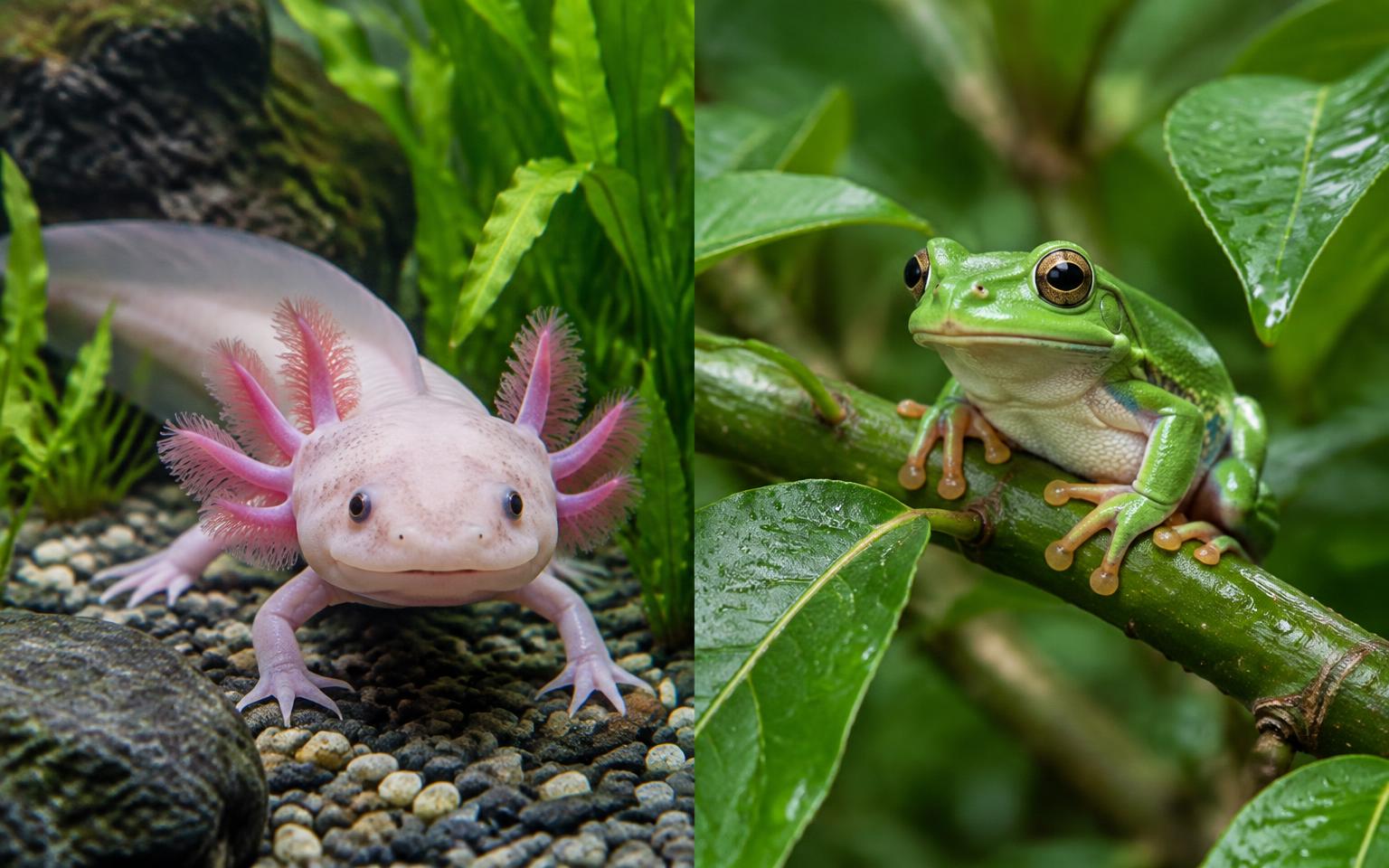
Representative amphibians photography; individual appearances vary.
At a glance
- Scientific name
- Xenopus laevis
- Family
- Pipidae
- Origin
- Sub-Saharan Africa
- Lifespan
- 10–15 years, sometimes over 20
- Adult size
- 10–13 cm
- Weight
- 60–200 g
- Temperament
- Fully aquatic, hardy and greedy; more active and personable than many amphibians.
- Activity level
- Moderate; active swimmer, especially at feeding time.
- Social needs
- Can live alone or in same-species groups; will eat smaller tank mates.
- Intelligence
- Modest; learns feeding routines quickly.
- Noise
- Males hum quietly at night.
Housing and environment
- Housing
- Minimum 40 litres per frog with gentle filtration and a tight lid; they escape.
- Space requirement
- Aquarium-only; no land area needed.
- Temperature
- 18–24 °C; no heater usually needed.
- Humidity
- Fully aquatic.
- Exercise
- Swims actively in the water column.
- Grooming
- Sheds skin periodically and eats it — normal behaviour.
Diet and feeding
Carnivorous: sinking amphibian pellets, earthworms and frozen foods.
Behaviour and compatibility
Will nip at fingers and anything that moves; handle rarely and only with wet hands or a container.
- With children
- Good observed pet; not for handling.
- With other animals
- Eats small fish; larger fish may nip it. Often best kept species-only.
- Training difficulty
- Not trainable.
Health
- Bloat (dropsy)
- Fungal infections after injury
- Chytrid fungus risk from unquarantined amphibians
Never release into the wild — they are a serious invasive species in many countries.
Special care requirements
See the housing, diet and health sections — this species has needs that are easy to underestimate.