
Cat breed · Hybrid-derived
Bengal
A spectacular, highly active cat derived from crosses with the Asian leopard cat, needing far more enrichment than an average cat.
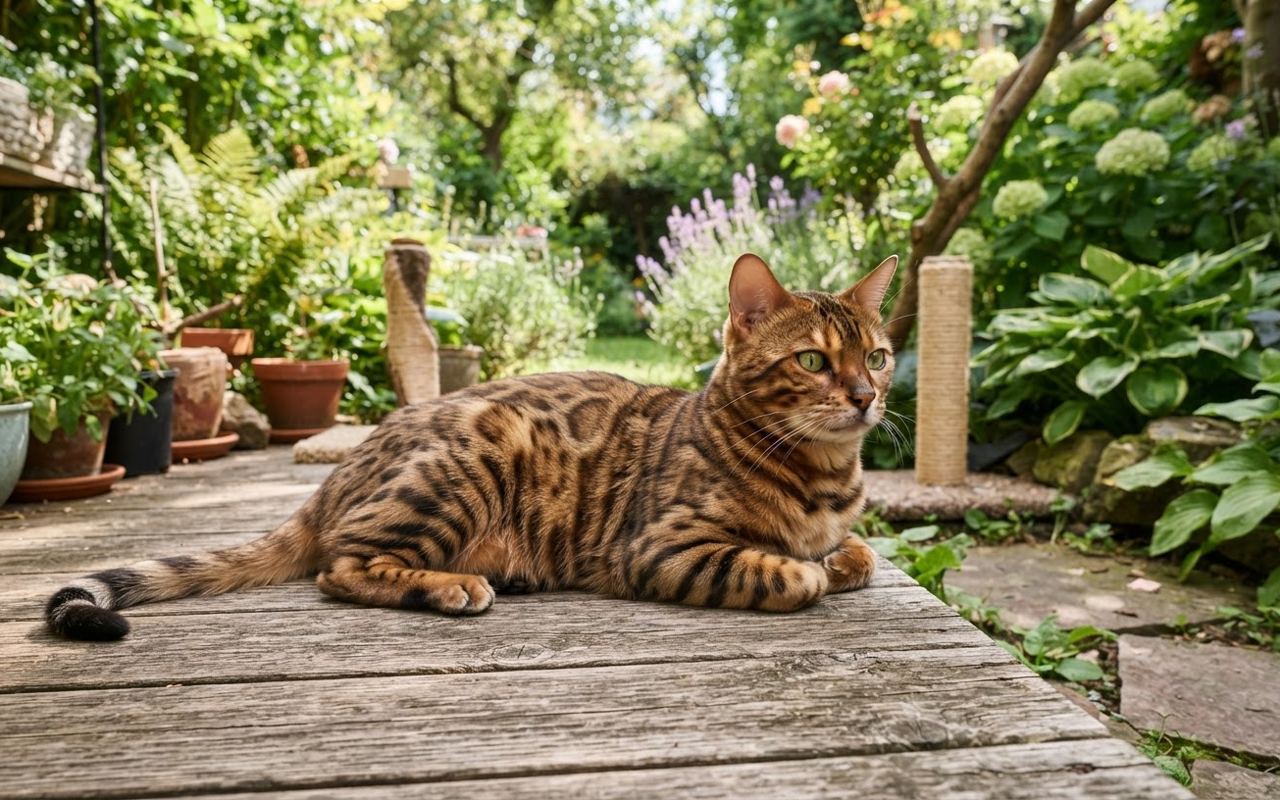
AI-generated editorial illustration of the subject; not a photograph of a specific animal, product or case.
Breed characteristics
- Group
- Hybrid-derived
- Origin
- United States
- Size
- Large
- Weight
- 4–8 kg (9–18 lb)
- Height
- 33–41 cm
- Lifespan
- 12–16 years
- Coat
- Short, dense, often glittered and rosetted
- Temperament
- AthleticCuriousDemandingWater-loving
History
Developed from the 1960s onward; modern pet Bengals are several generations removed from their wild ancestor.
Appearance
Muscular with a wild-looking spotted or marbled coat.
Exercise and activity
Multiple daily play sessions, tall climbing structures, puzzle feeders and ideally a secure catio.
Care and grooming
Simple coat care, but a demanding enrichment programme. Check local laws about early-generation hybrids.
Health considerations
- Hypertrophic cardiomyopathy
- Progressive retinal atrophy
- Pyruvate kinase deficiency
- Flat-chested kitten syndrome
- Chronic diarrhoea in some lines
Honest challenges
Before choosing a Bengal
- Treat the breed profile as a starting point, not a guarantee of temperament. Meet the individual and discuss its history, needs and behaviour with the rescue or responsible breeder.
- Check your routine can support the activity described here: Multiple daily play sessions, tall climbing structures, puzzle feeders and ideally a secure catio. Allow for age, weather, health and recovery rather than imposing a fixed target.
- Ask the breeder or rescue and your vet about problems reported in this breed (such as Hypertrophic cardiomyopathy, Progressive retinal atrophy, Pyruvate kinase deficiency, Flat-chested kitten syndrome, Chronic diarrhoea in some lines), which of them have recognised screening tests, and the parents' results where relevant. Screening reduces some uncertainty but cannot promise a healthy lifetime.
- Plan grooming, veterinary costs and care during holidays. Children and other pets still need careful introductions and supervision whatever a breed's typical rating.
Educational reference, not an individual diagnosis or a verified professional review. Read our editorial policy.
Guidance libraries and further reading
These organisations publish relevant guidance. Their links are further reading, not evidence that they have reviewed this page.
- RSPCA — animal care and welfare advice across species
- PDSA — veterinary charity pet health advice
- International Cat Care — cat health, behaviour and welfare advice