
Fear and anxiety
Helping Pets Cope With Fireworks
Preparing a safe den, managing the night itself, and longer-term help for noise fears.
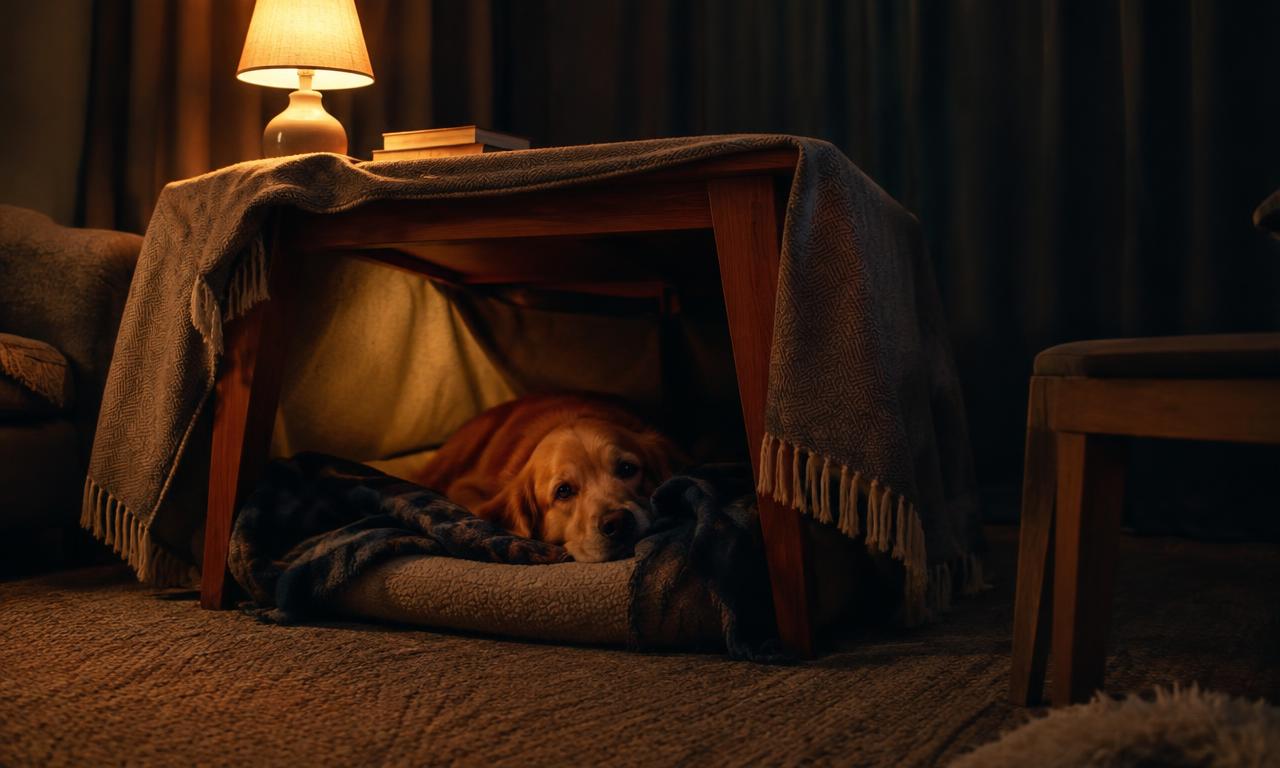
AI-generated retreat illustration. Offer a safe hiding space the animal can choose, with ventilation and access to usual resources; do not force confinement.
Noise events: prepare, protect, recover
| Situation or check | Practical next step |
|---|---|
| Before likely fireworks | Secure escape routes and set up familiar indoor resources. |
| Pet chooses to hide | Allow a safe retreat; do not pull it out. |
| Pet seeks contact | Offer calm support without restraint. |
| Sound training causes tension | Stop or lower intensity; train away from the real event. |
| Injury, breathing difficulty or rabbit stops eating | Seek veterinary help rather than waiting for the noise to end. |
No product or training programme guarantees comfort. Severe fear needs an individual veterinary and behaviour plan.
Prepare before the first loud night
Noise fear can appear as trembling, pacing, escape attempts, hiding or refusal of food. Contact your vet well before an expected event if previous reactions were severe. Pain and other health problems may worsen fear, and prescribed treatment needs an individual plan rather than borrowing medication.
Check identification, doors, windows and escape routes. Walk dogs during quieter daylight periods, keep cats indoors when fireworks are likely and provide their usual indoor resources. Plan toilet breaks with secure equipment and supervision; a frightened dog may escape even in a familiar garden.
Make a retreat your pet can choose
Set up a familiar quiet space with bedding, water and hiding options. Close curtains and use moderate background sound if the animal tolerates it. Do not force a pet into a crate it fears or pull it out of hiding. Allow safe contact if it seeks you; comforting fear is not rewarding a deliberate misbehaviour.
For rabbits and other outdoor animals, assess a safe alternative space before the event. Avoid garages with fumes, hazards or running engines, and do not suddenly move animals into a much hotter environment. Covers must not restrict ventilation, and bonded companions should normally remain together.
Respond calmly during fireworks
Offer a familiar activity if your pet chooses to engage, but stop if it cannot eat or play. Reduce demands and let it rest rather than insist on training. Check that hiding animals still have access to water and species-appropriate food, and monitor small pets' appetite and droppings.
Do not punish barking, accidents or destructive escape behaviour. These can reflect distress. If the animal injures itself, collapses, develops breathing difficulty or a rabbit stops eating, contact veterinary help immediately.
Train at a level that does not cause fear
Sound desensitisation is a gradual programme conducted away from actual firework events. Start recordings at a level that produces no fearful response, pair them with positive experiences and increase only while the animal stays comfortable. Recordings cannot reproduce every feature of real fireworks, including flashes and vibration.
If the pet freezes, hides or stops taking food, reduce intensity or end the session. A qualified behaviour professional can help with timing and progression. Severe cases may benefit from veterinarian-prescribed medication alongside management; no product guarantees a cure.
Review what worked afterwards
Keep a brief record of reactions, noise timing, safe spaces and any treatment effects. This helps plan for the next event and identify worsening fear. Recovery time matters too: avoid a demanding outing immediately after a distressing night.
Make an event-day plan everyone can follow
Agree who handles doors, toilet breaks and visitors before the noise starts. Keep a frightened pet behind a second secure boundary when someone enters the home. Check collar or harness fit and identification details while the animal is calm, not during panic. Give cats familiar indoor litter, food, water and resting options before closing their usual outside access. For rabbits, prepare an appropriate safe space and preserve access to hay and bonded companions. Do not place an enclosure in an unventilated cupboard or a room containing fumes simply because it is quiet.
- Arrange walks and essential outdoor tasks before likely noise.
- Prepare a retreat with safe access to water and usual resources.
- Tell visitors not to open escape routes or disturb hiding animals.
Separate fear support from sound training
A real fireworks night is primarily a management situation, not a test of training progress. Use a recording programme at another time when the pet is comfortable and you can control the intensity. Start quieter than you think necessary, watch the whole body, and stop before tension or avoidance develops. Eating a treat is useful information but does not by itself prove the animal feels safe. If it scans constantly, freezes or cannot settle afterwards, the session was too difficult. Reduce the challenge and ask a qualified professional for help rather than increasing the volume to make the pet get used to it.
Review treatment and recovery with the vet
If previous events involved prolonged panic or escape injury, contact the vet ahead of the season and describe the actual reactions. A prescription plan should include when to use it, whether an advance trial is needed, expected effects and when to call about adverse effects. Quietness after a product does not necessarily mean fear has resolved. Do not borrow another animal's medicine or combine calming products without advice. After a noisy night, allow a predictable quiet routine and record recovery, appetite and sleep. Ongoing distress or new sensitivity to ordinary noises merits a health and behaviour review rather than simply waiting for the next display.
Frequently asked questions
- Should I make my pet face the noise?
- No. Forced exposure can worsen fear. Offer a chosen retreat and use gradual training separately at a non-frightening intensity.
- Does comforting a frightened pet teach it to be afraid?
- Calm support is appropriate if the pet seeks it. Do not force contact or pull it from a safe hiding place.
- Can a noise recording reproduce a real display?
- Not completely. Flashes, vibration, smell and unpredictable sounds differ, so training does not remove the need for safe event-day management.
- When should I discuss medicines?
- Before an expected event if fear has been substantial. Your vet needs to assess this animal and explain the individual plan; do not borrow another prescription.
References
- Fireworks and animals — RSPCA
- Fears, phobias and anxiety — VCA Animal Hospitals
- Dog advice — Dogs Trust