
Adoption decisions
Choosing a Shelter Dog: Questions That Predict a Good Match
What shelter behaviour does and does not tell you, the questions worth asking staff, and how to plan for the decompression period after homecoming.
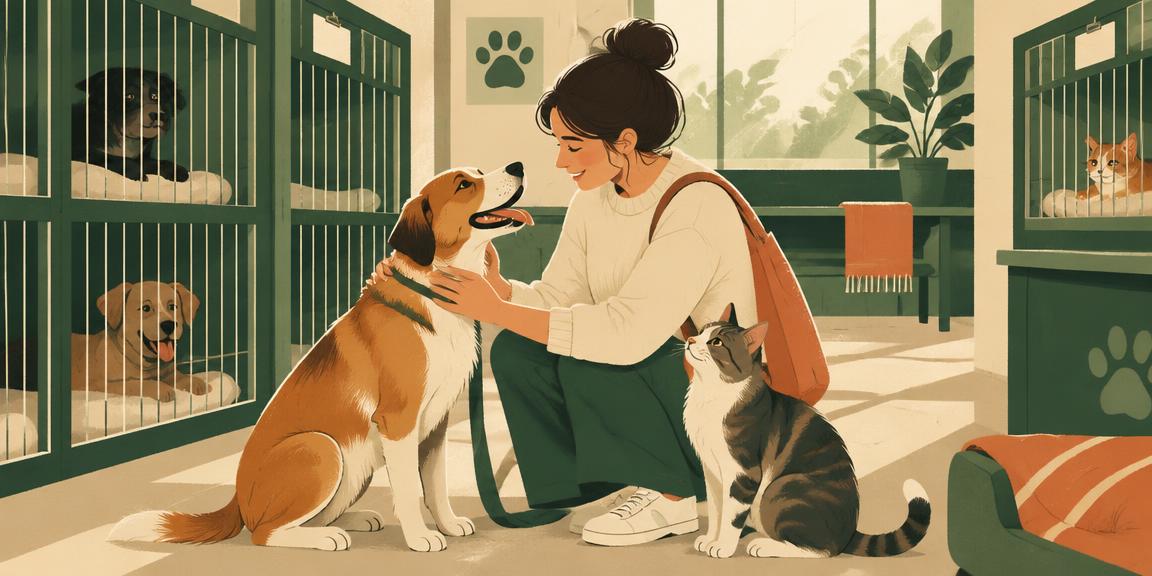
A kennel is not a preview of home life
Kennels are loud, bright and unpredictable. Some dogs shut down and appear calm; others bark, spin and pull, and appear unmanageable. Neither presentation reliably predicts behaviour in a quiet house weeks later. Treat kennel behaviour as information about how the dog copes with stress, not as its personality.
This is why good shelters value foster placements so highly — a week in a home tells staff more than a month in a kennel.
Ask about history and handling, not just temperament
Broad labels such as 'friendly' or 'nervous' are less useful than specific, observed behaviour. Ask for examples.
- How does the dog behave when a stranger approaches the kennel, and when they walk away?
- Has the dog been handled for grooming, nails, ears or a veterinary examination, and how did it go?
- How does it respond to food, chews or toys when someone walks past?
- What is known about its behaviour with other dogs, cats and children in real situations rather than assumptions?
- Has it been left alone, and for how long, without distress?
- What medical treatment has it had, and what is likely to need ongoing care or cost?
Be honest about your household
Match the dog to the life you actually live, not the one you intend to start. Working hours, stairs, a rented flat with noise-sensitive neighbours, small children, an existing resident cat and your realistic exercise tolerance all narrow the field usefully. A good shelter will welcome that honesty, and steering you away from a particular dog is a sign they are doing their job.
The decompression period
Many dogs need weeks to show who they are. A common framing is three days to stop being overwhelmed, three weeks to settle into a routine, and three months to feel genuinely at home — approximate, but a useful antidote to panic in week two.
Keep the first fortnight deliberately dull: a predictable routine, short lead walks in quiet places, no visitors, no dog parks, a defined safe space the dog can retreat to, and no pressure to interact. Behaviour that appears at week four, once a dog is confident enough to express preferences, is normal rather than deception.
Plan for support before you need it
Register with a vet in the first week, ask the shelter what post-adoption behaviour support they provide, and identify a qualified, reward-based trainer or a clinical animal behaviourist in advance. Problems addressed in the first month are far easier to resolve than those left for six.
Frequently asked questions
- Should I adopt a puppy or an adult?
- Adults come with visible size, coat and much of their temperament already apparent, and often need less intensive early input. Puppies offer more influence over socialisation but far more work in the first year.
- What if it does not work out?
- Speak to the shelter early rather than at crisis point. Reputable organisations offer behavioural advice and will always take an animal back, and many problems resolve with support.